▶ Watch the original YouTube video
Zenless Zone Zero 3.0 Anniversary Update: Why Players Feel Underwhelmed Despite Major Release
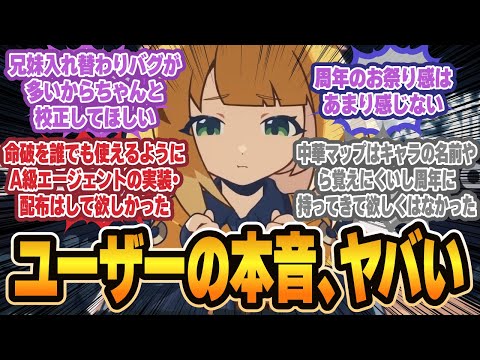
Zenless Zone Zero’s 3.0 anniversary update has generated mixed reactions from the player community, with many describing the expansion as “underwhelming” despite new content additions. An analysis of user feedback reveals systemic issues ranging from story bugs to character design choices that have left players questioning whether the update meets the standards expected of a major anniversary milestone.
What Happened
Zenless Zone Zero released its 3.0 anniversary update, introducing new event content, story elements, a Chinese-inspired thematic direction, and a new attribute system. However, player reception has been notably divided, with a significant portion of the community describing the update as failing to deliver the excitement typically associated with anniversary releases. User feedback across multiple platforms indicates concerns about event quality, story bugs, character design decisions, and the implementation of new gameplay systems.
Why It Matters
Anniversary updates serve as a critical indicator of a game’s development priorities and operational health. They represent the largest content drops and are expected to showcase a studio’s commitment to its player base. When an anniversary update underperforms, it signals potential issues with resource allocation, quality assurance, or creative direction. For Zenless Zone Zero, the 3.0 reception raises questions about whether the development team can meet evolving player expectations in a competitive live-service gaming landscape.
Background
Anniversary updates in modern live-service games have evolved significantly over the past five years. Early iterations (2018–2020) typically followed a formula of new areas, story content, character releases, and generous rewards. However, industry leaders like Genshin Impact and Honkai: Star Rail have raised the bar by emphasizing narrative depth, character development, and world-building alongside traditional content additions. Players now expect anniversary updates to represent meaningful turning points in a game’s story and systems, not merely incremental additions.
Previous Zenless Zone Zero updates, particularly the 1.4 and 1.5 versions, were praised for their event design and cinematic quality. The 2.0 update’s movie theater event was specifically highlighted by players as a high point in content execution. Against this backdrop, the 3.0 update’s reception appears diminished.
Key Points
- Event Content Quality Concerns: Players report that event volume and narrative depth fall short compared to versions 1.4, 1.5, and 2.0, with descriptions of current events as “hollow” or lacking substance.
- Critical Story Bugs: Multiple reports of text-voice mismatches, dialogue errors, and complete story bugs are affecting early players, indicating insufficient quality assurance for a major update.
- New Attribute Implementation Issues: The newly introduced “Master” attribute lacks meaningful integration with existing systems, with players noting that the attribute itself isn’t compelling—only the associated character is strong.
- Character Design Homogenization: Players observe that recent character designs have become increasingly generic, with distinctive personality traits being diluted in response to community feedback.
- Technical Performance Problems: PS5 version performance issues and UI inefficiencies continue to detract from the overall experience.
- Chinese Thematic Reception Mixed: While some players appreciate the Chinese-inspired direction, others find the cultural elements lack depth or fail to meaningfully enhance the narrative.
Perspectives
Player Sentiment Distribution:
Analysis of community feedback reveals three distinct player groups:
Positive Reception (approximately 30%): A segment of players reports enjoying the 3.0 content without framing it as an anniversary milestone. These players appreciate new characters and content without comparing it to previous versions or external standards. Comments include “enjoying it normally” and “the movie was great, so 100 points.”
Neutral/Ambivalent (approximately 40%): The largest group acknowledges that the update is enjoyable but lacks the special quality expected of an anniversary release. These players describe the experience as “no different from usual” or “fun, but underwhelming for an anniversary.” This group identifies the core issue: the update is competent but not exceptional.
Critical (approximately 30%): Players in this group point to specific failures: severe bugs, insufficient new attribute integration, and declining character design quality. Their criticisms are substantive and grounded in concrete examples.
Cultural Implementation Debate: Interestingly, opinions on the Chinese thematic elements diverge sharply. Some players find the cultural references unclear, while others believe they are sufficiently represented. This disagreement reflects differing expectations about how cultural themes should be integrated into gameplay and narrative.
Insights
The 3.0 anniversary update reveals several systemic challenges facing the development team:
Expectation vs. Reality Gap: The update fails to deliver the narrative turning point or world-building expansion that modern players expect from anniversary content. While new areas and characters are present, they do not represent meaningful story progression or system expansion.
Quality Assurance Breakdown: Story bugs affecting early players indicate that the update was released without adequate testing. For an anniversary milestone, this represents a significant operational failure. The issue suggests the development team’s capacity may not match the scope of the update.
New Systems Lack Cohesion: The Master attribute introduction follows a pattern seen in successful games like Genshin Impact, but execution differs critically. In Genshin Impact, new elements expanded existing character viability and created new strategic possibilities. In Zenless Zone Zero, the new attribute appears as a standalone strong character rather than a system that enriches the broader gameplay ecosystem. Additionally, the absence of a distributed base character for the new attribute limits accessibility.
Character Design Philosophy Shift: Player feedback suggests that excessive incorporation of community requests has resulted in homogenized character designs. The most memorable characters in successful games possess distinctive, sometimes controversial traits that drive narrative engagement. Recent Zenless Zone Zero characters appear increasingly generic, potentially reducing long-term player investment.
Evolving Anniversary Standards: The industry has shifted from viewing anniversary updates as “all-in-one events” to treating them as significant milestones within continuous content pipelines. However, this shift requires maintaining high baseline quality and clear narrative progression. Zenless Zone Zero’s 3.0 update appears caught between these paradigms—substantial enough to be an update, but not distinctive enough to be a milestone.
Path Forward: The development team should prioritize: (1) resolving story bugs immediately, (2) designing new attributes to expand existing character utility rather than replace it, (3) restoring character design distinctiveness, and (4) ensuring future updates deliver clear narrative progression. Player feedback, while critical, is constructive and grounded in legitimate concerns about game quality and design philosophy.