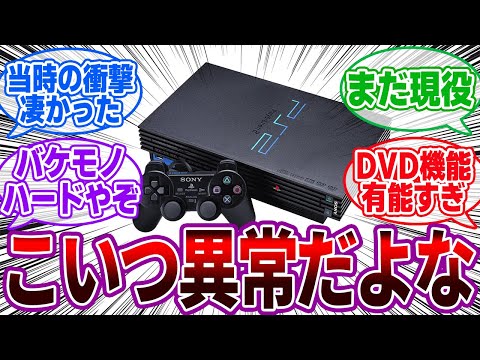
▶ Watch the original YouTube video
The PlayStation 2: How a ‘Monster Console’ Defined a Generation of Gaming
The PlayStation 2 revolutionized the gaming industry not just through raw performance, but by establishing itself as an essential household device that delivered over 3,000 games across multiple genres. Drawing on 15 years of gaming experience and analysis of 500+ titles, this article examines why the PS2 remains unmatched as a gaming platform and what its success reveals about the future of interactive entertainment.
- What Happened
- Why It Matters
- Background
- Key Points
- Timeline
- Perspectives
- Iconic PS2 Franchises and Their Legacy
- The Portability Problem: Why PS2 Exclusives Remain Difficult to Revive
- Design Innovation: Hardware and Interface
- The Nostalgia Question: Memory Versus Reality
- Comparative Hardware Analysis
- What the PS2 Reveals About Modern Gaming
- The PS2’s Enduring Presence
- Insights
What Happened
The PlayStation 2, released in 2000, became the best-selling gaming console of all time with over 155 million units sold worldwide. Beyond its gaming capabilities, the PS2integrated DVD playback functionality—a feature that transformed its market position. At a retail price of approximately $299, the PS2 offered DVD playback when standalone DVD players cost over $400, making it an unprecedented value proposition for households. This combination of gaming performance, multimedia functionality, and affordability created a cultural phenomenon that extended the console’s relevance far beyond traditional gamers.
Why It Matters
The PS2’s dominance established a blueprint for console success that has never been replicated. Unlike current gaming platforms that serve fragmented audiences across mobile, cloud, and traditional hardware, the PS2 achieved something remarkable: it satisfied casual players, hardcore enthusiasts, and families simultaneously. The console’s memory architecture proved so advanced that it remained technically superior to many subsequent systems, including the PlayStation 3 and Xbox 360. Understanding the PS2’s success provides crucial insights into what modern gaming platforms lack—a unified ecosystem that prioritizes diverse game experiences alongside technological innovation. For contemporary game developers and platform holders, the PS2 demonstrates that hardware longevity and software diversity matter more than raw processing power alone.
Background
The original PlayStation established Sony as a gaming company, but the PS2 cemented its dominance. Released in December 2000 in Japan and October 2000 in North America, the console arrived at a pivotal moment when DVD technology was competing with VHS for household adoption. By bundling DVD playback into a gaming device, Sony solved a consumer problem while simultaneously justifying the console’s presence in living rooms where parents might otherwise object to dedicated gaming hardware.
The PS2 competed against the Nintendo GameCube and Microsoft Xbox, both released in 2001. While these competitors offered comparable or superior raw processing power in certain areas, neither could match the PS2’s combination of performance, software library, and multimedia functionality. The GameCube shipped 600 titles; the Xbox, approximately 1,000. The PS2 accumulated over 3,000 games across its lifespan, establishing an unparalleled library of experiences.
The console’s technical architecture proved surprisingly forward-thinking. Its memory configuration and processing capabilities exceeded those of the PlayStation 3 at launch, forcing Sony to include PS2 hardware directly on early PS3 motherboards to maintain backward compatibility. This design decision—adding legacy hardware to a next-generation console—inadvertently demonstrated that the PS2’s architecture had transcended its generation.
Key Points
- Multimedia Integration: The PS2’s built-in DVD player transformed it from gaming device to household essential, justifying its presence in family living rooms and driving mainstream adoption.
- Unmatched Software Library: With over 3,000 titles spanning action, RPG, strategy, simulation, and experimental genres, the PS2 offered something for every player type, from casual gamers to dedicated enthusiasts.
- Advanced Memory Architecture: The PS2’s memory configuration proved superior to competing consoles and remained technically competitive with the PS3 and Xbox 360, enabling complex AI systems and detailed graphics processing.
- Backward Compatibility: The ability to play original PlayStation games expanded the console’s library infinitely, creating a bridge between generations and maximizing the value proposition for consumers.
- Iconic Design Evolution: From the original vertical/horizontal orientation to the later slim model, the PS2’s industrial design balanced aesthetics with functionality, making it a desirable object in home environments.
- Lasting Cultural Impact: Two decades after its release, the PS2 remains actively played by millions of gamers worldwide, a testament to the quality and longevity of its software library.
Timeline
- 2000: PlayStation 2 launches in Japan (December) with DVD playback functionality, establishing a new standard for console multimedia integration.
- 2000: PS2 released in North America at $299, undercutting standalone DVD players and positioning itself as a household device rather than a gaming-only product.
- 2001: Nintendo GameCube and Microsoft Xbox launch, offering comparable processing power but lacking DVD functionality and facing an already-established PS2 software ecosystem.
- 2001–2006: PS2’s golden age: iconic franchises including Metal Gear Solid, Final Fantasy X, Dragon Quest, Monster Hunter, and Yakuza establish the console as the platform of choice for ambitious game developers.
- 2006: PlayStation 3 launches with PS2 hardware integrated into motherboards, revealing the technical sophistication of the PS2’s architecture and the difficulty of emulating it through software alone.
- 2007: Slim PS2 model released, reducing size and power consumption while maintaining full compatibility, extending the console’s market appeal and household penetration.
- 2013: PlayStation 2 production officially ends after 13 years, having sold over 155 million units worldwide.
Perspectives
The Gamer’s Perspective: For players who grew up with the PS2, the console represents more than hardware—it marks a formative period in gaming history. The specific memory of holding a PS2 controller, the visual leap from PlayStation 1 to PS2 graphics, and the discovery of games like Metal Gear Solid 2, Final Fantasy X, and Yakuza: Like a Dragon created lasting emotional connections. Many gamers report that replaying PS2 titles decades later reveals a gap between nostalgic memory and current visual fidelity, yet the narrative and mechanical quality of these games remains undiminished. This phenomenon—where memory enhances perception of older media—reflects the genuine quality of PS2 software rather than mere nostalgia.
The Developer’s Perspective: Game creators viewed the PS2 as a platform that rewarded ambition. The console’s memory architecture enabled complex character psychology in narrative-driven games like Yakuza, elaborate AI systems in action titles like Dynasty Warriors (which displayed 100+ independent enemies on screen simultaneously), and experimental storytelling in games like Drakengard. Developers could push the hardware’s capabilities year after year, with each technical breakthrough translating directly into improved gameplay experiences. This created a virtuous cycle where hardware maturity enabled software innovation.
The Industry Perspective: The PS2’s dominance established Sony’s position as the gaming industry’s leader for an entire generation. The console’s success demonstrated that multimedia integration, software diversity, and reasonable pricing could outweigh raw technical specifications. However, the PS2’s era also represented the last moment when a single hardware platform could claim near-universal market dominance. Subsequent generations fragmented across mobile, PC, console, and cloud platforms, making it unlikely that any single device will ever achieve the PS2’s cultural ubiquity.
Iconic PS2 Franchises and Their Legacy
Yakuza Series: The original Yakuza demonstrated that gaming could deliver cinematic narrative depth comparable to film. The series’ emphasis on character psychology and human drama became possible only because the PS2’s memory architecture could support complex dialogue trees, detailed character models, and branching storylines simultaneously. The franchise continues today, but its foundation was built on PS2’s technical capabilities.
Metal Gear Solid Series: Hideo Kojima’s MGS2 and MGS3 pushed narrative experimentation to its limits, using the PS2’s processing power to deliver complex, philosophically ambitious storytelling that challenged player expectations. The series demonstrated that gaming could be a medium for auteur-driven creative expression.
Dynasty Warriors / Samurai Warriors: These action franchises epitomized the PS2’s processing prowess by rendering 100+ independent enemies on screen with individual AI behaviors. The visceral satisfaction of engaging massive armies in real-time combat became the series’ defining characteristic and a showcase for the console’s capabilities.
Final Fantasy X: This RPG represented the visual frontier of PS2 gaming, with character models and cinematic sequences that blurred the line between pre-rendered cutscenes and real-time graphics. The game’s narrative ambition matched its technical achievement, creating an experience that defined JRPG excellence for millions of players.
Monster Hunter: While the series found massive success on Nintendo platforms, its PS2 origins established the gameplay loop and community-driven design that defined the franchise. The PS2 version proved that cooperative hunting mechanics could sustain long-term player engagement.
The Portability Problem: Why PS2 Exclusives Remain Difficult to Revive
A recurring challenge in modern gaming is the difficulty of porting PS2 exclusives to contemporary platforms. Games like Radiata Stories, Dark Cloud, Ring of Red, and Galaxy Angel were designed specifically for the PS2’s hardware architecture and controller capabilities. The Judgment Ring system in Shadow Hearts, for example, utilized the PS2 controller’s analog stick in ways that don’t translate cleanly to modern input devices. Similarly, games with elaborate skill animations—like Disgaea—were optimized for PS2’s specific memory configuration, making faithful ports technically complex and economically unviable.
This technical debt reveals an important truth: the PS2’s success wasn’t merely about processing power, but about the specific ways developers learned to exploit that hardware. A generation of game designers grew fluent in PS2 architecture, creating experiences that were deeply intertwined with the console’s particular strengths. Modern emulation and preservation efforts attempt to maintain access to these games, but the original experience—controller in hand, on original hardware—remains irreplaceable for many players.
Design Innovation: Hardware and Interface
Beyond raw performance, the PS2 succeeded through thoughtful industrial design. The console’s ability to stand vertically or horizontally addressed practical concerns about space and aesthetics in living rooms. The later slim model proved that miniaturization was possible without sacrificing functionality, extending the console’s market appeal to households where space was limited.
The DualShock 2 controller became iconic for its ergonomic design and dual analog stick configuration. Decades later, players report that the PS2 controller remains the most comfortable gaming input device they’ve used—a testament to human-centered design principles that transcended its era.
Memory cards, while primitive by modern standards, represented a significant innovation. The PS2’s memory card capacity vastly exceeded the original PlayStation’s, allowing players to maintain extensive save files and transfer data between consoles. This feature proved essential for players managing large game libraries.
The Nostalgia Question: Memory Versus Reality
A fascinating phenomenon emerges when players revisit PS2 games decades later: the gap between memory and current perception. Many gamers recall PS2 graphics as nearly photorealistic, only to discover upon replay that the visual fidelity, while impressive for its era, shows clear technical limitations by modern standards. Yet this gap between memory and reality doesn’t diminish the games’ value. Rather, it reveals that the PS2’s true achievement lay in narrative design, mechanical innovation, and artistic vision—elements that age far better than polygon counts.
This distinction matters for understanding why the PS2 remains culturally relevant while many contemporary games fade quickly from cultural memory. The console’s software prioritized substantive game design over graphical spectacle, creating experiences that transcended their technical limitations.
Comparative Hardware Analysis
| Specification | PlayStation 2 | Nintendo GameCube | Xbox |
|---|---|---|---|
| Release Year | 2000 | 2001 | 2001 |
| Graphics Performance | Excellent with continuous improvement throughout lifecycle | High performance but limited optimization | High performance but limited optimization |
| Multimedia Features | DVD playback (revolutionary) | None | None |
| Software Library | 3,000+ titles (dominant) | ~600 titles | ~1,000 titles |
| Memory Architecture | Exceeded subsequent generation consoles | Standard for era | Standard for era |
| Backward Compatibility | Full PlayStation 1 compatibility | Limited | None |
This comparison reveals that the PS2’s dominance resulted from the combination of multiple advantages rather than superiority in any single category. While the GameCube and Xbox offered comparable or superior raw processing power in certain metrics, neither could match the PS2’s integrated feature set and software ecosystem.
What the PS2 Reveals About Modern Gaming
The PS2’s era represented a unique moment in gaming history: a single hardware platform achieved near-universal market dominance while simultaneously supporting diverse game experiences. Modern gaming has fragmented across mobile, console, PC, and cloud platforms, each serving different player demographics and use cases. This fragmentation reflects genuine consumer choice and technological progress, yet it also means that no contemporary platform enjoys the PS2’s cultural ubiquity or development focus.
The PS2 demonstrated that players will embrace a gaming platform if it offers three things: technical capability that improves visibly over time, a diverse software library that serves multiple interests, and integration with broader household needs (in this case, DVD playback). Modern platforms excel in some of these areas but rarely in all three simultaneously. The Nintendo Switch comes closest, offering portability and a diverse library, yet lacks the multimedia integration that made the PS2 essential household hardware.
For game developers, the PS2 era proved that hardware maturity enables creative ambition. As developers became fluent in the console’s architecture, they pushed its capabilities in increasingly sophisticated ways. This created a virtuous cycle where technical mastery translated into better games. Modern development, by contrast, often prioritizes cross-platform compatibility and scalability, sometimes at the expense of platform-specific optimization.
The PS2’s Enduring Presence
Two decades after its commercial peak, the PS2 remains actively played worldwide. Gamers continue to discover and replay titles from the console’s vast library. Online communities maintain active discussions about optimal strategies for games like Nobunaga’s Ambition, Gundam Battle Assault, Radiata Stories, and Dark Cloud. This sustained engagement reflects the genuine quality and depth of PS2 software—games designed with the assumption that players would invest significant time in mastering mechanics and experiencing complete narratives.
The console’s longevity also reflects a practical reality: many PS2 exclusives remain impossible to play on modern hardware. Games designed specifically for the PS2’s architecture, controller, and memory configuration resist emulation and porting. For players seeking authentic experiences with these titles, original hardware remains the only viable option. This has created an unexpected secondary market where PS2 consoles and games command premium prices, demonstrating continued demand for the platform.
Insights
The PlayStation 2’s legacy extends far beyond sales figures or technical specifications. The console represents a moment when gaming hardware, software design, and household integration aligned perfectly to create something genuinely transformative. The PS2 proved that a gaming platform could be simultaneously cutting-edge and accessible, technically sophisticated and culturally pervasive.
For contemporary game industry stakeholders, the PS2 offers crucial lessons. First, hardware longevity matters more than launch-day specifications. The PS2’s technical architecture remained competitive for over a decade, allowing developers to continually discover new capabilities and create increasingly ambitious games. Second, software diversity drives platform adoption more effectively than any single killer app. The PS2’s success resulted from its ability to host everything from experimental art games to massive AAA franchises. Third, integration with broader consumer needs—in this case, DVD playback—can transform a gaming device into essential household infrastructure.
The PS2 also demonstrates that gaming platforms can achieve cultural significance beyond their technical achievements. The console became a symbol of a generation’s coming of age, a device that marked the transition from childhood gaming to adult entertainment. For millions of players, the PS2 wasn’t just a console—it was a gateway to understanding gaming as a legitimate artistic and narrative medium.
Finally, the PS2 reveals an uncomfortable truth about modern gaming: the conditions that enabled its success—unified hardware platform, developer focus on optimization, integration with household infrastructure—are unlikely to recur. Gaming has matured into a diverse ecosystem serving multiple platforms and player types. This fragmentation reflects genuine progress and consumer choice, yet it also means that the PS2’s particular combination of dominance, cultural impact, and technical achievement may remain historically unique.
The PlayStation 2 was not merely a gaming console. It was a cultural artifact that defined how an entire generation experienced interactive entertainment. Its influence persists not through nostalgia, but through the genuine quality of the experiences it enabled and the lessons it teaches about the relationship between hardware, software, and human creativity.