▶ Watch the original YouTube video
How Quattro’s Overwhelming Workload Reveals Critical Organizational Failures: A Deep Analysis of Mobile Suit Zeta Gundam
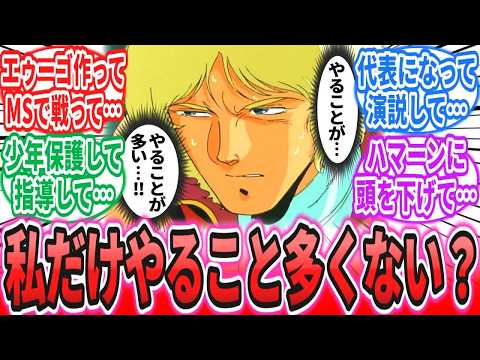
Mobile Suit Zeta Gundam’s character Quattro Bajeena, also known as Char Aznable, carries an unsustainable workload that exposes fundamental structural problems within the AEUG organization. At just 27 years old, he simultaneously manages combat operations, strategic planning, personnel management, and diplomatic negotiations—a burden that ultimately leads to his psychological collapse and raises critical questions about organizational responsibility and the dangers of over-relying on exceptional talent.
- What Happened
- Why It Matters
- Background
- Key Points
- Comparative Analysis: Similar Characters in Different Works
- Organizational Structure and Systemic Failures
- Psychological Deterioration: The Burnout Process
- The Double Bind: Contradictory Organizational Messaging
- The Role of Social Support and Its Absence
- Age, Maturity, and Organizational Responsibility
- Perspectives: Organizational Blame vs. Individual Responsibility
- Insights: The Danger of Exceptional Talent Without Systems
What Happened
In Mobile Suit Zeta Gundam, Quattro Bajeena emerges as the de facto leader of the AEUG (Anti-Earth Union Group), a resistance organization opposing the Titans. Despite his youth and the absence of adequate support structures, Quattro is tasked with commanding military operations, developing mobile suit technology, conducting diplomatic negotiations, managing personnel, and making strategic decisions that affect the entire Earth Sphere. The series documents his gradual psychological deterioration as these responsibilities accumulate, culminating in scenes that reveal severe stress, emotional exhaustion, and questioning of the organization’s purpose itself.
Why It Matters
Quattro’s situation transcends anime narrative and speaks to contemporary organizational dysfunction. The pattern of concentrating excessive responsibility on a single high-performing individual—while providing minimal support infrastructure—remains endemic in modern workplaces. This analysis demonstrates how organizational structures that depend on exceptional individuals rather than robust systems inevitably lead to burnout, reduced decision-making quality, and ultimately, organizational failure. The character serves as a cautionary case study in the dangers of unsustainable workload distribution and the psychological toll of unmet support needs.
Background
Mobile Suit Zeta Gundam, the sequel to the original Mobile Suit Gundam, depicts a conflict between the Earth Federation’s Titans faction and the AEUG resistance movement. Quattro Bajeena, revealed to be the legendary pilot Char Aznable from the original series, joins the AEUG as a military officer. Following the assassination of AEUG leader Blex Fora, Quattro assumes increasing responsibility for the organization’s operations. Unlike his predecessor Blex, who had established command structures and support systems, Quattro inherits an organization in crisis with minimal institutional support. His responsibilities span six or more distinct domains: combat piloting, military command, strategic planning, technology development, diplomatic negotiations, and personnel management.
Key Points
- Excessive Workload Across Multiple Domains: Quattro simultaneously manages combat operations, unit organization, reconnaissance missions, investor negotiations, strategic planning, subordinate training, and crisis management—roles that would typically require multiple specialized personnel.
- Organizational Over-Dependence on Single Individual: The AEUG structure creates dangerous reliance on Quattro’s exceptional abilities, preventing development of secondary leadership and institutional resilience.
- Absence of Support Infrastructure: Unlike comparable organizations in other anime (such as the Survey Corps in Attack on Titan), the AEUG provides minimal institutional support, leaving Quattro isolated in decision-making.
- Psychological Deterioration Throughout Series: Visible markers of stress accumulate—scenes of Quattro holding his head in despair, increasingly harsh treatment of subordinates, and existential doubts about the organization’s mission.
- Age and Experience Mismatch: At 27 years old, Quattro lacks the typical maturity and experience expected for managing Earth Sphere-level strategic decisions, yet receives no mentorship or guidance.
- Communication Breakdown and Unmet Requests for Help: Quattro repeatedly signals distress through dialogue and behavior, yet the organization fails to recognize or respond to these signals, exemplifying a complete breakdown in organizational communication.
Comparative Analysis: Similar Characters in Different Works
Quattro’s situation differs significantly from comparable characters in other anime. Lelouch from Code Geass manages multiple organizational domains but possesses the Geass ability to directly command obedience, providing a form of coercive control unavailable to Quattro. Shinji Ikari from Neon Genesis Evangelion bears excessive psychological pressure but remains confined to a single role—pilot—rather than managing multiple institutional domains. Erwin Smith from Attack on Titan occupies a leadership position comparable to Quattro’s but benefits from an established command structure and dedicated staff support.
| Series | Character | Domains Managed | Support Infrastructure | Special Abilities |
|---|---|---|---|---|
| Mobile Suit Zeta Gundam | Quattro Bajeena | 6+ | Minimal | Newtype abilities (supplementary) |
| Code Geass | Lelouch | 4-5 | Partial | Geass (coercive power) |
| Neon Genesis Evangelion | Shinji Ikari | 1 | None | AT Field manipulation |
Organizational Structure and Systemic Failures
The AEUG exhibits classic structural problems common to rapidly-formed resistance organizations. The organization lacks clear hierarchical definition, suffers from uneven personnel quality due to rapid expansion, and concentrates critical functions in too few individuals. Most critically, the organization’s survival becomes dependent on Quattro’s continued performance, creating a fragile system vulnerable to his incapacity.
The assassination of Blex Fora represents a critical organizational failure point. Rather than establishing succession planning or distributed leadership, the organization simply transfers all of Blex’s responsibilities to Quattro. This creates a vacuum where Quattro loses his primary source of mentorship and support precisely when his workload increases most dramatically.
Psychological Deterioration: The Burnout Process
Quattro’s mental state visibly degrades throughout the series. Early episodes show him maintaining optimism despite heavy workload. Mid-series episodes reveal increasing stress markers: scenes of him sitting alone with his head in his hands, deteriorating interpersonal interactions with subordinates, and monologues expressing doubt about the organization’s mission and effectiveness. By the series’ conclusion, Quattro exhibits classic burnout symptoms—emotional exhaustion, reduced empathy, and questioning of fundamental purpose.
Psychologically, this represents a progression toward what researchers term “burnout”—a state of emotional, physical, and mental exhaustion caused by prolonged stress. Quattro’s case is particularly severe because his stress derives not merely from workload volume but from the psychological contradiction of being expected to succeed while simultaneously being denied adequate resources.
The Double Bind: Contradictory Organizational Messaging
A critical moment occurs when Quattro receives a contradictory directive: “You can handle this. We won’t help. Please save us.” This represents what psychologists call a “double bind”—a communication pattern where contradictory messages make successful response impossible. The organization simultaneously demands that Quattro solve critical problems while explicitly refusing to provide support. This creates an impossible psychological situation where Quattro cannot succeed regardless of his actions.
This pattern mirrors similar dynamics in Neon Genesis Evangelion, where Shinji receives contradictory messages about his autonomy and responsibility. However, Quattro’s situation proves more severe because the stakes involve not individual survival but the fate of Earth’s entire population.
The Role of Social Support and Its Absence
Psychological research consistently demonstrates that social support—the presence of trusted individuals to consult with and rely upon—represents one of the most critical factors in managing high-stress roles. Quattro’s organizational isolation proves particularly damaging. He lacks peers with whom to share decision-making burden, supervisors to provide guidance, or confidants to process emotional stress. This absence of social support accelerates his psychological deterioration and prevents early intervention.
The loss of Blex Fora as a mentor figure proves especially significant. Blex represented Quattro’s primary source of organizational guidance and psychological support. His death leaves Quattro without anyone to consult regarding strategic decisions or to validate his concerns about organizational sustainability.
Age, Maturity, and Organizational Responsibility
Quattro’s age of 27 raises critical questions about organizational judgment. While legally adult, 27 represents a relatively early career stage for managing Earth Sphere-level strategic decisions. Typical organizational practice reserves such responsibility for individuals with 15-20+ years of experience and established track records. The AEUG’s decision to place such responsibility on Quattro without corresponding mentorship or support infrastructure suggests organizational desperation rather than sound judgment.
This age mismatch compounds Quattro’s difficulties. He possesses the technical competence to execute tactical decisions but lacks the experience and emotional maturity to manage the strategic and interpersonal dimensions of his role effectively.
Perspectives: Organizational Blame vs. Individual Responsibility
Online discussions regarding Quattro’s situation reveal competing interpretations. Some commentators emphasize organizational culpability, characterizing the AEUG as a “black company” (Japanese term for exploitative employer) that systematically overloads its most capable employee. Others note that Quattro himself bears responsibility for not explicitly stating his limits and requesting support, suggesting that his failure to communicate needs contributed to his deterioration.
A more nuanced perspective recognizes that Quattro’s situation results from interaction between organizational dysfunction and individual psychology. The organization creates unsustainable conditions, but Quattro’s own internalization of perfectionist standards—his belief that he “should” be able to handle any challenge—prevents him from seeking help even when available.
Some viewers interpret Quattro’s pursuit of a subordinate who attempted unauthorized combat operations as evidence of genuine care for his team members, suggesting his harshness stems from responsibility rather than cruelty. This interpretation complicates simple narratives of organizational villainy or individual failure.
Insights: The Danger of Exceptional Talent Without Systems
Quattro’s trajectory illustrates a critical organizational principle: systems that depend on exceptional individuals rather than robust institutional structures inevitably fail. Organizations that concentrate critical functions in single high-performers create fragility disguised as strength. When that individual reaches capacity—as all humans eventually do—the entire organization becomes vulnerable.
The tragedy of Quattro’s situation lies in its preventability. Had the AEUG invested in developing secondary leadership, distributing responsibilities across multiple personnel, and establishing mentorship structures, Quattro’s capabilities could have been leveraged sustainably. Instead, the organization’s short-term focus on immediate operational needs created long-term structural weakness.
Quattro’s case also demonstrates the psychological mechanism by which exceptional individuals become trapped in unsustainable situations. His competence generates organizational expectations, which he internalizes as personal responsibility. This internalization prevents him from recognizing that his situation is organizationally created rather than personally inevitable. By the time he recognizes the unsustainability of his position, he has already experienced significant psychological damage.
The broader implication extends beyond anime narrative to contemporary organizational practice. Modern workplaces frequently replicate the AEUG’s pattern: identifying high performers, progressively increasing their responsibilities, providing minimal support infrastructure, and expressing surprise when burnout occurs. Quattro’s fictional deterioration mirrors real-world patterns of talented professionals experiencing psychological collapse due to unsustainable workload and inadequate organizational support.
The series suggests that organizational responsibility extends beyond task assignment to include active management of employee wellbeing. The AEUG’s failure to monitor Quattro’s psychological state, to redistribute responsibilities when stress became evident, or to provide mentorship and support represents organizational negligence as significant as any individual failure on Quattro’s part.