▶ Watch the original YouTube video
One Piece: Analyzing Imu’s Overwhelming Power and True Purpose After 15 Years of Fandom
In the latest One Piece episode 1189, the mysterious antagonist Imu demonstrates unprecedented brutality against Luffy, breaking established patterns of enemy behavior in the series. This encounter represents a fundamental shift in the narrative structure, introducing a threat that transcends individual combat and challenges the very foundation of Luffy’s growth philosophy.
- What Happened
- Why It Matters
- Background
- Key Points
- Comparative Analysis: Imu’s Departure from Established Enemy Archetypes
- Narrative Intent and Structural Transformation
- Imu’s Arsenal: The “World-Imagined” Weapon
- Luffy’s Survival: Competing Scenarios
- Fan Reception and Psychological Implications
- Insights and Future Implications
What Happened
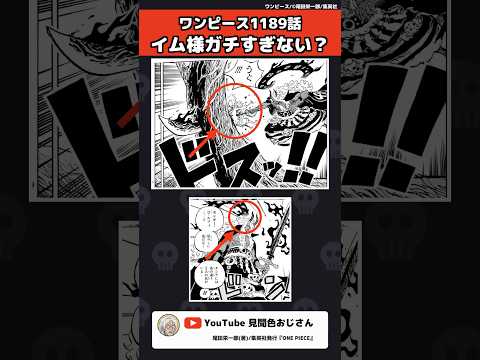
In episode 1189, Imu engages Luffy in direct combat with a level of lethal intent previously unseen in One Piece’s enemy encounters. Rather than displaying the characteristic restraint or secondary objectives typical of past antagonists, Imu pursues immediate elimination through multiple piercing attacks. The encounter escalates beyond physical damage when Imu invokes Luffy’s deceased brother Ace and his brother Sabo, applying psychological pressure alongside devastating physical trauma. The episode concludes with Luffy in critical condition, his survival uncertain.
Why It Matters
After 15 years of following One Piece, this confrontation marks a watershed moment in the series’ narrative structure. Imu represents a departure from the established formula where antagonists—regardless of power level—maintain some form of restraint, alternative objective, or philosophical justification. The introduction of an enemy whose sole purpose is pure elimination, combined with psychological warfare targeting Luffy’s deepest losses, signals that the story has entered a fundamentally different phase. This shift redefines what victory and survival mean in the context of One Piece’s final arc.
Background
Since the series’ beginning in 2009, Luffy has consistently overcome enemies through a combination of training, experience, and unwavering determination. Each major antagonist—from Crocodile to Kaido—possessed distinct philosophies, secondary objectives, or moments of restraint that allowed Luffy opportunities for growth and eventual triumph. The World Government’s true leadership remained mysterious until Imu’s revelation, establishing a new hierarchical layer above the Navy and Shichibukai system. Imu’s emergence as the supreme authority represents the materialization of theories about hidden world-controlling forces, elevating the conflict from personal ambition to existential threat.
Key Points
- Unprecedented Lethal Intent: Imu abandons the characteristic restraint of previous One Piece antagonists, pursuing immediate termination rather than prolonged conflict or demonstration of dominance.
- Extreme Physical Damage: Multiple piercing attacks inflict injuries exceeding any previous trauma Luffy has sustained, suggesting Imu operates beyond conventional physical limitations.
- Psychological Warfare: Strategic invocation of Ace and Sabo targets Luffy’s emotional vulnerabilities, weaponizing his sense of responsibility for fallen comrades.
- World-Scale Threat: References to weapons capable of reshaping the world indicate Imu commands resources transcending individual combat capability.
- Technological Salvation: Vegapunk’s regeneration technology emerges as a potential survival mechanism, suggesting narrative reliance on technological rather than purely martial solutions.
- Narrative Transformation: The encounter signals a shift from personal ambition narratives toward systemic, world-altering conflict.
Comparative Analysis: Imu’s Departure from Established Enemy Archetypes
Across 15 years of One Piece analysis, previous major antagonists demonstrated consistent patterns: Crocodile repeatedly granted Luffy recovery opportunities; Doflamingo prioritized control over subordinates; even Kaido maintained focus on Wano’s governance. Each possessed what might be termed a “philosophy of conflict”—a framework explaining their actions beyond pure dominance.
Imu operates without such framework. The absence of secondary objectives, the refusal to acknowledge Luffy’s potential for growth, and the explicit mockery of his training methodology represent a categorical break from established patterns. This distinction carries narrative weight: it suggests Imu represents not merely a stronger enemy, but a fundamentally different category of threat—one that cannot be overcome through conventional progression.
Comparative examination with other anime antagonists reinforces this uniqueness. While characters like Attack on Titan’s Beast Titan employ strategy and conviction, or My Hero Academia’s All Might serve as mentor figures, Imu embodies pure eliminationist intent without redemptive potential or philosophical complexity. Even Demon Slayer’s Muzan, despite overwhelming power, exhibits fear and self-preservation instincts. Imu demonstrates absolute confidence and absence of doubt.
Narrative Intent and Structural Transformation
Since the Wano Country arc (2020 onwards), One Piece’s narrative emphasis has shifted from enemy characterization toward demonstrating overwhelming force. Imu represents the culmination of this trend. The creative intent appears multifaceted:
Scale Expansion: The introduction of a supreme authority above the World Government establishes new hierarchical layers, transforming the conflict from binary (pirates versus Navy) to triadic (pirates, Navy, and world-controlling entity).
Limitation of Growth: Imu’s existence challenges the foundational premise that training and experience guarantee progression. This adversary cannot be overcome through conventional methods, forcing narrative recalibration.
Technological Integration: The emergence of Vegapunk’s regeneration technology as potential salvation introduces non-martial solutions, suggesting the final arc will incorporate scientific and technological elements alongside combat.
Imu’s Arsenal: The “World-Imagined” Weapon
References to weapons capable of “imagining the world” transcend conventional armament. Previous One Piece weapons—Doflamingo’s strings representing control, Kaido’s flames embodying destruction—extend personal desires into physical form. A world-imagined weapon operates at different scale entirely, suggesting either ancient weapons (Pluton, Poseidon, Uranus) of unprecedented power, a centuries-constructed world governance system weaponized, or Imu’s personal abilities expanded to planetary scale. Regardless of specific nature, this arsenal indicates the threat Luffy faces is not individual but systemic—the weaponization of world structure itself.
Luffy’s Survival: Competing Scenarios
Vegapunk Salvation Scenario (70% probability): Vegapunk’s regeneration technology restores Luffy’s physical form, potentially enhancing capabilities beyond baseline recovery. Given Vegapunk’s established opposition to the World Government and recent narrative prominence, involvement in Luffy’s salvation aligns with character trajectory and thematic consistency.
Awakening Self-Repair Scenario (20% probability): A new level of Gomu Gomu no Mi awakening—beyond the Nika form—grants self-regeneration capabilities. This would represent pure martial progression, maintaining traditional One Piece problem-solving methodology.
Composite Salvation Scenario (10% probability): Multiple elements (Vegapunk, awakening, crew intervention) combine to enable survival. This approach would integrate technological, martial, and social dimensions.
Fan Reception and Psychological Implications
Audience reactions expressing shock at Imu’s overwhelming power reflect deeper psychological recognition than simple “enemy is strong” assessment. Within 15 years of One Piece fandom observation, such reactions emerge during three specific conditions: unexpected enemy strength revelation (Ace’s execution at Marineford), protagonist desperation (Luffy’s defeat in Dressrosa), or fundamental narrative restructuring (revelation of true Yonko strength).
Current reactions satisfy all three criteria simultaneously. Fans intuitively comprehend that Imu’s introduction marks narrative transition into new territory. Comments regarding absence of visible survival pathways indicate recognition that conventional problem-solving frameworks—training, experience, determination—prove insufficient. This represents collective understanding that One Piece has fundamentally transformed.
Insights and Future Implications
Imu’s introduction signals One Piece’s transition from personal ambition narrative toward systemic transformation narrative. The series has evolved from “Luffy becomes Pirate King” toward “Luffy confronts and transforms world systems.” This shift carries profound implications for character development, thematic resonance, and resolution pathways.
Most significantly, the encounter redefines victory conditions. Previous conflicts culminated in enemy defeat; Imu’s confrontation may prioritize survival and progression toward next phase rather than triumph. This represents maturation of both protagonist and narrative—recognition that some adversaries cannot be defeated through conventional means, only transcended.
The psychological dimension—Imu’s invocation of Ace and Sabo—indicates future conflicts will test not merely physical capability but emotional resilience and philosophical conviction. One Piece appears to be shifting from physical growth narratives toward spiritual and psychological maturation.
Finally, Imu possesses potential to become One Piece’s definitive antagonist—not through power alone, but through representing the narrative’s central conflict: the individual against systemic oppression. Unlike previous enemies embodying personal ambition, Imu embodies world structure itself, making the confrontation fundamentally about whether individual will can transform established systems.