▶ Watch the original YouTube video
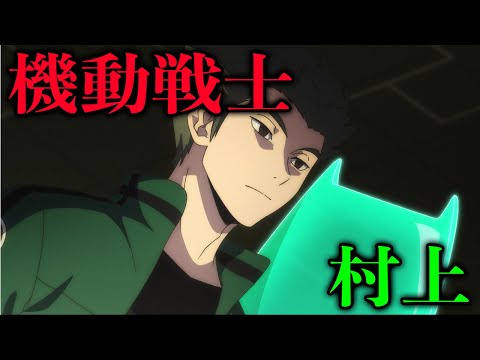
Why Murakami Kouhei Is World Trigger’s Hidden Standout Character: A Deep Analysis
After years of anime analysis, viewers are discovering that Murakami Kouhei from World Trigger is far more than a supporting character. This deep dive explores why this seemingly minor character represents one of modern anime’s most complex and compelling character designs.
What Happened
Murakami Kouhei initially appears to be a minor antagonist in World Trigger, a character easily overlooked among more prominent cast members. However, repeated viewings and fan discussions across Twitter, YouTube, and forums have sparked a significant reassessment of his role and significance within the narrative. What began as dismissive commentary about a “boring supporting character” has evolved into widespread recognition of his depth, strategic importance, and moral complexity.
Why It Matters
Murakami Kouhei exemplifies a broader shift in modern anime toward morally complex characters that resist simple good-versus-evil categorization. In an era where audiences increasingly demand nuanced storytelling—as seen in Attack on Titan, Jujutsu Kaisen, and Chainsaw Man—characters like Murakami represent the industry’s evolution toward more sophisticated character design. Understanding why viewers are reassessing this character reveals important insights about contemporary anime storytelling and audience expectations.
Background
World Trigger follows border agents defending against interdimensional invaders. Murakami Kouhei operates from the opposing faction’s perspective, making strategic decisions that prioritize organizational goals over personal ambition. His position as an “enemy” character who nonetheless demonstrates legitimate motivations and tactical competence creates a compelling moral ambiguity that distinguishes him from typical antagonists.
The character’s appeal has grown as the series progresses, with fans noting subtle character development in his expressions, dialogue, and decision-making patterns. This gradual revelation of depth mirrors the experience of analyzing similarly complex characters like Reiner Braun from Attack on Titan or Erwin Smith from the same series—characters whose true significance becomes apparent only through careful observation and multiple viewings.
Key Points
- Organizational Integrity: Murakami consistently prioritizes team success over personal recognition, embodying a professional ethos that reflects real-world organizational dynamics
- Hidden Competence: Despite lacking flashy combat sequences, his tactical judgment and combat ability rank among the series’ highest levels
- Team Coordination: He functions as an invisible stabilizing force within his unit, adjusting internal dynamics and enabling team functionality
- Moral Complexity: As an “enemy” character with legitimate justifications for his actions, he challenges viewers’ binary moral frameworks
- Character Evolution: New character facets continue to emerge, suggesting significant untapped potential for future development
- Fan Reassessment: Initial negative or dismissive reactions have shifted toward recognition of his narrative importance and psychological depth
Character Analysis: Five Core Strengths
1. Professional Excellence as a Character Trait
Murakami’s commitment to organizational benefit over individual achievement might seem unremarkable, but it represents a sophisticated character design choice. In anime, such “organizational men” are often portrayed as boring or antagonistic. Murakami transcends this stereotype by making his professionalism a source of strength rather than weakness. His ability to subordinate ego to team objectives mirrors the team-first mentality seen in Haikyuu!!, but from an opposing faction’s perspective—a positioning that adds narrative tension and moral complexity.
2. Quiet Competence
Like Aizawa Shouta from My Hero Academia, Murakami demonstrates that effectiveness need not be visually spectacular. His lack of prominent combat scenes reflects his role as a coordinator rather than a frontline fighter. This restraint actually enhances his characterization, suggesting maturity and strategic thinking rather than weakness.
3. Relationship Management
Murakami’s ability to navigate complex team dynamics and maintain group cohesion represents a crucial but often invisible skill. Similar to Mouten from Kingdom, his value lies in facilitating team function rather than individual achievement. Teams without such coordinators inevitably collapse, regardless of individual member strength.
4. Legitimate Opposing Perspective
Murakami’s faction operates from a defensible ideological position: protecting their world from invasion. This legitimacy—comparable to the moral complexity of Marley soldiers in Attack on Titan—prevents viewers from dismissing him as simply “evil.” His actions stem from genuine conviction rather than malice, creating productive moral ambiguity.
5. Underdeveloped Potential
Subtle hints suggest internal conflict beneath Murakami’s composed exterior. Potential future developments could include ideological doubt, emotional vulnerability, or fundamental role transformation—any of which would represent significant character evolution.
Comparative Character Analysis
| Character | Series | Similarities to Murakami | Key Differences |
|---|---|---|---|
| Reiner Braun | Attack on Titan | Enemy faction with legitimate motivations; moral complexity | Reiner’s internal conflict is explicitly portrayed; more emotionally volatile |
| Mouten | Kingdom | Team coordinator; high judgment; understated effectiveness | Mouten engages in more direct action; protagonist-aligned |
| Aizawa Shouta | My Hero Academia | Quiet competence; team importance; unflashy strength | Aizawa operates from protagonist faction; more emotionally expressive |
Modern Anime Trends and Murakami’s Position
Recent anime increasingly feature morally ambiguous characters operating outside binary good-versus-evil frameworks. Series like Attack on Titan (Marley soldiers), Jujutsu Kaisen (Gojo’s complexity), and Chainsaw Man (protagonist moral ambiguity) reflect audience demand for sophisticated characterization. Murakami represents this trend: a character whose legitimacy cannot be dismissed despite opposing the protagonists.
This shift reflects broader cultural changes in how audiences consume narrative. Rather than seeking simple heroes and villains, viewers increasingly appreciate characters whose actions stem from understandable motivations, even when those actions conflict with protagonist goals. Murakami embodies this evolution perfectly.
Fan Reception and Online Discussion
Initial audience reactions dismissed Murakami as a minor antagonist. However, social media analysis reveals significant reassessment over time. Twitter discussions increasingly feature observations like “I didn’t notice Murakami’s decision-making ability until my third viewing” and “Is Murakami actually the more justified character?” YouTube comments emphasize subtle character details: facial expressions, dialogue nuances, and behavioral patterns suggesting deeper complexity.
5channel (Japanese forum) discussions have shifted from dismissal toward recognition of his legitimate perspective. Comments like “Given Murakami’s position, his actions make sense” and “He might actually be right” indicate that fans are engaging with his moral framework rather than rejecting it outright.
Some viewers maintain critical positions—”He’s the enemy, so I dislike him” or “His actions are unforgivable.” However, these opinions increasingly represent minority perspectives, suggesting audience maturation toward more nuanced character appreciation.
Viewing Recommendations for Deeper Understanding
Multiple Viewings: Complex characters reveal additional layers on repeated viewing. Details invisible during first exposure become apparent on second and third watches, particularly in Murakami’s subtle expressions and seemingly casual dialogue.
Contextual Understanding: Comprehending why Murakami’s faction opposes Border—the ideological foundations of his position—illuminates his character depth. This perspective shift mirrors the experience of reassessing Code Geass after understanding antagonist motivations.
Relationship Observation: Analyzing how Murakami interacts with teammates and opponents reveals his values and priorities. These interactions provide crucial insight into his character beyond explicit exposition.
Comparative Series: Attack on Titan effectively demonstrates how opposing faction characters can possess legitimate motivations. Kingdom illustrates the narrative importance of team coordinators. Viewing these series enriches understanding of Murakami’s role and significance.
Potential Future Development
Several narrative trajectories seem plausible for Murakami’s character arc:
Ideological Doubt: Similar to Reiner’s crisis in Attack on Titan, Murakami might question his faction’s justifications, creating internal conflict between organizational loyalty and personal conviction.
Emotional Vulnerability: His current professional composure might fracture, revealing human emotion beneath the organizational facade. This would represent significant character development while maintaining his core identity.
Faction Transition: Murakami could shift allegiances, move to neutral ground, or join alternative organizations—a transformation that would fundamentally alter his narrative role while building on established character foundations.
Insights
Murakami Kouhei’s growing recognition reflects fundamental changes in how audiences engage with anime narratives. The shift from dismissing him as a “boring supporting character” to recognizing him as a complex, morally legitimate character demonstrates viewer sophistication and evolving storytelling expectations.
His character design succeeds precisely because it resists easy categorization. He is simultaneously enemy and sympathetic figure, weak in flashiness yet strong in judgment, minor in prominence yet crucial to team function. This multiplicity creates productive tension that rewards careful observation and repeated engagement.
World Trigger’s treatment of Murakami—allowing complexity to emerge gradually rather than through exposition—represents contemporary anime’s maturation. Rather than telling audiences that a character is complex, the series shows complexity through subtle details, dialogue patterns, and behavioral choices. This approach respects viewer intelligence and encourages active interpretation.
Ultimately, Murakami Kouhei exemplifies how modern anime can transcend binary moral frameworks while maintaining narrative coherence. His character suggests that antagonists need not be evil, supporting characters need not be insignificant, and quiet competence deserves recognition equal to flashy heroics. In recognizing Murakami’s depth, audiences are not simply reassessing a single character—they are engaging with anime’s evolution toward more sophisticated, human-centered storytelling.