▶ Watch the original YouTube video
Why Kamen Rider Monster Designs Fail to Gain Critical Recognition: A Structural Analysis
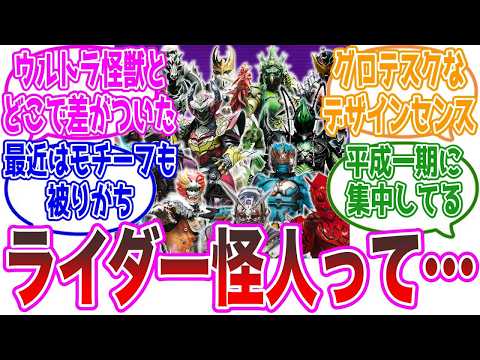
Despite featuring visually compelling creature designs, Kamen Rider’s monsters receive significantly less design criticism and fan appreciation compared to Ultraman’s kaiju. A 15-year veteran of anime and gaming analysis reveals the structural reasons behind this disparity, from character independence to merchandising strategies.
What Happened
A detailed analysis of online discussions reveals a stark contrast in how Kamen Rider monsters and Ultraman kaiju are evaluated by fans. While Ultraman creatures generate extensive design-focused discourse, Kamen Rider monsters—despite comparable or superior design quality—rarely receive the same critical attention. This phenomenon became apparent in the mid-2010s when comparing fan reactions to series like Ultraman Ginga and Kamen Rider Ooz simultaneously.
The disparity is not due to inferior design quality. Rather, it stems from fundamental differences in how these creatures are conceived, produced, and marketed. Kamen Rider monsters are designed primarily as enemy characters within a hero-centric narrative, while Ultraman kaiju originated from a creature-feature film tradition where monsters held protagonist-level significance.
Why It Matters
Understanding why certain monster designs achieve cultural prominence while others fade into obscurity reveals important truths about character design evaluation, merchandising strategy, and fan engagement in tokusatsu (special effects) media. This analysis has implications for how creative industries approach secondary character development and product positioning.
For fans and creators alike, recognizing these structural barriers illuminates why exceptional design work often goes unappreciated, and suggests pathways for future series to achieve greater recognition for their creature design achievements.
Background
The Kamen Rider franchise, which debuted in 1971, has produced thousands of monster designs across numerous series. The Heisei era (1989-2019) introduced particularly acclaimed designs like the Mirror Monsters (Kamen Rider 555/Faiz), the Orphnoch (also from Faiz), and the Zodiarts (Kamen Rider Fourze). Meanwhile, Ultraman’s kaiju have maintained consistent fan appreciation and merchandising success since the original 1966 series.
The structural difference lies in creative intent: Ultraman was built upon the kaiju film tradition, where monsters were central to the narrative. Kamen Rider, conversely, was conceived as a hero-driven series where monsters served as obstacles to overcome. This foundational distinction shapes everything from design philosophy to commercial strategy.
Key Points
- Character Independence: Ultraman kaiju possess independent character status and narrative significance, while Kamen Rider monsters are primarily designed as enemy obstacles lacking standalone character development
- Design Philosophy Consistency: Highly-evaluated Kamen Rider monsters (Mirror Monsters, Orphnoch, Zodiarts) share unified design languages—mirrors, insects, and constellations respectively—making them memorable and comparable
- Merchandising Disparity: Ultraman kaiju achieved massive commercial success through soft vinyl figures, while Kamen Rider monster merchandise remained limited, reducing public exposure and design awareness
- Viewer Psychology: Enemies are cognitively processed as “characters to defeat” rather than “characters to appreciate,” shifting evaluation criteria from design aesthetics to combat capability
- Recent Design Fragmentation: Modern Kamen Rider series (Revice, Geats) lack unified design themes, making individual monsters harder to remember and discuss compared to earlier series
- Sculptor Constraints: Advances in sculpting technology paradoxically shift viewer expectations toward realism rather than design innovation, causing creative design choices to be overlooked
Timeline
- 2004: Kamen Rider 555 (Faiz) introduces Orphnoch with insect-based unified design language
- Mid-2010s: Analysis begins noting disparity between Ultraman Ginga kaiju discussion and Kamen Rider monster recognition
- 2011: Kamen Rider Fourze introduces Zodiarts with constellation-based design philosophy
- 2019 onward: Recent Kamen Rider series show declining design unity and increased fan criticism of monster memorability
Perspectives
Design Evaluation Gap: The fundamental issue is not design quality but character positioning. Ultraman kaiju are evaluated as independent entities with narrative weight, while Kamen Rider monsters are evaluated solely as obstacles. This psychological framing determines whether design becomes a topic of appreciation or remains invisible.
Merchandising as Recognition: Commercial availability directly correlates with design awareness. Ultraman’s successful soft vinyl figure lines created touchpoints for design appreciation. Kamen Rider’s limited monster merchandise meant fewer opportunities for fans to examine and discuss designs in detail. This is not a reflection of design quality but of commercial prioritization—Kamen Rider merchandise focuses on the rider suits and transformation items, not monsters.
Unified Design Language: Monsters with consistent thematic frameworks (insects, constellations, playing cards) are inherently more discussable than those without. When viewers can compare “Orphnoch A versus Orphnoch B,” design becomes a natural conversation topic. When monsters lack such frameworks, they remain functionally interchangeable.
Technical Advancement Paradox: Improved sculpting technology creates higher viewer expectations for realism, paradoxically making bold design choices less visible. Older Showa-era Kamen Rider monsters, despite cruder execution, are appreciated for their conceptual audacity (a panda monster, a killer whale monster). Modern monsters face expectations for anatomical accuracy that overshadow design innovation.
Insights
The underappreciation of Kamen Rider monster designs reflects not inferior quality but structural disadvantages rooted in narrative positioning, merchandising strategy, and design consistency. Several key insights emerge:
Character Development Drives Appreciation: Monsters with independent storylines and character arcs—such as the Fangaia in Kamen Rider Kiva—receive substantially higher design recognition than purely functional enemies. When monsters possess names, backgrounds, and narrative significance, they transition from obstacles to characters worthy of aesthetic evaluation.
Merchandising Creates Visibility: The commercial ecosystem determines design visibility. Products in stores create opportunities for detailed observation and discussion. The absence of Kamen Rider monster merchandise is not evidence of poor design but reflects business decisions prioritizing rider suits and gadgets. This creates a self-reinforcing cycle: limited merchandise means reduced visibility, which justifies further merchandising cutbacks.
Unified Design Language Enables Memory: Series with consistent design themes (Faiz’s insects, Fourze’s constellations) create natural frameworks for comparison and discussion. Recent series lacking such frameworks produce monsters that blur together in viewer memory, regardless of individual design quality. This suggests that design excellence requires both conceptual strength and thematic consistency.
Broader Industry Pattern: The observation that even recent Ultraman series show declining monster discussion suggests this is not a Kamen Rider-specific problem but reflects changing fan engagement patterns across tokusatsu media. The golden age of monster appreciation may have been specific to earlier eras when monsters held greater narrative prominence.
Practical Path Forward: Future Kamen Rider series could enhance monster design appreciation by: establishing unified design themes per series, developing individual monster character arcs, expanding merchandise offerings, and explicitly highlighting design choices in supplementary materials. These changes would not require superior design talent but would create conditions where existing design work receives appropriate recognition.
Ultimately, Kamen Rider monster designs are not undervalued because they lack merit, but because structural factors—narrative positioning, merchandising strategy, and design consistency—prevent that merit from becoming visible to audiences. Recognizing these barriers is the first step toward creating conditions where creature design receives the critical attention it deserves.