▶ Watch the original YouTube video
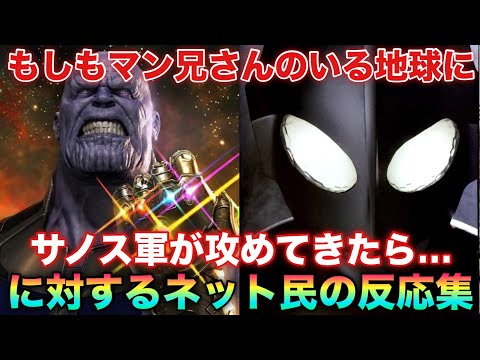
A viral video concept exploring what would happen if Marvel’s Thanos army invaded the Earth of Ultraman has sparked widespread fascination among fans, revealing the interconnected history and cultural richness of Japanese tokusatsu (special effects) and anime hero franchises spanning nearly 60 years.
What Happened
A conceptual video has circulated online proposing a hypothetical scenario: if Thanos’s army from the Marvel Cinematic Universe invaded Earth in the Ultraman universe, what would happen? The premise begins with Ultraman responding to the threat, then escalates as he calls for backup from other Japanese heroes—Kamen Rider, Super Sentai, giant robots from anime, and eventually characters from the Super Robot Wars game series. The scenario concludes that Earth itself could not withstand the combined force of all Japanese heroes mobilized to defend it.
Why It Matters
This concept has resonated deeply with fans because it illuminates the historical connections and shared cultural DNA of Japan’s tokusatsu and anime industries. Rather than treating these franchises as isolated properties, the scenario demonstrates how they form an interconnected ecosystem—a perspective that reflects how fans have long understood these works. The video also highlights a fundamental difference between Western and Japanese hero cultures: while the Marvel Cinematic Universe represents an officially unified narrative, Japanese hero franchises maintain their independence while remaining culturally linked through shared production companies, creative lineages, and fan imagination.
Background
Japanese tokusatsu culture began with Godzilla in 1954, followed by Ultraman’s debut in 1966, which became the first major success in the special effects hero genre. Kamen Rider launched in 1971, and Super Sentai began in 1975. These franchises, while produced by different studios and maintaining separate continuities, were largely shaped by Toei Company’s influence on the industry. Over the decades, occasional official crossovers have occurred—such as Ultraman and Kamen Rider appearing together in 1993’s “Ultraman Tiga & Ultraman Complete Collection” and 2012’s “Ultraman Saga.” Such collaborations remain exceptionally rare in Western hero media. The Super Robot Wars video game series, launched in 1991, pioneered the concept of uniting multiple mecha anime franchises within a single narrative universe, demonstrating fan appetite for large-scale crossovers.
Key Points
- Core Concept: A hypothetical scenario where Thanos’s army invades the Ultraman universe, triggering a chain reaction of hero mobilization across Japanese tokusatsu and anime franchises
- Escalating Response: The scenario progresses from Ultraman to Kamen Rider, Super Sentai, giant robots, and finally Super Robot Wars characters, each tier adding exponentially more power
- Industry Structure: The video reveals how Toei Company’s historical influence shaped the interconnected nature of Japanese hero franchises, distinguishing them from the officially unified MCU model
- Overkill Factor: The conclusion that Earth itself could not survive the combined presence of all mobilized heroes, emphasizing the absurdist humor and abundance of Japanese hero culture
- Fan Reception: Overwhelmingly positive response from online communities, with users praising both the scenario’s entertainment value and its demonstration of Japanese hero culture’s richness
- Cultural Significance: The concept serves as a lens for understanding how Japanese fans perceive their hero franchises as parts of a larger, interconnected cultural narrative rather than isolated properties
Timeline
- 1954: Godzilla establishes the foundation of Japanese tokusatsu culture
- 1966: Ultraman premieres, becoming the first major success in the special effects hero genre
- 1971: Kamen Rider launches, building on Ultraman’s success
- 1975: Super Sentai series begins, further expanding the tokusatsu landscape
- 1991: Super Robot Wars video game series launches, pioneering official crossovers of multiple mecha anime
- 1993: Ultraman and Kamen Rider officially appear together in “Ultraman Tiga & Ultraman Complete Collection”
- 2012: Ultraman and Kamen Rider collaborate again in “Ultraman Saga”
- 2019: “Theatrical Version Ultraman” features multiple Ultraman characters in shared narrative
- 2020s: Increased frequency of crossovers and collaborations across tokusatsu and anime franchises
- Recent: Viral video concept gains widespread online traction and discussion
Perspectives
Fan Perspective: Online communities have embraced this scenario enthusiastically, with comments highlighting the absurdist humor of the escalating scale. One popular observation notes how Ultraman’s initial call for help spirals into a “universe-scale war,” with users appreciating the exponential growth of the scenario. Fans recognize this as a celebration of Japanese hero culture’s abundance and diversity.
Critical Perspective: Some users have raised the point that comparing a single antagonist force (Thanos’s army) to the combined might of multiple entire franchises represents an unfair matchup. This observation reflects an understanding that the scenario is not meant as a serious power-scaling exercise but rather as a demonstration of Japanese hero culture’s richness compared to Western alternatives.
Industry Perspective: The concept implicitly celebrates how Japanese production companies—particularly Toei—have fostered an ecosystem where multiple franchises can coexist and occasionally collaborate, contrasting with the MCU’s centralized narrative control. This flexibility has allowed Japanese hero culture to maintain both independence and interconnectedness.
Cultural Perspective: The scenario illustrates how Japanese fans have long practiced “unofficial integration” of separate franchises through imagination and fan creation, whereas Western fans experienced official integration through the MCU. This suggests different approaches to building shared universes: one top-down and canonical, the other organic and fan-driven.
Insights
This viral concept reveals several important truths about Japanese hero culture and fan communities. First, it demonstrates that Japanese tokusatsu and anime franchises, despite maintaining separate continuities, function as a unified cultural ecosystem in the minds of fans. The scenario’s appeal lies not in serious power comparison but in celebrating the sheer abundance and diversity of Japanese hero media.
Second, the concept highlights a fundamental structural difference between Western and Japanese hero narratives. The MCU achieved unity through official, top-down integration of a shared universe. Japanese hero franchises achieved cultural cohesion through historical lineage, shared production infrastructure, and—crucially—fan imagination. This flexibility has allowed Japanese franchises to remain independent while remaining culturally linked, a model that has proven remarkably durable and generative of fan creativity.
Third, the enthusiastic reception of this scenario suggests that fans view their favorite franchises not as isolated entertainment products but as chapters in a larger cultural narrative. The scenario validates this perception by showing how these franchises, when considered together, represent an extraordinary concentration of creative and cultural value.
Finally, the concept serves as a mirror reflecting the maturation of the anime and tokusatsu industries. Recent years have seen increasing official crossovers and collaborations, suggesting that industry professionals increasingly recognize what fans have long understood: that these franchises form a coherent cultural whole. The scenario may foreshadow future official projects that more explicitly embrace this interconnectedness, such as large-scale theatrical crossovers or even animated adaptations of Super Robot Wars that unite previously separate franchises.
Ultimately, this concept demonstrates that Japanese hero culture’s strength lies not in centralized control but in decentralized creativity—the ability to maintain distinct franchises while remaining part of a larger, evolving narrative shaped by both creators and fans.