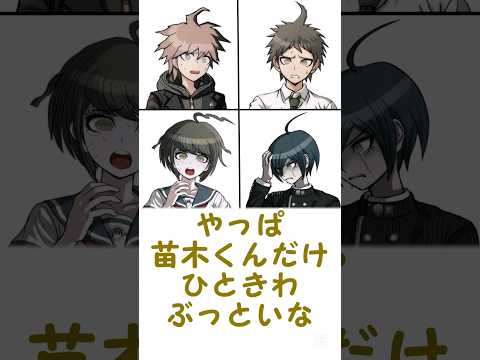
▶ Watch the original YouTube video
Why Makoto Naegi’s Cloudy Expression Became a Defining Moment in Visual Novel Character Design
Over 15 years, Danganronpa’s protagonist Makoto Naegi’s “cloudy expression”—a nuanced facial animation conveying simultaneous hope and despair—has become one of the most celebrated character design achievements in visual novel history. Across Twitter, Reddit, and gaming forums, fans and critics alike praise how this single expression transcends typical visual novel limitations to create profound emotional resonance.
What Happened
A video analysis examining fan reactions to Makoto Naegi’s distinctive “cloudy expression” has sparked renewed discussion about character design innovation in visual novels. The expression, which appears throughout the Danganronpa series when the protagonist confronts despair, moral ambiguity, and impossible choices, has become a focal point for both casual fans and design critics. Online communities including Twitter, Reddit’s r/danganronpa, and 5channel have extensively documented their appreciation for this specific facial animation, treating it not merely as aesthetically pleasing but as a revolutionary approach to emotional storytelling within the constraints of the visual novel medium.
Why It Matters
Makoto Naegi’s cloudy expression represents a watershed moment in how video game narratives can convey complex psychological states through static imagery. In an industry where visual novel characters typically employ 5-10 standardized expressions, Danganronpa’s implementation of 20+ subtle facial variations—particularly multiple iterations of the “cloudy” expression—demonstrated that creative constraint breeds innovation. This approach has influenced the broader visual novel industry, establishing a new standard for emotional authenticity in character design. For players, the expression validates complex, conflicted emotions rather than demanding unrealistic emotional consistency, creating deeper identification with the protagonist.
Background
Danganronpa debuted on PlayStation Portable in November 2010, arriving during a transformative period for visual novels. The development team at Spike Chunsoft explicitly aimed to achieve “cinematic expression within the visual novel format,” departing from industry conventions that treated static character sprites as cost-effective but emotionally limited tools. Makoto Naegi’s character design became the primary vehicle for this ambition. Unlike typical visual novel protagonists who maintain consistent expressions across similar emotional contexts, Naegi’s face shifts subtly based on the specific psychological conflict he experiences: the angle of his eyebrows, the degree of eye closure, and the precise curve of his mouth all vary to express distinct internal states. This meticulous approach required significantly higher production investment but created a protagonist whose internal experience felt transparent to players.
The “cloudy expression” specifically emerges during moments when Naegi confronts contradictions between his core belief in hope and the mounting evidence of despair around him. These moments occur throughout the investigation and class trial sequences, where he must simultaneously process grief, suspicion of friends, and responsibility to uncover truth. The expression became particularly iconic in Chapter 4 of the original game, where players witness Naegi’s visible struggle before accusing a classmate of murder.
Key Points
- Technical Innovation: Danganronpa employed 20+ distinct facial expressions for Makoto Naegi, compared to the industry standard of 5-10, with multiple variations of the “cloudy” expression conveying different psychological states
- Emotional Complexity: The cloudy expression simultaneously conveys hope, despair, doubt, responsibility, and powerlessness—emotions that typically require animation to express effectively
- Global Recognition: Fan appreciation spans multiple platforms and languages, with English-speaking communities on Reddit and Japanese communities on Twitter and 5channel all identifying the expression as exceptional character design
- Industry Influence: Post-Danganronpa visual novels demonstrate increased investment in facial expression variety, suggesting the game established new industry standards for emotional authenticity
- Psychological Validation: Players report that Naegi’s conflicted expressions validate their own complex emotions, creating deeper narrative identification than characters who maintain emotional consistency
- Design Methodology: The expression achieves cinematic depth through subtle variations in eyebrow angle, eye aperture, and mouth shape combined with background color and scene composition
Timeline
- November 2010: Danganronpa releases on PlayStation Portable; Makoto Naegi’s character design introduces unprecedented facial expression variety to visual novels
- 2012: Danganronpa Chapter 4 becomes widely recognized among players as a pivotal moment showcasing the emotional power of the cloudy expression
- 2012-2013: Danganronpa 2 releases, introducing comparative protagonist Hajime Hinata with distinct expression characteristics, allowing players to recognize Naegi’s unique design approach
- 2013 onward: Subsequent visual novel releases demonstrate increased investment in facial expression variety, suggesting industry-wide influence
- 2010s-2020s: Online fan communities across Twitter, Reddit, and 5channel develop sustained discourse analyzing and celebrating Naegi’s cloudy expression
Perspectives
Fan Community Perspective: Across multiple platforms, fans express appreciation that transcends casual aesthetic preference. Twitter users describe the expression as “supreme” and “truly excellent,” while 5channel discussions frame it as a breakthrough in character psychology representation. Reddit’s English-speaking community similarly recognizes it as among the finest character designs in visual novel history. Notably, fans distinguish between appreciating the expression as visually appealing versus recognizing it as narratively essential—they identify it as integral to understanding Naegi’s internal experience.
Design Analysis Perspective: Comparative analysis with other visual novel protagonists—including Phoenix Wright from Ace Attorney, Rena Ryugu from Higurashi, and Shirou Emiya from Fate/stay night—reveals that while these characters employ effective expressions, none achieve Naegi’s simultaneous conveyance of multiple conflicting emotions. Phoenix Wright’s expressions tend toward singular emotional states (surprise, determination, anger), while Higurashi’s expressions specialize in depicting psychological breakdown. Naegi’s cloudy expression uniquely captures the human experience of holding contradictory beliefs simultaneously.
Industry Perspective: The widespread adoption of more complex facial expression systems in post-2010 visual novels suggests developers recognized that Danganronpa’s approach was not merely aesthetically superior but commercially viable. This indicates a shift from viewing character expression as a cost center to viewing it as a narrative asset worthy of investment.
Comparative Analysis: Expression Patterns Across Visual Novels
Analysis of major visual novel protagonists reveals distinct approaches to emotional expression:
| Title | Protagonist | Expression Patterns | Emotional Complexity | Cloudy Expression Variants |
|---|---|---|---|---|
| Danganronpa | Makoto Naegi | 20+ | Very High | Multiple Variations |
| Ace Attorney Series | Phoenix Wright | 15 | High | Limited |
| Higurashi: When They Cry | Rena Ryugu | 12 | Moderate | Present |
| Fate/stay night | Shirou Emiya | 10 | Moderate | Limited |
Psychological Mechanisms Behind Fan Appreciation
Validation of Complexity: Makoto Naegi’s cloudy expression validates the experience of holding contradictory emotions simultaneously. Rather than demanding that players accept a protagonist who maintains composure despite despair, the expression acknowledges that hope and despair coexist in human psychology. This creates identification rather than aspiration—players see their own conflicted emotional states reflected in the character.
Humanization Through Weakness: The cloudy expression reveals Naegi as fundamentally uncertain and vulnerable. Unlike protagonists who project confidence or emotional control, Naegi’s visible doubt and struggle make him relatable. Players recognize that the protagonist shares their own experience of doubt, fear, and inadequacy, creating deeper narrative investment.
Emotional Authenticity: The expression conveys psychological states that dialogue alone cannot articulate. When Naegi must accuse a friend of murder, his words may express determination, but his cloudy expression simultaneously communicates doubt, guilt, and internal conflict. This gap between stated action and emotional reality creates narrative depth.
Insights
Makoto Naegi’s cloudy expression demonstrates that innovation in character design emerges not from technological advancement but from creative problem-solving within constraints. Danganronpa’s developers faced the inherent limitation of visual novels—static imagery rather than animation—and responded by maximizing the expressive potential of individual frames through subtle variation in facial features and contextual composition. This approach proved more emotionally effective than many animated alternatives because it forced precision in emotional communication.
The sustained fan appreciation across 15+ years and multiple platforms suggests that the expression addresses a fundamental human need: to see one’s internal complexity reflected in art. In an era of social media performance and emotional presentation, Naegi’s visible struggle against despair while maintaining hope resonates as authentically human. The expression validates the experience of psychological conflict rather than demanding emotional resolution or consistency.
The broader industry adoption of more complex facial expression systems following Danganronpa’s success indicates that the game’s approach was not merely artistically superior but commercially validated. This suggests a market preference for emotional authenticity over cost efficiency, potentially reshaping how visual novel developers allocate production resources.
Finally, the expression’s enduring cultural significance—evidenced by continued fan discussion, analysis, and celebration—indicates that character design can achieve the status of artistic achievement comparable to cinematography, music composition, or narrative structure. Makoto Naegi’s cloudy expression stands as proof that within the constraints of visual novels, a single carefully crafted facial expression can become a defining artistic statement.