▶ Watch the original YouTube video
Madara’s “Reanimation is a Suicide Pact” Line Sparks Philosophical Debate Among Anime Fans
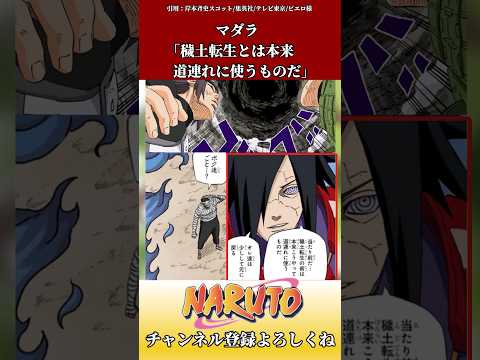
A pivotal moment in Naruto features the antagonist Madara redefining the forbidden jutsu of Reanimation as a “suicide pact” rather than mere resurrection. This philosophical declaration has generated widespread discussion online, revealing deeper themes about isolation, control, and human connection that resonate far beyond the anime itself.
What Happened
In a critical scene from Naruto, the character Uchiha Madara makes a striking statement about Reanimation (Edo Tensei), one of the series’ most powerful forbidden techniques. Rather than describing it as a resurrection method, Madara reframes the jutsu as inherently a “suicide pact”—a technique designed to drag others into mutual destruction. This reinterpretation has sparked extensive analysis and debate across social media platforms, with viewers offering diverse interpretations of what the statement reveals about Madara’s character and philosophy.
Why It Matters
This single line of dialogue encapsulates a broader trend in modern anime where antagonists express complex philosophical positions rather than serving as one-dimensional villains. Madara’s statement forces viewers to confront uncomfortable truths about human relationships—the desire to pull others into our world, the nature of control, and the manifestation of deep loneliness. The statement’s resonance demonstrates how character writing in anime has evolved to explore psychological depth and existential themes, making it relevant to discussions about narrative sophistication in animation and storytelling.
Background
Madara Uchiha is a central antagonist in Naruto, a character defined by centuries of isolation, his severed bond with Hashirama, and his grand vision known as the “Moon’s Eye Plan.” His understanding of Reanimation as a “suicide pact” must be understood within the context of his personal history—a man who has spent immense time alone, pursuing his ideology with absolute conviction. The statement represents the culmination of his worldview: that true connection means pulling others into one’s own world, even if that world leads to mutual destruction. This philosophy stands in direct opposition to the series’ central theme of bonds and acceptance.
Key Points
- Reframing of Reanimation: Madara redefines the forbidden jutsu not as resurrection but as a mutual destruction technique, revealing his psychological framework
- Philosophical Depth: The statement expresses Madara’s isolation and his desire to impose his worldview on others, masking loneliness as control
- Diverse Online Reactions: Viewers interpret the line variously as an expression of twisted love, pure domination, or psychological desperation
- Character Transformation: This moment elevates Madara from a conventional antagonist to a philosophically complex character worthy of serious analysis
- Cultural Connection: The concept of “suicide pact” links to traditional Japanese themes of “shinju” (lovers’ suicide), grounding the statement in cultural context
- Narrative Precedent: The line exemplifies a trend in anime where antagonists articulate sophisticated ideologies, seen in works like Attack on Titan, Demon Slayer, and Jujutsu Kaisen
Timeline
- 2009 onwards: Naruto airs during the early era of late-night anime, establishing itself as a culturally significant work
- Madara’s Introduction: The character emerges as a major antagonist in the series’ second half, gradually revealing his philosophy
- The “Suicide Pact” Statement: Madara articulates his reinterpretation of Reanimation, becoming a pivotal moment in character development
- 2015-2020: A wave of anime featuring philosophically complex antagonists emerges, with Madara’s approach serving as an early example of this trend
- Ongoing Discussion: The statement continues to generate analysis and debate across social media platforms and anime communities
Perspectives
Interpretations of Madara’s statement vary significantly across the anime community. Some viewers see it as an expression of twisted affection—Madara’s way of saying he wants others to share his existence, even in destruction. This reading emphasizes the psychological loneliness driving his actions. Others interpret it as pure domination, viewing the statement as evidence of Madara’s narcissism and desire for absolute control over others. A third perspective frames it as a cry for understanding; beneath the language of destruction lies a desperate wish to be comprehended by someone else. Voice actor Morikawa Toshiyuki’s performance reinforces the character’s absolute conviction in his beliefs, adding emotional weight to the philosophical declaration. These varied readings demonstrate the statement’s complexity and its ability to sustain multiple valid interpretations.
Insights
Madara’s “suicide pact” statement reveals a universal human tension: the desire to pull others into our world versus the need to respect their autonomy. While Madara expresses this desire in extreme form, the underlying impulse resonates because it reflects aspects of human relationships—romantic love, friendship, and professional bonds all involve some degree of drawing others into our sphere of influence. The statement’s power lies in its articulation of what remains largely unspoken in everyday life. The philosophical sophistication of this moment marks an evolution in anime storytelling, where antagonists serve not merely as obstacles but as mirrors reflecting uncomfortable truths about human nature. Madara’s ideology ultimately stands opposed to Naruto’s central message of acceptance and understanding, making their eventual confrontation a clash of fundamentally different approaches to human connection. The ongoing debate surrounding this line demonstrates anime’s capacity to engage viewers in serious philosophical discourse, elevating the medium beyond entertainment into the realm of meaningful cultural commentary.