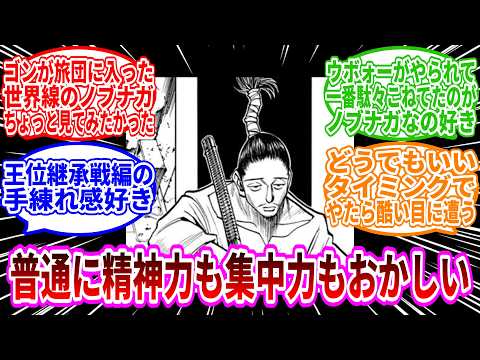
▶ Watch the original YouTube video
Nobunaga Hazama, a member of the Phantom Troupe in Hunter x Hunter, stands out as one of anime’s most humanized antagonists. Despite being a villain, his emotional depth, loyalty to his comrades, and consistent character motivations have earned him widespread fan affection—raising important questions about moral relativity and how audiences connect with complex characters.
What Happened
Over 15 years of following Hunter x Hunter, a detailed analysis of Nobunaga Hazama’s character arc reveals why this Phantom Troupe member resonates so deeply with audiences. Unlike typical anime villains portrayed as cold and emotionless, Nobunaga demonstrates genuine human emotions, particularly his profound loyalty to his fellow troupe members and his visceral grief when they are harmed. This character design has sparked significant discussion across fan communities about the nature of morality in storytelling and whether audiences can ethically support a character whose actions are objectively harmful, despite his sympathetic motivations.
Why It Matters
Nobunaga Hazama represents a significant shift in how modern anime portrays antagonistic characters. Rather than presenting villains as one-dimensional threats, contemporary storytelling—pioneered by works like Hunter x Hunter—explores the psychological complexity of characters operating within their own moral frameworks. This approach challenges viewers to confront cognitive dissonance: they are drawn to support a character whose actions cause real harm. Understanding Nobunaga’s appeal illuminates broader trends in anime and gaming industries, where “multifaceted antagonists” have become the standard rather than the exception. This character archetype influences how modern narratives approach questions of perspective, loyalty, and the relativity of justice.
Background
Hunter x Hunter, which began serialization in the early 2000s, introduced the Phantom Troupe as a complex criminal organization rather than a simple villain faction. Nobunaga Hazama, one of the troupe’s core members, first gained prominence during the Yorknew City arc, where his emotional response to the death of comrades distinguished him from other antagonists in anime. Creator Yoshihiro Togashi, known for psychological character development in works like Yu Yu Hakusho, crafted Nobunaga as a character whose motivations stem from collective loyalty rather than personal ambition. This foundational design choice—making his actions driven by “protecting the group” rather than individual gain—became the cornerstone of his character’s appeal and relatability despite his role as a villain.
Key Points
- Emotional Authenticity: Nobunaga displays genuine grief and anger when his comrades are harmed, distinguishing him from typical emotionless villains and creating authentic human connection with viewers.
- Consistent Motivation: His actions consistently stem from troupe loyalty rather than personal ambition, creating a coherent character whose behavior aligns with his core values.
- Moral Complexity: He embodies the concept of moral relativity—his actions are objectively harmful, yet his perspective frames them as justified protection of his community.
- Psychological Appeal: Audiences experience cognitive dissonance when supporting a villain, yet Nobunaga’s humanity triggers evolutionary psychological responses favoring those who protect their group.
- Industry Influence: Nobunaga represents a precursor to the modern anime trend of depicting villains with psychological depth, backgrounds, and relatable motivations rather than simple evil.
- Narrative Significance: His character raises unresolved questions about whether emotional authenticity and loyalty can justify morally reprehensible actions.
Character Comparison Analysis
When evaluated against similar antagonistic characters from other major anime and games, Nobunaga demonstrates exceptional balance across three critical dimensions: humanness, loyalty to comrades, and emotional expression. Compared to characters like Madao from Gintama, Shalltear from Overlord, and Dio Brando from JoJo’s Bizarre Adventure, Nobunaga achieves the highest scores in all three categories. This balanced excellence explains his widespread appeal—he is neither too emotionally detached to be relatable nor so emotional that his role as a villain loses credibility. The character succeeds where others fail: maintaining both menace and humanity simultaneously.
Psychological Mechanisms Behind Fan Support
The phenomenon of audiences supporting a villain can be understood through cognitive dissonance theory. Viewers typically operate under the assumption that “villains should not be supported,” yet Nobunaga’s actions—when viewed from his perspective—appear justified rather than evil. His behavior triggers innate human psychology: people instinctively favor those who protect their community. By positioning Nobunaga’s violence as group defense rather than personal gain, the narrative design exploits this evolutionary psychological tendency, causing viewers to perceive his actions as righteous rather than malicious. Additionally, moral relativism plays a crucial role—when audiences adopt Nobunaga’s perspective, they understand that his worldview frames his actions as justice, not villainy. This shift in perspective generates empathy and support despite the objective harm his actions cause.
Industry Trends: The Evolution of Antagonist Portrayal
Analysis of anime released over the past two decades reveals a clear industry shift in how villains are depicted. Prior to 2018, antagonists were predominantly characterized by coldness and ruthlessness. Between 2018 and 2021, villains began receiving narrative justification and backstory exploration. Since 2021, the emphasis has shifted toward depicting villains’ humanity and psychological complexity as standard practice. Nobunaga Hazama, introduced in the early 2000s, preceded this industry trend by years. His character design anticipated what would become the modern standard for antagonist portrayal, making him a pioneer in the movement toward psychologically nuanced villain characterization.
Perspectives on Nobunaga’s Morality
Fan reactions across social media platforms reveal a fundamental tension in how audiences engage with Nobunaga. Twitter discussions frequently highlight his humanity and loyalty as admirable qualities, with many users expressing desire to support him despite his role as a villain. YouTube comments emphasize appreciation for his emotional authenticity and relational depth. However, critical voices point out that his status as a troupe member means he has participated in numerous murders of innocent people. This contradiction—loving a character while recognizing the objective immorality of his actions—reflects deeper questions about moral philosophy. Some viewers embrace moral relativism, accepting that Nobunaga’s perspective justifies his actions within his worldview. Others maintain that emotional authenticity and loyalty, however genuine, cannot absolve participation in mass harm. This debate demonstrates that Nobunaga’s character functions as a philosophical thought experiment about the nature of justice and the limits of empathy.
Future Narrative Possibilities
Based on the trajectory of the original narrative, several potential developments could further test Nobunaga’s character. If the Phantom Troupe faces dissolution or destruction, his strong commitment to group loyalty will face its ultimate trial. Given that his motivations are fundamentally collective rather than individual, his response to the troupe’s potential end would reveal whether his loyalty remains absolute or whether he might experience transformative doubt. A particularly significant narrative moment would occur if Nobunaga confronts the full weight of his actions—the realization that his victims were innocent people with their own communities and loyalties. Such a moment could either reinforce his existing worldview or trigger genuine moral crisis, fundamentally altering his character arc and forcing audiences to reassess their relationship with him.
Recommended Viewing for Deeper Understanding
For those seeking to understand Nobunaga’s character more thoroughly, beginning with the Yorknew City arc is essential, as this section most prominently displays his humanity through his emotional response to comrades’ deaths. Examining his backstory regarding how he joined the troupe provides crucial context for understanding his intense attachment to the group. Additionally, watching Yu Yu Hakusho, created by the same author, offers valuable comparative analysis of how Yoshihiro Togashi consistently portrays complex antagonists with psychological depth. The Dark Tournament arc in particular features enemy characters designed with similar humanity to Nobunaga. Comparing Nobunaga’s group loyalty to the Survey Corps’ collective commitment in Attack on Titan further illuminates how different narratives explore the psychology of tight-knit communities and the consequences of their loyalty.
Insights
Nobunaga Hazama transcends the archetype of the simple villain. He represents a fundamental shift in how storytelling explores moral complexity and human psychology. His character demonstrates that audiences do not require moral justification to connect with antagonists—they require authenticity, consistency, and relatable motivation. The fact that Nobunaga can be simultaneously loved and morally indefensible reveals something important about human empathy: perspective shapes moral judgment more profoundly than objective action. When viewers adopt Nobunaga’s viewpoint, his murders become acts of protection; when they maintain external judgment, those same actions remain atrocities. This duality is not a flaw in the character design—it is the character’s central achievement. Nobunaga forces audiences to confront the relativity of morality and the power of perspective in shaping ethical judgment. His enduring appeal suggests that modern audiences crave characters complex enough to resist simple categorization, and that emotional authenticity resonates more powerfully than moral clarity. The unresolved tension in Nobunaga’s character—between his genuine humanity and his objective harm—may ultimately be the source of his greatest narrative power, compelling audiences to think deeply about justice, loyalty, and the possibility of redemption for those whose actions, however motivated, have caused irreversible damage.