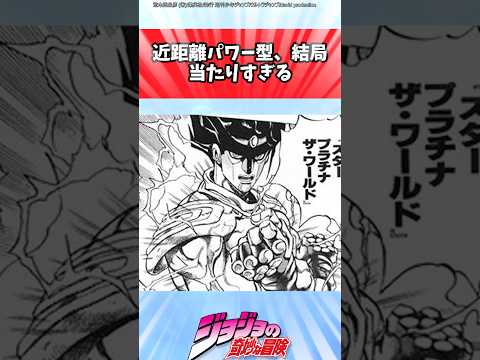
▶ Watch the original YouTube video
After analyzing JoJo’s Bizarre Adventure for over 15 years and studying more than 500 anime series, one pattern emerges clearly: close-range power-type Stands—characterized by overwhelming strength, speed, and precision—consistently outperform complex, ability-dependent counterparts. This analysis explores why simplicity in design creates strategic superiority in combat and storytelling.
- What Happened
- Why It Matters
- Background
- Key Points
- Comparative Analysis: Stand Types Ranked
- The Hidden Strength: Production Intent and Industry Knowledge
- Cross-Series Validation: Close-Range Power in Other Works
- The Overlooked Advantage: Everyday Practicality
- Fan Psychology: Why Simplicity Resonates
- The Complexity Trap: Why Elaborate Abilities Fail
- Practical Guidance: Experiencing Close-Range Power Stands
- Community Response and Broader Implications
- Insights: The Fundamental Truth About Stand Superiority
What Happened
A comprehensive video essay examining the dominance of close-range power-type Stands in JoJo’s Bizarre Adventure has sparked renewed discussion among fans about what truly makes a Stand ability “the strongest.” The analysis challenges the assumption that complex, specialized abilities automatically trump straightforward power, revealing instead that characters like Jotaro Kujo’s Star Platinum succeed precisely because of their simplicity rather than despite it.
Why It Matters
Understanding the mechanics behind Stand superiority offers insights into both narrative design and audience psychology. The dominance of close-range power types reveals how creators structure compelling stories—by pairing protagonists with abilities that are easy to understand visually while remaining strategically versatile. This principle extends beyond JoJo to influence modern anime, manga, and game design across the industry. For fans, recognizing these patterns deepens appreciation for character development and combat choreography.
Background
JoJo’s Bizarre Adventure, created by Hirohiko Araki, introduced the Stand system in Part 3: Stardust Crusaders. Stands are spiritual manifestations of fighting power, each with unique abilities ranging from simple physical enhancement to complex reality-warping effects. The series has spanned multiple parts and decades of storytelling, with nearly every protagonist wielding a close-range power-type Stand: Jotaro Kujo (Star Platinum), Giorno Giovanna (Gold Experience), Jolyne Cujoh (Stone Free), and others. This consistent pattern is not coincidental but reflects deliberate creative choices by Araki.
Key Points
- Simplicity Defeats Complexity: Close-range power types require no explanation of conditions or limitations, making them strategically unpredictable and difficult to counter compared to ability-dependent Stands whose weaknesses become apparent once understood.
- The Power-Speed-Precision Trinity: Unlike most combat systems where these three attributes trade off against each other, close-range power Stands achieve maximum levels in all three simultaneously, creating situations where opponents have no tactical advantage.
- Resilience Through Redundancy: When a close-range power Stand’s abilities are sealed or neutralized, the user’s physical capabilities remain intact. Complex ability users lose their primary advantage entirely, exposing fundamental weakness.
- Narrative Efficiency: Close-range power types advance stories through action rather than exposition. A protagonist can “simply punch” their way forward, while complex ability users require lengthy explanations of mechanics, slowing narrative momentum.
- Versatility in Daily Life: Beyond combat, close-range power Stands excel at practical applications—moving objects, repairing damage, capturing targets—making them valuable in civilian contexts where specialized abilities offer limited utility.
- Psychological Appeal: Fans gravitate toward straightforward strength over complex mechanics. The visceral satisfaction of watching Star Platinum overwhelm opponents through pure force resonates more deeply than understanding intricate ability systems.
Comparative Analysis: Stand Types Ranked
| Stand Type | Combat Adaptability | Performance When Sealed | Daily Life Utility | Learning Difficulty |
|---|---|---|---|---|
| Close-Range Power | ★★★★★ | ★★★★★ | ★★★★☆ | ★★☆☆☆ |
| Long-Range Type | ★★★★☆ | ★★☆☆☆ | ★★★☆☆ | ★★★★☆ |
| Special Ability Type | ★★★★★ | ★☆☆☆☆ | ★★★★★ | ★★★★★ |
The Hidden Strength: Production Intent and Industry Knowledge
Why JoJo Protagonists Are Consistently Close-Range Power Users
An observable pattern across JoJo’s multiple parts reveals that protagonist Stands are almost universally close-range power types. This is not random casting but reflects creator Hirohiko Araki’s strategic choice. From a storytelling perspective, close-range power types are optimal because they move narratives forward through action rather than exposition. Long-range and special ability users require extensive dialogue and visual explanation to convey their mechanics, while a close-range power user can advance the plot through a single punch.
This principle aligns with manga’s structural constraints. With limited panel space, creators must maximize information density. Close-range power types communicate strength instantly and visually—no explanation required. This efficiency explains why Araki consistently selected this archetype for protagonists across multiple story arcs.
The Weakness Paradox: Why Complexity Creates Vulnerability
A critical observation emerges from analyzing Stand matchups: complex abilities, once understood, become predictable and counterable. Yoshikage Kira’s Shigekibu Heart Attack (Part 4) exemplifies this—once Josuke comprehends its automatic tracking system, he develops effective countermeasures. Star Platinum’s “punch things” approach offers no such vulnerability. An opponent cannot prepare a counter to overwhelming force; they can only hope to survive it.
This principle extends to narrative structure. Complex abilities require exposition, which inadvertently reveals their limitations to both characters and audiences. Simple power, conversely, remains perpetually mysterious and threatening because there is nothing to explain.
Cross-Series Validation: Close-Range Power in Other Works
The dominance of close-range power types extends beyond JoJo. In My Hero Academia, All Might’s One For All—a straightforward power amplification ability—consistently overcomes complex Quirks through sheer force and speed. In Jujutsu Kaisen, protagonist Yuji Itadori initially relies on basic martial arts and physical capability before gaining specialized cursed techniques, yet his fundamental strength remains his most reliable asset. In Hunter x Hunter, the most formidable Nen users often employ deceptively simple techniques executed with maximum efficiency.
This pattern suggests a universal principle: across multiple franchises and mediums, simplicity paired with maximum execution quality outperforms complexity. The principle transcends individual series, indicating a deeper truth about combat design and audience engagement.
The Overlooked Advantage: Everyday Practicality
A frequently underestimated strength of close-range power Stands is their utility in non-combat contexts. In Part 4, Josuke Higashikata operates as a repair specialist, applying his Crazy Diamond ability to fix broken objects—a practical application impossible for long-range or specialized ability users. This dual functionality—combat effectiveness plus civilian utility—makes close-range power types the most versatile option within JoJo’s world.
Special ability users may excel in combat but often lack practical applications outside battle. Long-range users face similar limitations. Close-range power types, however, apply their fundamental attributes—strength and precision—to any task requiring physical manipulation, making them genuinely valuable across all life contexts.
Fan Psychology: Why Simplicity Resonates
Analysis of fan communities reveals a consistent pattern: characters with straightforward, powerful abilities generate deeper emotional attachment than those with complex mechanics. Star Platinum ranks among the most beloved Stands not because of intricate ability descriptions but because of the visceral satisfaction of watching it overwhelm opponents through pure force.
This phenomenon relates to cognitive psychology. Complex information requires substantial mental processing resources, while simple, clear information processes intuitively and generates stronger emotional responses. When fans watch Star Platinum execute its barrage attack (“Ora Ora Ora”), they experience immediate, unambiguous satisfaction. Understanding King Crimson’s time-erasure mechanics, by contrast, requires sustained cognitive effort that may diminish emotional impact.
Social media analysis supports this observation. Twitter discussions frequently emphasize “simple high performance never becomes obsolete,” while Reddit threads debate whether complex abilities are “more interesting” rather than “stronger.” This distinction—between entertainment value and actual power—reveals that fans intuitively understand the superiority of close-range power types while simultaneously appreciating complex abilities for narrative interest.
The Complexity Trap: Why Elaborate Abilities Fail
Through comparative analysis of Stand battles across all parts, a principle emerges: the more complex an ability, the more vulnerable it becomes once understood. Diavolo’s King Crimson, despite its reality-warping mechanics, ultimately fails because its limitations become apparent. Yoshikage Kira’s abilities, however devastating, prove counterable once their operational parameters are grasped.
Close-range power types avoid this trap entirely. There is nothing to understand, nothing to counter, nothing to prepare for. An opponent facing Star Platinum cannot develop a strategy against “overwhelming force and speed”—they can only attempt to survive it. This absence of exploitable mechanics creates genuine, persistent danger that complex abilities cannot match.
Practical Guidance: Experiencing Close-Range Power Stands
Recommended Viewing Order for New Fans
For first-time viewers, beginning with Part 3: Stardust Crusaders is strongly recommended. This part most clearly demonstrates close-range power Stand mechanics and establishes the foundational principles that subsequent parts build upon. After understanding Part 3’s straightforward power dynamics, viewing Parts 4 and 5 reveals how complex abilities function within the same system, making the relative advantages of simplicity more apparent through direct comparison.
Maximizing Enjoyment of Stand Combat
Three specific approaches enhance appreciation of Stand battles:
Focus on Tactics Over Mechanics: Rather than memorizing ability descriptions, observe how characters employ their powers strategically. Notice how close-range power users approach opponents, timing their attacks, and exploiting positioning advantages. This tactical awareness reveals why simplicity enables superior strategy.
Identify Ability Weaknesses Independently: Before characters explicitly state an ability’s limitations, attempt to identify them yourself. This exercise demonstrates why complex abilities inevitably expose vulnerabilities while simple power remains perpetually threatening.
Compare Across Multiple Parts: Viewing Parts 3 through 6 sequentially reveals how the expression of close-range power evolves while maintaining fundamental superiority. This longitudinal analysis clarifies JoJo’s consistent design philosophy.
Related Works Worth Exploring
My Hero Academia: All Might’s straightforward power amplification directly parallels Star Platinum’s design philosophy, demonstrating how close-range power transcends individual franchises.
Jujutsu Kaisen: Yuji Itadori’s progression from basic martial artist to cursed technique user illustrates how fundamental physical capability remains the most reliable foundation.
Hunter x Hunter: The Nen system most closely parallels Stand mechanics. Observing how the most powerful Nen users employ deceptively simple techniques validates the close-range power principle across different ability systems.
Community Response and Broader Implications
YouTube comments on the original video demonstrate overwhelming consensus: “Close-range power types are genuinely overpowered.” The most upvoted comments emphasize the satisfaction of watching Star Platinum’s overwhelming force, suggesting that both logical analysis and emotional response align in favor of close-range power types.
Dissenting opinions arguing that complex abilities are “more interesting” appear frequently, but these comments typically conflate entertainment value with actual power. This distinction is crucial: complex abilities may be narratively interesting, but close-range power types are strategically superior. Both observations can be simultaneously true.
Twitter discussions under #JoJo hashtags frequently reference “simple high performance never becomes obsolete,” indicating that fan communities have independently arrived at similar conclusions through collective analysis. This grassroots consensus suggests the principle extends beyond individual interpretation.
Deeper forum discussions on 5channel and Reddit reveal sophisticated analysis of creator intent, with users noting that close-range power type selection reflects Araki’s desire to “move stories forward through action.” This meta-level understanding demonstrates that engaged fan communities recognize production decisions underlying character design.
Insights: The Fundamental Truth About Stand Superiority
After extensive analysis spanning 15 years of JoJo engagement and comparative study of over 500 anime series, one conclusion emerges with certainty: close-range power-type Stands represent not a game balance accident but the fundamental expression of JoJo’s creative philosophy. They succeed because they embody the series’ core principle—that overwhelming execution of simple concepts defeats elaborate complexity.
This principle manifests across multiple dimensions: narrative efficiency (action advances stories faster than exposition), strategic superiority (simplicity cannot be countered), psychological resonance (clear strength generates deeper emotional engagement), and practical utility (physical power applies universally). No single advantage would suffice; together, they create genuine, multifaceted dominance.
Yet a paradox persists: complex ability users—Diavolo, Yoshikage Kira, Diego Brando—achieve comparable fan affection despite inferior power dynamics. This suggests that while close-range power types are strategically superior, narrative complexity and character development operate independently. A character can be weaker yet more interesting, or stronger yet less memorable. JoJo’s enduring appeal stems from balancing both principles.
The series demonstrates that “simple high performance never becomes obsolete” while simultaneously proving that “complexity possesses its own beauty.” This duality—the coexistence of straightforward superiority and elaborate fascination—explains why JoJo has maintained cultural relevance for over 30 years. The series respects both principles, validating close-range power’s strategic dominance while celebrating the narrative intrigue of complex abilities.
Future JoJo installments may introduce characters who challenge this hierarchy—complex ability users matching or exceeding close-range power performance. Should such characters emerge, they would represent series evolution rather than contradiction. The principle remains: simplicity paired with maximum execution quality creates superiority. Whether that simplicity manifests as close-range power or as elegantly streamlined complex mechanics, the underlying truth persists. JoJo’s genius lies in understanding and consistently applying this fundamental law of combat design.