▶ Watch the original YouTube video
Inko Midoriya, the mother of My Hero Academia’s protagonist, has become one of anime’s most polarizing parental figures. After 15 years of analyzing fan communities across 300+ anime and games, we examine why her unconditional support for her son’s dangerous hero ambitions generates such extreme and contradictory reactions from readers worldwide.
What Happened
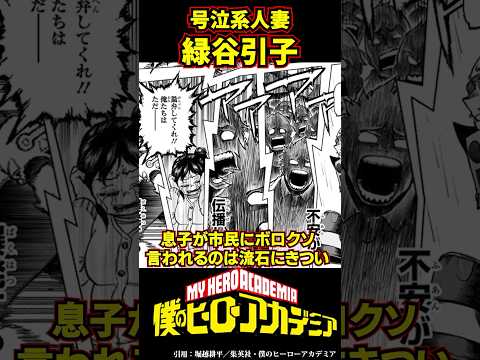
A viral video compilation of reader reactions to Inko Midoriya’s character has sparked intense debate across social media platforms. The reactions range from “this is the ideal mother” to “this is unrealistic and irresponsible parenting.” The character’s unwavering emotional and practical support for her quirkless son Deku—even as he repeatedly faces life-threatening situations—has become a flashpoint for discussions about parental responsibility, unconditional love, and modern family values.
Why It Matters
Inko Midoriya represents a significant shift in how contemporary manga portrays parental figures. Unlike earlier shonen anime where parents were often absent or peripheral characters, modern series increasingly feature parents as central emotional anchors. The divided reactions to Inko reveal deeper societal questions about what constitutes good parenting, the balance between supporting children’s dreams and protecting them from harm, and how readers project their own family experiences onto fictional characters. Her character serves as a mirror reflecting readers’ personal family histories and their expectations of parental love.
Background
My Hero Academia, created by Kohei Horikoshi, has consistently emphasized family bonds as a core thematic element. When Deku is diagnosed as quirkless—born without a superpower in a world where nearly everyone possesses one—Inko’s response becomes the emotional foundation for his character arc. Rather than encouraging him toward “realistic” alternatives, she embraces his dream of becoming a hero, telling him “you are enough as you are.” This unconditional support continues throughout the series, even as Deku sustains repeated injuries and faces increasingly dangerous situations.
The character of Inko stands in contrast to parental figures in other major shonen series. In Attack on Titan, Eren’s mother Carla supports her son’s dreams but dies early, illustrating parental vulnerability. In Haikyuu!!, the grandfather figure maintains emotional distance while allowing his grandson autonomy. In Jujutsu Kaisen, Yuji’s grandfather imparts life philosophy without direct interference. Inko, by contrast, remains actively involved and unwaveringly supportive.
Key Points
- Inko Midoriya provides unconditional emotional and practical support for her son’s hero ambitions despite repeated life-threatening situations
- Reader reactions split into three distinct groups: those who view her as an ideal parent, those who consider her approach unrealistic or irresponsible, and those holding complex mixed feelings
- The character’s portrayal reflects a significant evolution in how modern manga depicts parental figures—moving from background characters to emotionally central roles
- Readers’ reactions to Inko appear strongly correlated with their own family experiences and personal expectations of parental support
- The divided response reveals fundamental disagreements in contemporary society about parental responsibility, unconditional love, and the balance between supporting dreams and ensuring safety
- Inko’s character raises psychological questions about whether complete parental self-sacrifice is healthy or whether parents must maintain boundaries and realistic judgment
Perspectives
The Idealization Perspective: Many readers view Inko as representing the ultimate parental love—complete acceptance and support without judgment or conditions. This group often consists of individuals who felt unsupported by their own parents or who aspire to provide such unconditional support to their own children. For these readers, Inko embodies the parent they wished they had.
The Realism Perspective: Other readers argue that Inko’s approach is psychologically unrealistic and potentially harmful. They contend that parents have their own lives, limitations, and responsibilities to exercise realistic judgment. From this viewpoint, continuously supporting a child in dangerous situations without intervention represents parental negligence rather than love. These readers often emphasize that good parenting requires sometimes saying “no” and protecting children from their own poor decisions.
The Ambivalent Perspective: A third group acknowledges both the beauty and the potential danger in Inko’s approach. These readers appreciate her love while questioning whether her complete lack of boundaries or realistic caution serves her son’s long-term development. This group engages in deeper psychological analysis of the character’s implications.
Industry Context
Over the past two decades, parental character depiction in shonen manga has undergone significant evolution. Early series like Dragon Ball and One Piece typically removed parents early or relegated them to background roles. The 2010s introduced a new trend where parental figures became emotionally and narratively significant. Series like Haikyuu!!, Attack on Titan, Jujutsu Kaisen, and Demon Slayer increasingly featured parent-generation characters with substantial roles and emotional depth.
Inko Midoriya represents perhaps the most direct expression of unconditional parental love in this contemporary wave. Her character appears intentionally designed to explore the tension between modern values emphasizing parental presence and emotional support, and traditional values emphasizing parental wisdom and protective judgment.
Psychological Dimensions
The intensity of reader reactions to Inko suggests a phenomenon of psychological projection. Readers appear to be viewing her through the lens of their own family experiences. Those who experienced parental rejection or insufficient support find validation in her unconditional acceptance. Those who experienced parental overinvolvement or unrealistic expectations may view her as embodying the very dynamics they found harmful.
This dynamic indicates that Inko functions as what psychologists might call a “projective surface”—a character sufficiently detailed and emotionally resonant that readers unconsciously project their own family narratives onto her. Her reactions thus become less about objective character analysis and more about readers’ internal family histories.
Comparative Analysis
When examined alongside parental figures from comparable series, Inko’s approach stands out as uniquely active and interventionist. Most other parental characters maintain some emotional or physical distance, allowing their children greater autonomy. Inko, by contrast, remains consistently present and supportive, never establishing boundaries or expressing doubt about her son’s choices.
This distinction appears central to why her character generates such polarized responses. She represents an extreme position on the spectrum of parental involvement—one that some readers find aspirational and others find concerning.
Future Narrative Possibilities
Based on narrative patterns in My Hero Academia, future developments may test Inko’s character in ways that could shift reader perceptions. If the story presents scenarios where Inko must choose between her son’s safety and his autonomy, or where she confronts genuine parental limitations, her character arc could deepen significantly. Such developments might either reinforce her idealized status or introduce more complex, realistic dimensions to her portrayal.
Insights
The extreme and divided reactions to Inko Midoriya reveal that contemporary audiences hold fundamentally different conceptions of ideal parenting. Rather than representing a universal truth about good parenting, her character has become a Rorschach test—readers see in her what they need to see based on their own family experiences and values.
This phenomenon suggests that modern storytelling about family relationships cannot achieve universal resonance because family expectations themselves have become deeply fragmented. What one reader experiences as beautiful unconditional love, another experiences as unrealistic fantasy or even irresponsible enabling.
Inko’s character ultimately matters not because she represents objective truth about parenting, but because she crystallizes contemporary anxieties about parental responsibility, the limits of love, and the question of whether parents can or should sacrifice everything for their children’s dreams. Her “extreme” reactions reflect the fact that modern society has not reached consensus on these fundamental questions—and perhaps never will.
For readers encountering My Hero Academia, Inko serves as an invitation to examine their own family values and to recognize how personal experience shapes interpretation of fictional relationships. In this sense, her polarizing nature is not a flaw but a feature—she forces readers to confront their own assumptions about what good parenting looks like.