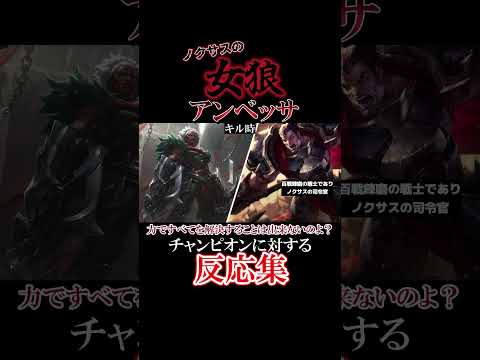
▶ Watch the original YouTube video
How Ambessa Reacts to Noxus: League of Legends’ Masterclass in Character Design
League of Legends demonstrates sophisticated character design through Ambessa’s detailed reaction lines to Noxus faction members. These interactions reveal how modern game developers use character-to-character dialogue to deepen narrative immersion and player engagement, setting a new industry standard for interactive storytelling.
What Happened
A video compilation showcasing Ambessa’s reaction lines to Noxus faction characters in League of Legends has highlighted the depth of character interaction design in Riot Games’ flagship title. The video demonstrates how Ambessa, a Demacian noble, responds differently to multiple Noxus champions including Draven, Swain, and Darius—each reaction reflecting her character’s background and emotional relationship to these enemies.
Why It Matters
This level of character-to-character interaction represents a significant evolution in game design philosophy. Rather than treating dialogue as incidental flavor text, League of Legends invests heavily in creating meaningful character moments that reinforce narrative stakes and player emotional investment. This approach has become increasingly important as gaming audiences mature and seek deeper storytelling experiences alongside competitive gameplay. The practice also demonstrates how interactive media can achieve character expression that rivals traditional narrative media like anime and film.
Background
Ambessa is a champion from Demacia, a nation locked in historical conflict with the Noxian Empire—one of Runeterra’s most powerful and dangerous factions. Her family has suffered greatly from Noxian aggression, creating deep personal motivation for her opposition to Noxian champions. League of Legends currently features over 170 playable characters, but not all receive equal dialogue interaction depth. Characters with significant narrative connections to specific factions, like Ambessa’s opposition to Noxus, receive more extensive reaction lines. This design choice reflects a deliberate philosophy: character interaction richness correlates directly with narrative importance and emotional investment.
Key Points
- Ambessa possesses individual reaction lines for multiple Noxus faction champions, each reflecting different emotional nuances rather than generic hostility
- These reactions are grounded in Ambessa’s character background as a Demacian noble with family trauma from Noxian conflict
- The Noxus faction serves as a central antagonistic force in League of Legends’ world-building, making character reactions to them narratively significant
- Character interaction depth varies across the roster based on narrative relevance and emotional stakes, creating a tiered design system
- This approach to character dialogue significantly enhances player immersion and emotional connection to champions
- The practice represents a broader industry trend toward prioritizing character-driven storytelling in live-service games
Character Interaction Design Philosophy
League of Legends distinguishes itself from other MOBA titles through its emphasis on character-to-character interactions. Competitors like Defense of the Ancients, Heroes of Newerth, and even early iterations of Dota 2 lack comparable dialogue systems. Riot Games appears to follow three core design principles when creating reaction lines:
Narrative Relevance: Characters receive more extensive interactions when they share direct story connections. Ambessa and Noxus exemplify this—their conflict is central to the Demacia storyline.
Emotional Depth: The intensity of a character’s emotional investment in their counterpart determines dialogue richness. Ambessa’s feelings toward Noxus run deep, justifying extensive reaction content.
Player Experience Impact: Dialogue must resonate emotionally with players, creating satisfying moments that reward familiarity with character lore. Ambessa’s Noxus reactions deliver this satisfaction through authentic emotional expression.
Comparative Character Interaction Analysis
Not all League of Legends champions receive equal dialogue treatment. Garen, another Demacian character, has extensive reactions due to his role as a soldier opposing multiple enemy factions. Akali has moderate interaction depth because her conflicts are more limited in scope. Luxanna (Lux) receives fewer faction-specific reactions despite her Demacian heritage, suggesting that individual character arcs matter as much as faction affiliation. This variation demonstrates that Riot Games makes deliberate, case-by-case decisions about dialogue investment based on narrative architecture.
Industry Trends and Broader Context
Over the past five years, character interaction has emerged as a core design priority in the gaming industry. This represents a significant shift from earlier eras when graphics and mechanical systems dominated development focus. Several factors drive this change: games increasingly function as narrative experiences rather than pure entertainment; player demographics have broadened to include audiences seeking deeper storytelling; and long-term engagement in live-service games depends heavily on character attachment and emotional investment.
League of Legends stands at the forefront of this trend. The game’s eight-year evolution has consistently prioritized character depth, making it a benchmark for how interactive media can achieve sophisticated character expression. This commitment extends beyond dialogue to include character cinematics, story events, and lore updates that continuously develop champion relationships and narrative arcs.
Community Reception
Player response across social platforms has been overwhelmingly positive. Twitter users frequently praise the emotional authenticity of Ambessa’s reaction lines, with many citing character interaction depth as a primary reason for sustained engagement with League of Legends. Reddit discussions in r/leagueoflegends highlight appreciation for Riot Games’ voice acting investment, with some commenters suggesting other studios should adopt similar practices. Constructive criticism focuses on the incompleteness of the system—not all character pairs have reaction lines—which paradoxically demonstrates how highly players value this feature. The demand for more interaction content indicates that players recognize and reward this design philosophy.
Future Narrative Possibilities
Based on the depth and emotional range of Ambessa’s Noxus reactions, several narrative developments appear likely. First, her character background will probably receive further exploration through upcoming story updates, as the Demacia-Noxus conflict remains central to League of Legends’ overarching narrative. Second, direct character interactions between Ambessa and major Noxus figures like Swain or Draven may be featured in future story events, reflecting Riot Games’ increasing tendency to center narrative around character-to-character dynamics. Third, Ambessa’s emotional arc may evolve from straightforward antagonism toward Noxus into more complex feelings, mirroring broader storytelling trends in contemporary media that complicate protagonist-antagonist relationships.
Practical Recommendations for Players
Explore Character Lore: League of Legends’ official website provides detailed backstories for every champion. Understanding Ambessa’s Demacian nobility, family history, and personal stakes against Noxus deepens appreciation for her reaction lines.
Listen Actively During Gameplay: When Ambessa faces Noxus champions in matches, pay attention to her dialogue. These lines function as character development tools, not mere sound effects, offering insight into her psychology and motivations.
Play Related Champions: Experiencing Noxus champions like Swain, Draven, and Darius from their perspective creates a more complete understanding of the conflict. This multi-perspective approach significantly enhances narrative immersion.
Engage with Community Discussion: League of Legends communities on Reddit, Twitter, and regional forums actively discuss character interactions. Participating in these conversations reveals how other players interpret character relationships and story implications.
Insights
Ambessa’s Noxus reaction lines represent more than voice acting—they exemplify a fundamental shift in how games approach character development. By treating dialogue as a primary narrative tool rather than supplementary content, League of Legends demonstrates that interactive media can achieve character expression rivaling traditional storytelling formats. The system works because it respects player intelligence, rewarding those who engage with lore while remaining accessible to casual players.
The broader implication is that character depth drives long-term engagement in live-service games. Players don’t merely want mechanical challenge; they want emotional connection to the characters they control. League of Legends’ investment in character interaction creates a feedback loop where narrative investment increases gameplay satisfaction, which in turn encourages deeper lore engagement.
However, this approach requires careful balance. Character-driven design must never compromise competitive integrity or mechanical clarity. League of Legends succeeds because it maintains this balance—narrative sophistication coexists with rigorous game balance and competitive viability. This achievement suggests that the false dichotomy between “story games” and “competitive games” is unnecessary; the two can reinforce each other when designed thoughtfully.
Looking forward, the industry should recognize that character interaction systems represent a new standard for ambitious game design. As player expectations continue rising, developers who invest in meaningful character-to-character dialogue will differentiate themselves in increasingly crowded markets. League of Legends has set a benchmark that other studios would be wise to study and adapt to their own design philosophies.