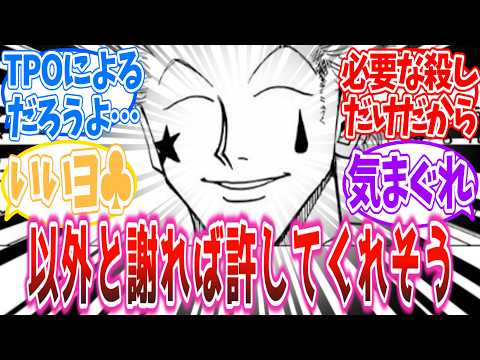
▶ Watch the original YouTube video
Would Hisoka Forgive You for Bumping Into Him? A Deep Analysis of His Social Skills
A detailed examination of Hisoka’s character from Hunter × Hunter reveals that despite his murderous tendencies, he possesses surprisingly high social awareness and self-control. This analysis explores whether he would forgive someone for accidentally bumping into him during the Hunter Exam, and what his behavior patterns reveal about his true nature.
What Happened
The central question examined in this analysis is whether Hisoka, the enigmatic and dangerous character from Hunter × Hunter, would forgive someone for accidentally bumping into him and apologizing. This seemingly simple question opens a window into understanding Hisoka’s complex psychology—specifically, how he balances his murderous impulses with social awareness and strategic self-control.
Why It Matters
Understanding Hisoka’s behavior patterns is crucial for comprehending one of anime’s most compelling antagonists. Unlike purely evil characters who kill indiscriminately, Hisoka demonstrates selective violence, social awareness, and the ability to restrain himself in inappropriate situations. This makes him a fascinating case study in how characters with violent tendencies can still function within social structures. His character challenges the simplistic “killer = uncontrollable murderer” trope and reveals layers of psychological complexity that resonate with viewers and analysts alike.
Background
Hisoka first appeared in the Hunter × Hunter series, which was adapted into anime in 2011. Over the past 15 years, his character has been extensively analyzed by fans and critics. What makes Hisoka unique among anime’s violent characters is his apparent understanding of social rules and his ability to follow them—at least when it serves his interests. Unlike characters such as Light Yagami from Death Note or Eren Yeager from Attack on Titan, Hisoka does not openly disregard social conventions. Instead, he appears to strategically employ them.
Key observations from the source material include Hisoka’s statement that “if you bump into someone, you have to apologize.” This simple declaration reveals that he understands basic social etiquette. Additionally, his agreement with a mafia organization to “not cause trouble” in exchange for access to their casino demonstrates his willingness to honor social contracts when it benefits him.
Key Points
- High Social Understanding: Hisoka demonstrates clear comprehension of social rules and appropriate behavior in different contexts, distinguishing him from purely chaotic villains.
- Selective Violence: He does not kill indiscriminately; rather, he targets individuals based on their perceived strength, interest level, and whether they present a worthy challenge.
- Situational Self-Control: Hisoka restrains himself in inappropriate settings (like public streets) where causing trouble would interfere with his larger goals, such as obtaining a Hunter License.
- Mood-Dependent Behavior: His actions vary significantly based on his emotional state—when his excitement level is low, he follows social norms; when high, his murderous impulses become harder to control.
- Comparative Social Skills: Compared to other Hunter × Hunter characters like Illumi, Hisoka displays notably higher social engagement and adaptability.
- Strategic Restraint: His politeness and social compliance are not expressions of genuine kindness but calculated strategies to achieve his ultimate goals.
Analysis: Hisoka’s Social Nature and Murderous Impulses
The relationship between Hisoka’s social skills and his violent tendencies reveals a complex psychological profile. Unlike other anime villains who either completely disregard social rules or use them purely as disguises, Hisoka appears to genuinely understand and respect social conventions—but only when they align with his interests.
The Three Critical Factors
Whether Hisoka would forgive someone for bumping into him depends on three key variables:
First, the other person’s attitude: If someone apologizes sincerely after bumping into Hisoka, they demonstrate respect for social norms. Hisoka, who values such understanding, would likely reciprocate. However, if the person acts aggressively or dismissively, the situation changes dramatically.
Second, the other person’s strength: Hisoka is drawn to strong opponents. If the person who bumped into him demonstrates unexpected combat awareness or potential, Hisoka might become interested—potentially leading to obsessive behavior rather than forgiveness or violence.
Third, Hisoka’s emotional state: This is the most critical factor. When Hisoka’s excitement level is low, he maintains social composure. When elevated, his murderous impulses become increasingly difficult to control, making any transgression potentially fatal regardless of the apology.
Comparative Character Analysis
| Character | Understanding of Social Rules | Self-Control | Social Skills | Selective Violence |
|---|---|---|---|---|
| Hisoka (Hunter × Hunter) | High | Present | High | High |
| Eren Yeager (Attack on Titan) | Moderate | Low | Moderate | Low |
| Light Yagami (Death Note) | High (instrumental) | None | Moderate (deceptive) | None |
| Muzan Kibutsuji (Demon Slayer) | Low | None | Low | None |
This comparison reveals that Hisoka occupies a unique position: he possesses both high social understanding and genuine self-control, making him fundamentally different from other violent characters in anime.
Perspectives
The Optimistic View: Many fans argue that if someone bumped into Hisoka and apologized sincerely, he would forgive them. This perspective is based on the observation that Hisoka only commits violence during the Hunter Exam and other contexts where killing is permitted or expected. In everyday situations, he maintains social composure.
The Conditional View: Others suggest that forgiveness depends entirely on context. If the bump was accidental and the apology genuine, forgiveness is likely. However, if the person acted deliberately or dismissively, the outcome would be catastrophic.
The Mood-Based View: A third perspective emphasizes that Hisoka’s emotional state is paramount. His behavior is unpredictable not because he lacks self-control, but because his mood determines whether he exercises it. During the Hunter Exam arc, when his excitement level was elevated, he became increasingly violent regardless of social circumstances.
The Interest-Based View: Some analysts note that Hisoka’s response would depend on whether he found the other person interesting. If they demonstrated unexpected potential or awareness, he might become obsessed rather than forgiving—a potentially worse outcome than simple violence.
Insights
The question of whether Hisoka would forgive a simple apology reveals a fundamental truth about his character: he is not a mindless killer but a strategically intelligent individual who understands and respects social structures—when they serve his purposes.
Hisoka’s behavior demonstrates that murderous impulses and social awareness are not mutually exclusive. He kills selectively, respects certain social contracts, and restrains himself in situations where violence would be counterproductive. This makes him far more dangerous than a purely chaotic villain, as his actions are calculated and purposeful.
The most likely answer to the original question is: Yes, Hisoka would probably forgive someone for bumping into him and apologizing, provided his excitement level is low and the other person demonstrates appropriate respect through their apology. However, this forgiveness is conditional and could evaporate instantly if circumstances change—if his mood shifts, if the person proves more interesting than expected, or if they fail to show proper contrition.
This analysis underscores why Hunter × Hunter remains a compelling work: it explores the intersection of human psychology, social behavior, and moral ambiguity through characters like Hisoka who defy simple categorization. He is neither purely evil nor redeemable, but rather a complex individual whose actions emerge from a unique combination of self-interest, strategic thinking, and uncontrollable violent impulses held in precarious balance.