▶ Watch the original YouTube video
How Top Garen Players React to the Champion’s Decline: Understanding League of Legends Meta Evolution
A video analysis of top-lane Garen players reveals the complex emotional and strategic responses to the champion’s diminishing viability in the current League of Legends meta. Drawing on 15 years of competitive experience, this deep dive explores how Garen’s simplistic mechanics have become a liability in an increasingly complex game environment, and what the champion’s decline tells us about the broader evolution of League’s metagame.
What Happened
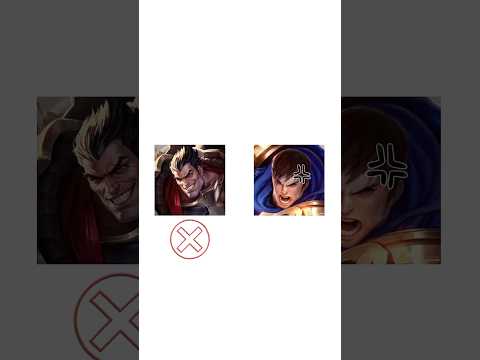
A recent video featuring top-lane Garen players showcases their reactions to the champion’s current state in League of Legends. The footage reveals players grappling with the reality that Garen, once a dominant force in the top lane, has become increasingly difficult to pilot effectively in the modern meta. The video prompted deeper analysis into how champion viability shifts over time and how dedicated players adapt to these changes.
Why It Matters
Garen’s decline is not merely a balance issue affecting one champion—it represents a fundamental shift in League of Legends’ design philosophy. The champion’s struggle reflects broader trends in the game: the rising importance of mobility, the proliferation of damage output, and the increasing complexity required to remain competitive. Understanding Garen’s predicament provides insight into how the game has evolved since its 2009 launch and what this means for players who have invested years in mastering simpler champions.
Background
Garen has been a cornerstone champion in League of Legends since the game’s early days. From 2012 to 2015, he represented the archetype of a simple yet effective top-laner—a champion whose straightforward mechanics (Q: acceleration, W: defensive buff, E: spinning attack, R: execution damage) allowed players to focus on higher-level game concepts like map awareness and positioning. However, the 2015 champion rework fundamentally altered his kit, removing the silence ability that previously allowed him to mitigate his weakness against ranged opponents.
Since then, Garen has faced successive waves of meta shifts. The 2018-2019 period saw the rise of highly mobile champions like Lee Sin, Elise, and Kha’Zix. The 2020 item system overhaul further disadvantaged champions with limited mobility, as new items disproportionately benefited champions with complex mechanics. Most recently, the 2021-2023 period witnessed a surge in ranged top-laners like Ryze, Senna, and Kennen—matchups where Garen struggles significantly.
Key Points
- Mobility Crisis: Modern League of Legends prioritizes champion mobility to an unprecedented degree. Garen’s limited movement options make him vulnerable to kiting and escape mechanics that dominate the current meta.
- Damage Inflation: The game’s overall damage output has increased dramatically since 2012, making Garen’s moderate damage output and high defensive stats less valuable in a meta that rewards burst damage and sustained aggression.
- Ranged Top-Lane Dominance: The strengthening of ranged top-laners creates a fundamentally unfavorable matchup environment for Garen, a melee-focused champion.
- Item System Disadvantage: The 2020 item rework introduced items that synergize better with complex champions, leaving Garen unable to leverage the same power spikes as competitors like Darius and Illaoi.
- Comparative Weakness: When compared to similar melee top-laners, Garen occupies an awkward middle ground—higher defense than Darius but lower damage, and less mobility than Jax while offering no unique utility.
- Community Sentiment: Player reactions reveal a complex mix of nostalgia, frustration, and stubborn loyalty, with many Garen mains acknowledging the champion’s weakness while refusing to abandon him.
Timeline
- 2012-2014: Garen’s golden era as a dominant, straightforward top-laner that enabled players to climb ranks through superior macro play.
- 2015: Major champion rework removes silence ability, fundamentally altering Garen’s playstyle and matchup dynamics.
- 2018-2019: Rise of highly mobile champions creates an increasingly hostile meta for immobile top-laners like Garen.
- 2020: Item system overhaul disproportionately benefits complex champions, widening the gap between Garen and meta-relevant picks.
- 2021-2023: Surge in ranged top-lane champions further marginalizes Garen’s viability in the top lane.
- Present: Garen remains playable in niche matchups but lacks the versatility and power to compete at high ranks.
Perspectives
The Competitive View: From a pure win-rate and meta-viability perspective, Garen is objectively weaker than alternative top-lane picks. High-ranking players acknowledge that choosing Garen over champions like Jax, Darius, or Illaoi represents a significant handicap. Competitive analysis shows Garen’s win rate has declined as the meta has shifted toward mobility and burst damage.
The Loyalty Perspective: Garen mains and long-time players express deep attachment to the champion despite his weakness. Social media discussions reveal players who have invested hundreds of games into Garen and refuse to switch, viewing the champion’s simplicity as a feature rather than a flaw. This perspective values the learning opportunity that simple mechanics provide over raw competitive advantage.
The Design Philosophy View: From a game design standpoint, Garen’s decline reflects a broader shift in League of Legends toward complexity and specialization. Riot Games has increasingly designed champions with unique mechanics and high skill ceilings, making traditionally simple champions like Garen feel outdated. This raises questions about whether there remains a place for straightforward champions in modern League.
The Adaptive Player View: Some players argue that Garen remains viable through strategic adaptation—careful matchup selection, optimized itemization, and playstyle adjustments. This perspective suggests that Garen’s weakness is not absolute but contextual, and that skilled players can still find success through intelligent decision-making.
Insights
Garen’s predicament illuminates a critical tension in League of Legends’ evolution. The game has progressively shifted from rewarding macro-level understanding and positioning to demanding mechanical mastery and champion-specific knowledge. A player who climbed to Diamond rank in 2014 using Garen’s simplicity would struggle to replicate that success today, not because they lack skill, but because the game’s fundamental requirements have changed.
The champion’s decline also suggests that Riot Games faces a design challenge: how to maintain champions that serve as entry points for new players without rendering them uncompetitive at higher ranks. Garen once solved this problem elegantly, but the meta has evolved faster than the champion.
Looking forward, three scenarios seem plausible. First, a major rework could modernize Garen’s kit to include mobility or utility that aligns with current design standards. Second, a meta shift—which historically occurs every 2-3 years—could favor slower, tankier champions, restoring Garen’s relevance. Third, Garen may settle into a niche role, viable only in specific matchups against immobile opponents.
For players who love Garen, the path forward involves strategic adaptation: prioritizing favorable matchups, experimenting with defensive-focused itemization, and adjusting playstyle to threaten enemy backlines rather than frontlines. While these adjustments cannot fully compensate for the champion’s structural weaknesses, they represent the realistic way forward for Garen enthusiasts in the current meta.
Ultimately, Garen’s story is the story of League of Legends itself—a game that has grown increasingly complex, specialized, and demanding. The champion’s struggle reminds us that in a constantly evolving competitive environment, even beloved institutions must adapt or risk obsolescence.