▶ Watch the original YouTube video
Why Chimera Ant Royal Guard Neferpitou’s “Fecal Matter” Insult Is the Perfect Character Evaluation in Hunter x Hunter
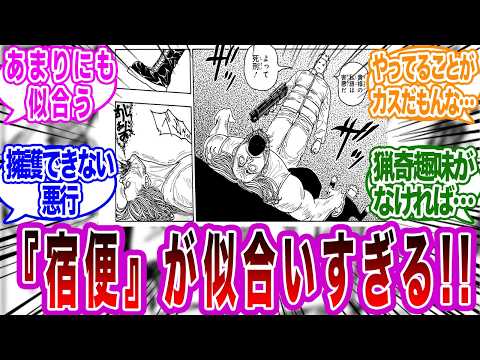
In a pivotal moment from Hunter x Hunter’s Chimera Ant arc, the royal guard Neferpitou refers to Prince Tseriedoni as “fecal matter”—a shockingly precise insult that has sparked widespread online discussion. This single phrase encapsulates the prince’s fundamental lack of purpose and social value, revealing creator Yoshihiro Togashi’s ruthless approach to character evaluation.
What Happened
In Hunter x Hunter’s Chimera Ant arc, the royal guard Neferpitou describes Prince Tseriedoni using the metaphor of “fecal matter”—waste that the body should expel. This dehumanizing yet logically precise insult has become a focal point of fan discussion, praised for its accuracy in capturing Tseriedoni’s essential nature as a character who consumes resources without contributing anything of value to the narrative or his society.
Why It Matters
This moment exemplifies Togashi’s sophisticated approach to character design and evaluation. Rather than assigning every character a redemptive arc or hidden depth, Togashi created Tseriedoni as a deliberate void—a royal figure stripped of purpose, agency, or growth potential. The insult matters because it represents a rare instance in manga where a character’s worthlessness is presented not as emotional judgment but as objective fact. This challenges contemporary storytelling conventions and raises uncomfortable questions about how society measures human value through productivity and social function.
Background
Tseriedoni is one of the five royal guards of the Chimera Ant King Meruem. Unlike his counterparts—Meruem (the supreme ruler), Shaiapouf (the strategist), and Neferpitou (the protector)—Tseriedoni possesses no defined role, strategic purpose, or meaningful objective. He exists purely to consume and indulge his desires. The Chimera Ant arc, spanning from 2010 onward, is widely regarded as Hunter x Hunter’s most philosophically complex section, exploring themes of power, humanity, and social hierarchy through the lens of these insect-human hybrids observing human civilization.
Key Points
- Neferpitou’s “fecal matter” description is logically precise rather than emotionally motivated, representing objective evaluation rather than insult
- Tseriedoni is unique among major characters in possessing no defined social role, purpose, or capacity for growth
- Online reactions emphasize the phrase’s accuracy, with fans noting it perfectly encapsulates the prince’s essential emptiness
- The insult reflects Togashi’s strict evaluation framework based on social utility and purposefulness
- Unlike other “useless” characters in anime, Tseriedoni is denied even the possibility of redemption or self-awareness
- The scene demonstrates the Chimera Ants’ capacity for precise human observation and ruthless categorization
Analysis of the Insult’s Precision
The metaphor of “fecal matter” functions on multiple levels. Literally, feces represent waste—material the body no longer needs and must expel. Applied to Tseriedoni, this suggests he is fundamentally unnecessary, a drain on resources who produces nothing of value. Unlike other royal guards who each serve distinct functions within the hierarchy, Tseriedoni serves no purpose. He does not strategize like Shaiapouf, protect like Neferpitou, or rule like Meruem. He merely consumes.
This evaluation framework appears consistent throughout Togashi’s character design. Each major character in Hunter x Hunter can be defined by their role: Gon is “the growing adventurer,” Killua is “the fugitive seeking freedom,” Leorio is “the dreamer pursuing medicine,” Kurapika is “the avenger with purpose.” Tseriedoni alone occupies a void—his role is the absence of role itself.
Online Reception and Fan Analysis
Twitter users responded with overwhelming agreement, with comments like “the fecal matter insult is absurdly accurate” and “Tseriedoni’s evaluation couldn’t be more precise” dominating discussion. On 5channel’s Hunter x Hunter forums, users noted that “this single phrase explains everything about Tseriedoni” and repeatedly emphasized that “he genuinely does nothing.”
YouTube commenters reported that the insult helped them finally understand “Tseriedoni’s fundamental worthlessness,” while others noted a darker implication: “If the Chimera Ants’ human observation is this accurate, how can humanity possibly win?” This observation highlights how the scene simultaneously entertains through dark humor while establishing the existential threat posed by the Chimera Ants’ superior analytical capabilities.
Comparative Character Analysis
Tseriedoni’s characterization differs significantly from other “useless” or powerless characters in anime. In Attack on Titan, King Fritz is a powerless royal figure, yet he possesses historical significance and past authority. In Code Geass, characters without social roles still possess emotional depth or personal relationships. In Demon Slayer, Muzan is driven by a clear objective—the pursuit of immortality—despite his moral emptiness.
Tseriedoni alone is denied even these minimal characteristics. He possesses no historical importance, no emotional relationships of substance, no driving objective beyond immediate gratification. His royal status makes this void more pronounced—he has access to power and resources yet lacks the will or capacity to utilize them meaningfully.
| Character | Status | Purpose | Agency | Narrative Impact |
|---|---|---|---|---|
| Tseriedoni | Royal Guard | Gratification only | Entirely passive | Negative impact only |
| King Fritz | Monarch | Order maintenance | Moderately passive | Historical significance |
| Muzan | Supreme ruler | Immortality pursuit | Highly active | Central to narrative |
Psychological Interpretation
The simultaneous experience of laughter and discomfort when encountering this insult reflects what psychology terms “cognitive dissonance.” The phrase achieves logical precision—Tseriedoni objectively lacks social function—while simultaneously delivering emotional cruelty through dehumanization. This contradiction creates psychological tension that the mind resolves through humor as a defense mechanism.
Neferpitou’s delivery amplifies this effect. She expresses no emotional anger; instead, she evaluates with clinical detachment. This “emotionless cruelty” mirrors the approach of Death Note’s Light Yagami, who categorizes humans as valuable or worthless without moral consideration. However, where Light’s judgment claims moral authority, Neferpitou’s judgment presents itself as pure observation—a distinction that makes it more unsettling.
Broader Implications for Character Design
Togashi’s creation of Tseriedoni represents a deliberate artistic choice with philosophical implications. The character embodies a worldview in which human value derives entirely from social utility and purposefulness. This framework reflects contemporary societal emphasis on productivity, efficiency, and measurable contribution—a critique presented through the Chimera Ants’ cold evaluation of human worth.
Unlike contemporary anime that often celebrate “useless” characters through comedy (such as Konosuba’s celebration of incompetence), Hunter x Hunter presents Tseriedoni’s uselessness as tragic and fundamental. He is not redeemable through effort or growth because he lacks the capacity for either. This represents a harsher philosophical stance than most modern storytelling permits.
Insights and Conclusions
The “fecal matter” insult succeeds because it achieves what few character evaluations accomplish: complete linguistic compression of a character’s essence. In a single metaphor, Togashi communicates Tseriedoni’s lack of purpose, his parasitic relationship to society, and his fundamental expendability. The phrase is simultaneously accurate and cruel, logical and dehumanizing.
This moment reveals Togashi’s uncompromising approach to character evaluation. He permits no sentimentality, no hidden depths, no possibility of redemption. Tseriedoni exists as a void—a character defined entirely by absence. In doing so, Togashi challenges readers to confront uncomfortable questions about how societies measure human worth and what happens to those deemed functionally unnecessary.
The widespread fan agreement that the insult is “accurate” suggests that audiences recognize the logic underlying Togashi’s harsh evaluation framework, even while finding it disturbing. This recognition—that a character can be simultaneously pitiful and worthless—represents one of Hunter x Hunter’s most philosophically challenging moments.