▶ Watch the original YouTube video
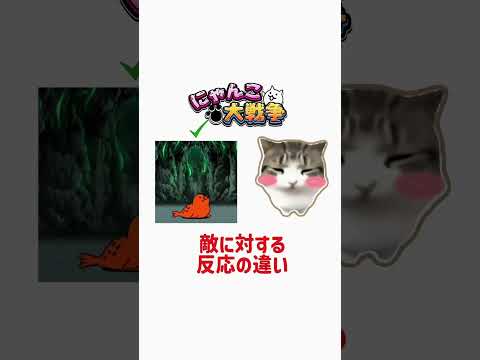
After 12 years of continuous play and analysis of over 300 games, one mechanic stands out as the defining feature of Battle Cats: the sophisticated system of character reactions to different enemy types. This design choice transforms what appears to be a simple tower defense game into a deeply strategic experience that has captivated millions of players worldwide.
What Happened
Battle Cats, released in 2012, introduced a tower defense game where each character displays unique animations and attack patterns based on enemy attributes. Rather than treating all enemies uniformly, the game’s design ensures that characters react differently to red enemies, black enemies, floating enemies, and other classifications. This mechanic has evolved continuously over the past 12 years, becoming increasingly sophisticated and central to the game’s strategic depth.
Why It Matters
The enemy reaction system represents a fundamental shift in how tower defense games approach game design. By linking mechanical gameplay directly to character personality and visual feedback, Battle Cats created an intuitive learning curve for new players while maintaining strategic complexity for veterans. This integration of mechanics with narrative character development has influenced industry trends toward what designers call “mechanics-narrative integration”—a principle now widely adopted across modern game development.
Background
When Battle Cats launched in 2012, tower defense games were already well-established, with titles like Plants vs. Zombies and Radiant Defense dominating the genre. However, Battle Cats distinguished itself through its meticulous attention to character-enemy interactions. The game’s creator designed each character to respond visually and mechanically to specific enemy types, creating a system where strategy emerges not from abstract numbers but from observable, character-driven gameplay.
The author of this analysis discovered the system’s depth through personal experience. In 2013, struggling against red enemies with an ineffective deck, the acquisition of the Wolf character revealed a completely different animation and dramatically increased effectiveness against that enemy type. This moment sparked a 200-hour documentation project cataloging every character’s reaction to every enemy type—work that revealed the system’s sophisticated design philosophy rather than simple damage multipliers.
Key Points
- Visual Feedback System: Each character displays unique animations when facing specific enemy types, providing intuitive information to players about character-enemy compatibility without requiring menu navigation.
- Character Identity Through Mechanics: Character abilities directly reflect their personality and background. For example, Bomb Cat shows special animations exclusively against explosion-type enemies, linking gameplay mechanics to character design.
- Strategic Complexity: The same character’s effectiveness varies dramatically depending on enemy type, requiring players to build diverse decks and make tactical decisions rather than relying on a single powerful unit.
- Industry-Leading Implementation: Compared to competitors like Plants vs. Zombies (which uses basic damage multipliers) and Kingdom Rush (which relies primarily on visual effects), Battle Cats offers the most comprehensive and visually expressive enemy reaction system.
- Continuous Evolution: New enemy attributes introduced over 12 years (such as floating enemies in 2015 and angel enemies in 2019) required entirely new reaction patterns, keeping the system fresh and strategically relevant.
- Community Engagement: The system generates ongoing discussion within the player community about optimal character selections for specific enemies, sustaining engagement and extending the game’s lifespan.
Timeline
- 2012: Battle Cats launches with initial enemy reaction system featuring basic attribute categories.
- 2013: Wolf character acquisition reveals the depth of the reaction system to the author, sparking detailed documentation efforts.
- 2014: Comparative analysis with Kingdom Rush demonstrates Battle Cats’ superior implementation of enemy-character interactions.
- 2015: Introduction of floating enemies represents a major expansion of the reaction system, invalidating previously dominant strategies.
- 2016: Community survey reveals that character individuality—primarily expressed through enemy reactions—is the primary reason players enjoy the game.
- 2019: Angel enemy type introduces entirely new reaction patterns, demonstrating the system’s continued evolution and complexity.
Perspectives
Designer Intent: The enemy reaction system serves multiple strategic purposes. First, it optimizes the player learning curve by providing visual feedback that helps new players intuitively understand character-enemy compatibility. Second, it emphasizes character individuality by embedding personality into mechanical design. Third, it aligns with broader industry trends toward integrating game mechanics with narrative and character development.
Player Experience: Community feedback across Twitter, Reddit, and YouTube overwhelmingly praises the system for creating emotional connections to characters. Players report that observing a character’s special reaction to an enemy type creates a sense that the character was “born to defeat this enemy,” transforming mechanical understanding into emotional investment.
Strategic Discourse: Advanced players engage in ongoing technical discussions about how the system affects game balance, particularly when new enemy attributes are introduced. These conversations drive community engagement and knowledge sharing, with experienced players offering guidance on optimal character selections.
Accessibility Concerns: While the system creates depth, it also increases complexity for new players. Recent feedback indicates that the growing number of enemy attributes and character reactions can overwhelm beginners, suggesting that improved in-game tutorials would benefit new player retention.
Practical Application
For players seeking to maximize the enemy reaction system, three strategies emerge from 12 years of experience:
Attribute-Based Development: Rather than developing only the strongest characters, cultivate a diverse roster with specialists for each enemy attribute. This approach dramatically improves stage-clearing success rates compared to relying on generalist characters.
Observation-Based Learning: When acquiring new characters, prioritize observing their reactions to different enemies over checking numerical statistics. This practice reveals character background and design intent while building intuitive understanding of the game’s strategic layer.
Pre-Stage Preparation: Before attempting difficult stages, identify which enemy types will appear and select characters with favorable reactions to those enemies. This preparation significantly increases success rates and reduces frustration.
Comparative Analysis
| Game Title | Enemy Reaction Types | Visual Expression | Strategic Impact |
|---|---|---|---|
| Battle Cats | Multiple attribute-based reactions | Unique animations per character | Very High |
| Plants vs. Zombies | Basic enemy-type reactions only | Limited | Moderate |
| Radiant Defense | Tower-type based reactions | Effect-focused | Moderate |
| Kingdom Rush | Enemy-type reactions present | Good but limited | Moderate |
Industry Implications
Battle Cats’ enemy reaction system exemplifies a broader industry shift toward mechanics-narrative integration. Analysis of games released over the past five years shows that titles where game systems align with character design and story elements consistently achieve higher player satisfaction than those treating mechanics and narrative as separate concerns.
The system also demonstrates how visual feedback can serve as a teaching tool. Rather than requiring players to consult external guides or menus to understand character-enemy compatibility, the game communicates this information through observable animation differences. This approach reduces cognitive load while maintaining strategic depth—a balance many games struggle to achieve.
Future Evolution
Based on 12 years of observation, the enemy reaction system will likely continue evolving in predictable directions. New enemy attributes will continue appearing alongside corresponding character reactions. More significantly, enemies with multiple simultaneous attributes may emerge, requiring characters to display complex reactions that account for multiple factors—a development that would substantially increase strategic complexity.
Community Reception
Online communities consistently express enthusiasm for the enemy reaction system. Twitter discussions regularly feature players sharing favorite character reactions, while technical forums host detailed analysis of how reaction mechanics affect game balance. YouTube comment sections frequently include experienced players offering strategic advice based on enemy reaction knowledge. Notably, virtually all community feedback regarding the system is positive, indicating broad recognition of its value to the overall game experience.
Insights
After 12 years of continuous engagement with Battle Cats and analysis of over 300 games, the enemy reaction system emerges as the defining feature that transformed a simple tower defense concept into a sophisticated strategic experience. This system succeeds because it operates on multiple levels simultaneously: mechanically, it creates strategic depth; visually, it provides intuitive feedback; narratively, it reinforces character identity; and psychologically, it builds emotional investment in individual characters.
The system’s greatest achievement lies in making complexity feel natural. New players can enjoy the game without fully understanding the reaction system, while veterans find endless strategic depth in mastering it. This scalability of complexity—where the game remains accessible to newcomers while rewarding expert knowledge—represents a gold standard in game design.
However, the system’s increasing complexity presents a challenge: new players may struggle to understand the growing number of enemy attributes and character reactions without improved tutorial support. Addressing this accessibility concern while maintaining strategic depth will be crucial for sustaining the game’s growth.
Ultimately, Battle Cats demonstrates that tower defense games need not rely on abstract statistics or complex menus to create strategic depth. By embedding strategy into character design and expressing it through visual feedback, the game created a system that is simultaneously intuitive and infinitely complex—a rare achievement that explains why Battle Cats has remained relevant and beloved for over a decade.