▶ Watch the original YouTube video
One Piece: The Mysterious Abnormalities of Higuma Explained and Fan Reactions
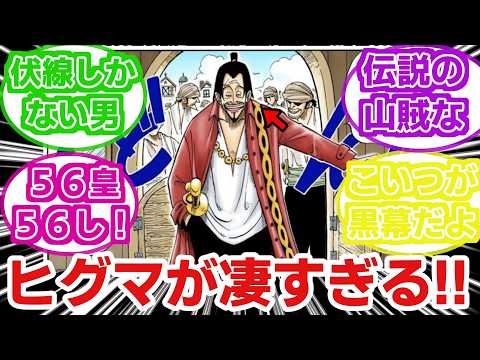
Fan communities have recently begun questioning the inconsistencies surrounding Higuma, a seemingly minor bandit character from One Piece’s opening chapter. After 15 years of analysis across hundreds of anime and games, one long-time fan has identified troubling contradictions in Higuma’s character that suggest he may be far more significant to the overall narrative than initially apparent.
What Happened
Fan communities have recently identified significant inconsistencies in the characterization of Higuma, a bandit who appears in One Piece’s first chapter. The discussion centers on contradictions between Higuma’s portrayal as a minor East Blue bandit and evidence suggesting he may possess extraordinary power and significance. Creator Eiichiro Oda has notably avoided addressing Higuma in SBS (reader Q&A) segments, fueling speculation about intentional narrative concealment.
Why It Matters
In long-running serialized narratives like One Piece, early character inconsistencies often signal future plot relevance. The Higuma discussion reflects broader fan engagement with narrative analysis and foreshadowing techniques. Understanding how creators plant seeds for future revelations helps readers recognize potential story developments and appreciate the complexity of long-form storytelling. Additionally, Higuma’s mysterious nature demonstrates how even minor early characters can become subjects of serious analytical discourse within fan communities.
Background
Higuma is a bandit character introduced in One Piece’s first chapter who directly causes Luffy’s loss of his arm, setting up a crucial emotional anchor for the protagonist’s journey. According to fan analysis, records indicate Higuma has killed 56 Celestial Dragons—an extraordinarily significant feat, as Celestial Dragons are among the most protected individuals in the One Piece world and represent the highest echelon of government power. Despite this apparent strength, Higuma is presented as a simple East Blue bandit with a bounty of only 8 million berries, a figure that seems incongruent with his alleged accomplishments.
Key Points
- Contradictory Strength Levels: Higuma’s 8 million berry bounty contradicts the documented killing of 56 Celestial Dragons, which would require extraordinary combat ability
- Unclear Defeat Circumstances: The exact nature of Higuma’s confrontation with Shanks remains ambiguous; whether he was truly defeated or survived remains unconfirmed
- Creator’s Deliberate Silence: Eiichiro Oda has consistently avoided discussing Higuma in SBS segments, suggesting intentional narrative withholding
- Behavioral Anomalies: Higuma’s fearless approach to Shanks suggests absolute confidence in his own strength, inconsistent with a typical bandit’s behavior
- Diverse Fan Theories: Community speculation ranges from “Higuma is secretly the strongest character” to “Higuma is a government operative” to “Higuma is actually multiple people”
- Potential Foreshadowing: Historical patterns in anime and manga show early-chapter inconsistencies often resolve into significant plot revelations
Analytical Framework: Higuma’s Narrative Significance
The Contradiction Between Role and Capability
In typical narrative construction, early characters serve specific, limited functions. However, Higuma presents a pattern inconsistent with this model. A standard bandit encountering a visibly powerful opponent like Shanks would retreat; Higuma instead confronts him directly. This behavioral pattern suggests either delusional confidence or genuine certainty in superior strength. The latter interpretation becomes more plausible when considering the Celestial Dragon killings.
The Celestial Dragon Killings: A Critical Detail
Celestial Dragons occupy a unique position in One Piece’s world hierarchy. They are systematically protected by government apparatus and possess near-absolute authority. That any individual—particularly one operating as a simple bandit in East Blue—could kill 56 of them suggests one of three possibilities: extraordinary combat prowess, access to special abilities, or deep integration within government structures. None of these scenarios align with Higuma’s presented identity.
Comparative Analysis: Early Character Recontextualization in Other Series
| Series | Early Character | Later Development | Parallel to Higuma |
|---|---|---|---|
| Attack on Titan | Jean Kirstein | Became central to major plot threads | Initially minor character gains narrative importance |
| Demon Slayer | Rui’s Family | Revealed as significant antagonist faction | Early enemies gain complex backstory and relevance |
| Jujutsu Kaisen | Inumaki Toge | Developed into major combat contributor | Supporting character gains unexpected prominence |
These examples demonstrate a recurring pattern: early-chapter characters presented as minor often become narratively significant. Higuma fits this archetype, suggesting his current ambiguity may be intentional setup for future revelation.
The Significance of Creator Silence
Oda’s consistent avoidance of Higuma in SBS segments carries specific implications. Creator silence regarding character details typically indicates one of three scenarios: the character will play a future role requiring narrative surprise; answering would create logical inconsistencies; or the character represents something the creator wishes to conceal. The first scenario aligns most closely with Oda’s demonstrated narrative patterns throughout One Piece’s 25+ year run.
The “Strongest Character” Hypothesis
Fan speculation proposing Higuma as secretly the strongest character, while seemingly extreme, contains internal logic. His fearless confrontation with Shanks, his apparent killing of Celestial Dragons, and his mysterious nature all support this interpretation. One analytical perspective suggests Higuma may be a member of the “Knights of God”—a recently introduced governmental faction—operating undercover as a bandit. This would explain both his power and his government’s apparent protection of his identity.
East Blue’s Classification: A Secondary Implication
One Piece establishes East Blue as the weakest of the four seas. However, this classification becomes questionable when examining its inhabitants. Arlong and Kuro, both East Blue-based antagonists, demonstrated considerable strength. The paradox resolves if Higuma’s exceptional power skews the regional assessment—his strength may have caused the government to classify the entire region as weak by comparison, or his presence may have influenced how the region is evaluated by external forces.
Perspectives
The Intentional Foreshadowing Interpretation: Higuma represents carefully planted narrative seeds meant to bloom in later story arcs. His contradictions are deliberate, designed to reward attentive readers upon eventual revelation.
The Narrative Accident Theory: Early in One Piece’s serialization, Oda may have introduced details about Higuma without fully planning their implications. Rather than retcon or explain, he maintains silence to avoid drawing attention to the inconsistency.
The Symbolic Interpretation: Higuma functions as a narrative device representing the unknown dangers lurking in seemingly peaceful regions. His true nature matters less than what he symbolizes about the One Piece world’s hidden complexities.
The Community-Driven Meaning: Higuma’s significance emerges primarily from fan analysis rather than authorial intent. The character becomes important because the community collectively decides to interrogate his role.
Community Response and Engagement
Twitter discussions have generated thousands of tweets under hashtags including #HigumaStongest, #HigumaMasterMind, and #HigumaMystery. YouTube comment sections frequently propose connections between Higuma’s strength and Shanks’ power development. Reddit and 5channel One Piece communities have sustained multi-threaded discussions examining Higuma’s potential future relevance. This sustained engagement reflects how unresolved narrative elements drive fan community discourse and creative speculation.
Insights
The Higuma discussion illuminates several broader principles about long-form narrative analysis. First, early-chapter details in serialized works often carry disproportionate significance, rewarding readers who maintain attention to foundational material. Second, creator silence regarding specific characters frequently signals intentional narrative withholding rather than authorial oversight. Third, fan communities function as collaborative analytical bodies, collectively identifying patterns individual readers might miss.
Higuma’s case demonstrates that even characters presented as minor can become subjects of serious interpretive discourse. Whether Oda intended Higuma’s contradictions as foreshadowing or they represent unplanned narrative elements remains unknown. However, the character’s persistent ambiguity ensures continued speculation until official clarification arrives. The mystery surrounding Higuma ultimately reflects One Piece’s broader appeal: a narrative sufficiently complex and layered to sustain decades of analytical engagement from its audience.
The answer to Higuma’s true nature remains hidden, waiting for revelation in future One Piece chapters.