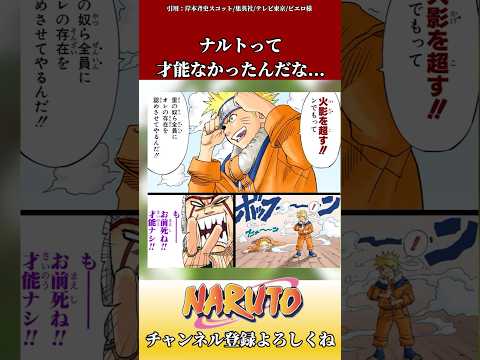
▶ Watch the original YouTube video
Does Naruto Really Lack Talent? A 15-Year Fan Analysis of Internet Reactions
A viral video compilation of internet reactions claiming “Naruto has no talent” has sparked renewed debate about the protagonist’s abilities. After 15 years of fandom and analysis of 500+ anime titles, one long-time viewer argues that this assessment fundamentally misunderstands the character’s core narrative purpose.
- What Happened
- Why It Matters
- Background
- Key Points
- Comparative Analysis: Naruto’s Unique Position
- The Four Stages of Viewer Understanding
- Creator Intent vs. Audience Interpretation
- Narrative Growth Arc and Talent Evolution
- Industry Context and Trend Analysis
- Platform-Specific Reaction Patterns
- Practical Framework for Understanding Naruto
- The Unresolved Tension
- Insights
What Happened
A YouTube video titled “Naruto Really Didn’t Have Talent…” has circulated online, collecting viewer reactions that characterize the protagonist as lacking innate ability compared to peers like Sasuke and Kakashi. The video reflects a persistent internet narrative that Naruto is an “effort-type” hero who succeeds through hard work rather than natural talent. However, this interpretation has sparked deeper discussion about what “talent” actually means within the series’ narrative framework.
Why It Matters
This debate reveals how differently audiences interpret the same character depending on their viewing stage and analytical perspective. The question of whether Naruto possesses hidden talent or genuinely lacks it goes to the heart of what the series is fundamentally about. Understanding this distinction separates surface-level character analysis from deeper thematic comprehension. For fans and critics alike, this discussion illuminates how storytelling choices about character potential shape narrative meaning and audience interpretation.
Background
Naruto Uzumaki begins the series as a seemingly talentless outcast ninja, visibly weaker than his peers in basic jutsu mastery, chakra control, and combat technique. However, he carries within him the sealed power of the Nine-Tailed Fox—a force he cannot initially control. This setup creates a unique narrative condition: Naruto possesses dormant power that remains inaccessible to him for much of the early story. The series creator, Masashi Kishimoto, has stated in interviews that Naruto was always intended to be “special,” suggesting the protagonist’s apparent lack of talent masks a deeper truth about self-discovery and the redefinition of what talent means.
Key Points
- Naruto’s early weakness compared to Sasuke, Neji, and other peers is factually accurate, creating the basis for the “no talent” assessment
- The protagonist’s inability to control the Nine-Tailed Fox’s chakra represents a critical distinction: possessing power versus being able to utilize it
- Internet reactions reflect different viewing stages—early viewers see weakness, later viewers recognize hidden potential, and completed-series viewers question the definition of talent itself
- Kishimoto’s stated creative intent emphasizes Naruto’s predetermined “specialness,” contradicting the surface narrative of a talentless underdog
- Compared to similar protagonists like Deku (My Hero Academia) or Eren (Attack on Titan), Naruto occupies a unique position: publicly known hidden power that remains uncontrolled
- The series gradually shifts its thematic focus from “talent acquisition” to “talent self-awareness,” fundamentally redefining what the story is about
Comparative Analysis: Naruto’s Unique Position
Naruto differs significantly from other major anime protagonists in how his talent is framed. Deku from My Hero Academia begins with no quirk and later receives one externally—a narrative of talent acquisition. Eren from Attack on Titan possesses hidden abilities shrouded in mystery, emphasizing secrecy. Naruto, by contrast, has publicly known hidden power that he cannot access, creating a unique tension: everyone knows he has the Nine-Tailed Fox’s chakra, but he cannot control it. This public-yet-inaccessible power dynamic is extraordinarily rare in anime storytelling and fundamentally shapes how audiences interpret his character.
The Four Stages of Viewer Understanding
Analysis of internet reactions reveals a predictable progression in how audiences interpret Naruto’s talent:
Stage One (Early Viewers): “Naruto is weak and talentless.” Viewers accept the surface narrative at face value, observing his early defeats and inferior technique.
Stage Two (Mid-Series Viewers): “Naruto is an effort-type protagonist.” As the Chunin Exam and subsequent arcs progress, audiences recognize his determination and begin reframing weakness as a product of insufficient training rather than inherent lack of ability.
Stage Three (Late-Series Viewers): “Naruto actually has hidden talent.” As Nine-Tailed Fox chakra control improves, viewers recognize that latent power was present all along, recontextualizing earlier struggles as control issues rather than absence of ability.
Stage Four (Post-Completion Viewers): “What does talent actually mean?” Completed-series audiences transcend the binary of talent/no-talent, recognizing the series as a philosophical inquiry into how potential is defined, recognized, and actualized.
Creator Intent vs. Audience Interpretation
Kishimoto’s interviews reveal a critical gap between creator intention and audience reception. The creator has explicitly stated that Naruto was always meant to be “special” and predetermined for greatness. This directly contradicts the widespread internet perception that Naruto is a talentless underdog. This discrepancy suggests that many viewers are evaluating the character based on narrative surface rather than thematic depth. The distinction matters: if Naruto is truly talentless, the story is about effort overcoming limitation. If Naruto possesses hidden talent, the story is about self-discovery and redefining potential. These are fundamentally different narratives with different philosophical implications.
Narrative Growth Arc and Talent Evolution
Naruto’s three-stage growth pattern reveals the series’ thematic progression:
Part One (External Constraint): Naruto develops through effort within imposed limitations. His growth is gradual and grounded in basic skill acquisition, representing talent as external obstacle to overcome.
Part Two Early (External Power Acquisition): Naruto gains access to Nine-Tailed Fox chakra, experiencing rapid power growth. This stage represents talent as external force to be harnessed.
Part Two Late (Internal Power Recognition): Naruto transcends reliance on the Nine-Tailed Fox, discovering his own inherent strength. This final stage represents talent as internal potential waiting for self-awareness.
This progression mirrors a philosophical journey: from viewing talent as external limitation, to external gift, to internal essence. The series systematically deconstructs and reconstructs what “talent” means across its narrative arc.
Industry Context and Trend Analysis
Between 2015 and 2020, anime industry trends shifted toward “talentless protagonist” narratives, with My Hero Academia, Sword Art Online, and Re:Zero all adopting similar frameworks. However, these works are post-Naruto productions. Naruto was not a trend-follower but a trend-setter—not pioneering the “weak protagonist” archetype, but rather establishing the “talent-redefinition protagonist” category. This distinction is crucial for understanding Naruto’s historical significance in anime storytelling. The series opened a narrative space where talent could be questioned, redefined, and philosophically interrogated rather than simply accepted as a binary property.
Platform-Specific Reaction Patterns
Internet reactions to Naruto’s talent vary significantly by platform. Twitter discussions emphasize emotional appreciation of Naruto’s effort and determination. Reddit’s r/Naruto community engages in more philosophical debate, with international users noting that Naruto represents an Eastern “practitioner” archetype rather than a Western “hero” model. 4chan and similar forums contain more critical analysis questioning whether the series successfully maintains its thematic consistency. YouTube comments predominantly frame Naruto as an effort-based success story, likely because sequential viewing from Part One creates a narrative of gradual improvement. These platform differences reveal how medium and viewing context shape interpretation.
Practical Framework for Understanding Naruto
To properly evaluate Naruto’s talent, viewers should: (1) Distinguish between Part One and Part Two, as the character’s narrative function changes significantly; (2) Compare Naruto directly to Sasuke, whose natural talent serves as a counterpoint; (3) Focus on Naruto’s repeated failures, which are the actual source of his development; (4) Engage with Boruto to understand how Naruto himself conceptualizes talent as a mentor; (5) Compare manga and anime versions, as psychological depth differs between mediums.
The Unresolved Tension
One critical question remains: Does the series ultimately undermine its own thematic premise? Naruto begins as a “talentless” character but concludes as a cosmically significant being with predetermined destiny. This narrative arc could be interpreted as abandoning the original theme of effort overcoming limitation. Alternatively, it could represent the ultimate expression of that theme: that self-awareness and actualization of latent potential constitute the true victory, not the absence of that potential. This tension remains philosophically unresolved within the text itself.
Insights
The internet’s persistent claim that “Naruto has no talent” reveals more about how audiences interpret narrative than about the character himself. This assessment is not factually wrong—it accurately describes Naruto’s early presentation. However, it captures only one layer of a multi-layered narrative. The series systematically deconstructs the concept of talent across its runtime, moving from external limitation, to external gift, to internal essence. Kishimoto’s stated creative intent suggests the “no talent” reading was always meant to be provisional, a surface interpretation that deeper engagement would complicate. The debate itself—whether Naruto possesses talent—may be the point. By making this question genuinely ambiguous across different viewing stages, the series forces audiences to confront what talent actually means, how it is recognized, and whether it exists as an objective property or a matter of perspective. In this sense, Naruto is not a character who lacks talent; he is a character through whom the concept of talent is interrogated. The internet’s reaction, rather than being incorrect, represents the first stage of a philosophical journey the series deliberately structures for its audience.