▶ Watch the original YouTube video
Gundam Zieakus: Analyzing Shariabl’s Authority Problem and What Fans Really Think
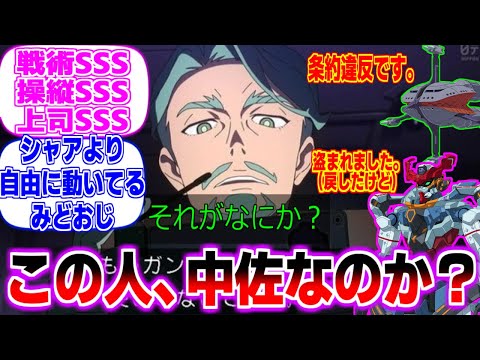
A contentious power structure inconsistency in Gundam Zieakus has sparked intense debate among fans: protagonist Shariabl, despite holding the rank of major, appears to exercise authority beyond his military station. This apparent contradiction has become a focal point for deeper analysis about the series’ narrative design and intentional storytelling choices.
What Happened
In Gundam Zieakus, the character Shariabl—officially holding the military rank of major—issues commands and makes decisions that appear to exceed the authority typically granted to an officer of his rank. Viewers have noted this discrepancy extensively, with the phrase “that’s not a major’s authority” becoming a recurring point of discussion across fan communities. Rather than being dismissed as a continuity error, this inconsistency has become the subject of serious analytical discourse about whether it represents intentional narrative design.
Why It Matters
This power structure anomaly matters because it reflects evolving trends in anime storytelling and the Gundam franchise specifically. For over 15 years, the Gundam series has gradually shifted from depicting rigid, clearly-defined military hierarchies to embracing more ambiguous power structures that serve narrative and character development purposes. The Shariabl authority question exemplifies how modern anime uses apparent inconsistencies not as flaws, but as deliberate tools to deepen viewer engagement and prompt critical analysis. Understanding this shift reveals how contemporary anime creators are experimenting with more complex, layered storytelling that rewards active audience participation.
Background
The Gundam franchise has long established military hierarchies as central to its world-building. Early entries like Mobile Suit Gundam maintained strict, clearly-defined rank structures. However, subsequent series including Mobile Suit Gundam Wing and Mobile Suit Gundam SEED introduced deliberate ambiguities in their power structures, using these inconsistencies to express character complexity and political intrigue rather than treating them as errors.
Gundam Zieakus appears to continue this evolution, pushing the ambiguity further than previous entries. Shariabl’s rank as major—typically a mid-level officer position subordinate to colonels and generals—conflicts with his demonstrated authority to issue commands that should require higher-ranking approval. This contradiction has not gone unnoticed by the fanbase, which has responded with sophisticated analysis rather than simple dismissal.
Key Points
- Authority Inconsistency: Shariabl, despite holding the rank of major, issues orders that appear to exceed his military station’s legitimate authority
- Intentional Design: The contradiction likely represents deliberate narrative choice rather than continuity error, consistent with modern Gundam storytelling trends
- Fan Engagement: The ambiguity has sparked extensive online discussion across Twitter, YouTube analysis channels, and anime forums, indicating viewer recognition of its significance
- Character Expression: The authority problem may serve to express Shariabl’s character complexity, hidden motivations, or organizational role beyond his official rank
- Narrative Foreshadowing: The inconsistency may function as foreshadowing for later plot developments that will clarify or recontextualize Shariabl’s true position
- Industry Trend: This approach reflects broader anime industry movement toward embracing narrative ambiguity as a tool for viewer investment and critical engagement
Comparative Analysis: Power Structure Depiction Across Gundam Series
| Series Title | Power Structure Clarity | Internal Contradictions | Narrative Function |
|---|---|---|---|
| Mobile Suit Gundam | Highly explicit | Minimal | Drives plot progression |
| Mobile Suit Gundam Wing | Moderate | Multiple present | Expresses character complexity |
| Mobile Suit Gundam SEED | Moderate | Multiple present | Conveys political conflict |
| Gundam Zieakus | Deliberately ambiguous | Multiple (likely intentional) | Expresses character essence and narrative mystery |
Perspectives
The Continuity Error Interpretation: Some viewers initially approached Shariabl’s authority inconsistency as a production oversight—a mistake in the script or character design that should have been caught during quality control. This straightforward reading treats the contradiction as a flaw to be explained away.
The Intentional Design Interpretation: More sophisticated analysis suggests the contradiction is deliberate. Proponents of this view note that Shariabl’s willingness to exercise authority beyond his rank may reveal something fundamental about his character—perhaps hidden rank, special organizational status, or willingness to operate outside normal hierarchical constraints. This interpretation aligns with how previous Gundam series have used power structure ambiguities to develop character depth.
The Narrative Foreshadowing Interpretation: Some analysts propose that the authority inconsistency functions as foreshadowing. The contradiction may be deliberately planted to be resolved later in the narrative, either through revelation that Shariabl holds hidden rank or authority, or through plot developments that make his authority exercise consequential to the story’s central conflicts.
The Organizational Complexity Interpretation: Another perspective suggests that Gundam Zieakus’s military organization may be more complex than initially apparent. Perhaps the rank system functions differently than assumed, or Shariabl holds special authority within his organization that isn’t immediately obvious from his official rank designation.
Online Community Response
The Shariabl authority question has generated substantial discussion across multiple platforms. On Twitter, users have posted extensively about the inconsistency, with many framing it not as criticism but as an intriguing mystery worthy of investigation. Anime analysis channels on YouTube have produced multiple videos dedicated to examining Gundam Zieakus’s power structure, with these videos accumulating significant viewership.
On 4chan’s anime boards and similar forums, dedicated discussion threads have emerged proposing various theories: that Shariabl conceals his true rank, that the organization’s structure permits majors greater authority than typical military hierarchies, or that the inconsistency deliberately signals organizational dysfunction central to the narrative.
This response pattern—moving from observation of inconsistency to active theorizing—suggests that viewers recognize the authority problem as narratively significant rather than dismissing it as error.
Insights
The Shariabl authority controversy reveals several important developments in anime storytelling and audience engagement. First, it demonstrates that contemporary viewers actively seek complexity and ambiguity in narrative design, interpreting apparent inconsistencies as potential narrative depth rather than production failures. This represents a maturation of anime fandom toward more sophisticated analytical engagement.
Second, the response validates the Gundam franchise’s evolution toward more nuanced power structure depiction. By embracing ambiguity rather than rigid hierarchy clarity, Gundam Zieakus appears to be successfully engaging viewers in active interpretation and discussion—precisely the effect such intentional design choices aim to achieve.
Third, the Shariabl case exemplifies how modern anime uses apparent contradictions as tools for character expression and thematic development. The inconsistency may ultimately reveal something essential about Shariabl’s character—his willingness to exceed authority, his hidden status, or his role in organizational conflict—making the contradiction narratively functional rather than problematic.
Finally, this phenomenon suggests that the anime industry’s movement toward embracing narrative ambiguity represents a genuine shift in creative philosophy. Rather than treating all inconsistencies as errors to be eliminated, contemporary creators are increasingly using them as deliberate devices to deepen viewer investment, prompt critical analysis, and create space for interpretive engagement. The Shariabl authority problem, viewed through this lens, becomes not a flaw to be corrected but a feature to be analyzed—and in that analysis, the series achieves its apparent creative intention.