▶ Watch the original YouTube video
How The Super Mario Movie Rediscovered Brotherly Love: A Deep Analysis of Viewer Reactions
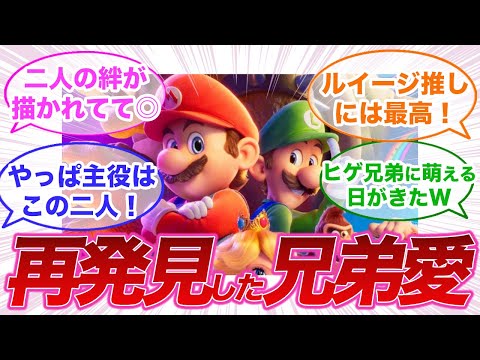
The Super Mario Movie has sparked widespread emotional responses by centering on the brotherly relationship between Mario and Luigi—a dynamic that remained largely unexplored in four decades of games. Through analysis of viewer reactions and comparison with similar works, the film reveals why audiences are deeply moved by this previously untapped narrative angle.
- What Happened
- Why It Matters
- Background
- Key Points
- How the Film Differs from the Games
- Comparative Analysis: Brotherly Love in Media
- Why Audiences Respond Emotionally
- Industry Context and Adaptation Strategy
- Viewer Reactions Across Platforms
- Future Implications for Gaming and Film
- Insights and Broader Implications
What Happened
The Super Mario Movie has become a cultural phenomenon by placing the emotional relationship between Mario and Luigi at its narrative center. Unlike the game series, which has treated Luigi primarily as a secondary character for nearly 40 years, the film explores the psychological depth of their brotherhood—including Luigi’s struggle with self-worth and Mario’s trust in his younger brother. Viewer reactions across social media and video platforms reveal overwhelming emotional engagement with this previously underdeveloped aspect of the Mario franchise.
Why It Matters
The film’s success demonstrates how reframing familiar intellectual property through a new emotional lens can create powerful resonance with audiences. By adding psychological depth to characters that existed in a relatively flat narrative space, the movie shows that even 40-year-old franchises can offer fresh emotional experiences. This approach has broader implications for how game-to-film adaptations should be conceived, suggesting that the most successful adaptations don’t simply translate gameplay into cinema—they excavate emotional truths that the original medium left unexplored.
Background
The Mario franchise began in 1985 with the original Super Mario Bros. and has since become one of gaming’s most iconic series, with over 50 major titles spanning multiple platforms and generations. Throughout this history, Mario and Luigi’s relationship has been presented as straightforward: they are brothers who adventure together, with Luigi functioning primarily as Player 2 or a support character. The games never deeply explored why they fight together, what they mean to each other, or how they view themselves in relation to one another.
The Super Mario Movie, released in 2023, takes a fundamentally different approach. Rather than simply adapting the game’s world and mechanics, the film uses the brothers’ relationship as its emotional core, presenting Luigi as a character struggling with inadequacy while learning to value himself, and Mario as someone who genuinely trusts and depends on his brother.
Key Points
- The film centers on Mario and Luigi’s brotherly bond—a theme largely absent from the game series despite 40 years of history
- Viewer reactions overwhelmingly focus on emotional resonance with the brothers’ relationship, with many reporting that the film prompted them to reflect on their own sibling relationships
- Luigi’s character arc—discovering his own value while maintaining faith in Mario—represents a significant departure from his role as a secondary character in the games
- The film’s approach aligns with current industry trends emphasizing character psychology and internal conflict over pure action and plot
- Comparative analysis with similar works (Fullmetal Alchemist, Fire Emblem, The Legend of Zelda) reveals that the Mario film’s focus on cooperation and mutual trust distinguishes it from other sibling narratives
- The movie’s success suggests future Mario games may expand Luigi’s role as an independent character rather than merely Mario’s supporting counterpart
How the Film Differs from the Games
The most striking difference between the film and the game series is the explicit emotional narrative. In the games, particularly titles like Super Mario 64, Super Mario Galaxy, and Super Mario 3D World, Mario and Luigi’s relationship is presented as a given—they simply exist together without explanation or emotional development. The games never ask why they fight together or what binds them beyond proximity.
The film, by contrast, directly addresses these questions. It depicts Luigi’s internal struggle with self-perception, showing him believing he is inferior to Mario while simultaneously trusting his brother completely. This psychological complexity—what researchers call “sibling comparison,” a well-documented phenomenon in developmental psychology—had never been explored in the game series.
This represents a significant creative choice. Rather than simply translating game mechanics to film, the filmmakers identified an emotional gap in the source material and filled it with genuine narrative substance. This approach transforms what could have been a straightforward action-adventure film into a story about identity, self-worth, and familial bonds.
Comparative Analysis: Brotherly Love in Media
| Work | Sibling Dynamic | Central Theme | Conflict Present |
|---|---|---|---|
| The Super Mario Movie | Trust and cooperation | Brotherly love, self-affirmation | Minimal |
| Fullmetal Alchemist | Responsibility and dependency | Redemption, growth | Present |
| Fire Emblem series | Complex and varied | Family, war, moral choice | Frequent |
| The Legend of Zelda | Not depicted | Adventure, solitude | Not applicable |
The Super Mario Movie’s approach to sibling dynamics stands out for its emphasis on mutual trust and cooperation without significant conflict. This contrasts sharply with works like Fullmetal Alchemist, where brothers Edward and Alphonse experience profound tension alongside their bond, or Fire Emblem games, where sibling relationships often involve moral opposition. The Mario film’s choice to minimize conflict while emphasizing understanding and support creates a distinct emotional tone—one that emphasizes healing and affirmation rather than struggle and reconciliation.
Why Audiences Respond Emotionally
Subversion of Expectations: For 40 years, Mario and Luigi’s relationship was presented without explanation or emotional depth. The film’s decision to suddenly examine this relationship creates what might be called an “expectation reversal.” Audiences who grew up with these characters discover emotional dimensions they never knew existed, creating a sense of rediscovery and renewed appreciation.
Personal Projection: Many viewers report that the film prompted them to reflect on their own sibling relationships. This happens because the film presents a universal experience—the complex feelings siblings have for one another—through familiar characters. Viewers with brothers or sisters naturally project their own experiences onto Mario and Luigi, making the film’s emotional beats deeply personal.
Clear Character Arc: Luigi’s journey from self-doubt to self-acceptance follows a clear psychological progression. This clarity of character development creates emotional satisfaction. Audiences can see Luigi changing, growing, and finding value in himself, which provides a sense of narrative completion and emotional catharsis.
Thematic Clarity: The filmmakers made a deliberate choice to center the story on brotherly love. This thematic clarity—the sense that the creators had a specific emotional message they wanted to convey—comes through powerfully and gives the film a sense of purpose beyond entertainment.
Industry Context and Adaptation Strategy
The Super Mario Movie’s approach reflects broader trends in contemporary filmmaking. Recent years have seen a shift toward character psychology and internal conflict in major film adaptations. Works like the 2019 Aladdin remake, 2021’s Shang-Chi, and 2023’s Super Mario Movie all prioritize character emotional development over pure plot mechanics.
This represents a significant departure from earlier adaptation philosophy, which often emphasized fidelity to source material’s narrative structure and action sequences. Modern adaptations increasingly recognize that the most successful translations of beloved properties involve identifying emotional truths in the source material and amplifying them.
The Mario film’s strategy—adding psychological depth that the games never explored—follows a proven pattern. Successful game-to-film adaptations typically introduce new perspectives that enhance rather than contradict the original work. By presenting Luigi’s internal struggle, the film doesn’t contradict the games; it simply answers questions the games never asked.
This approach also leverages nostalgia strategically. The film appeals to viewers’ memories of playing Mario games while simultaneously offering something new—a deeper understanding of characters they thought they knew. This combination of familiarity and novelty proves remarkably effective at generating emotional engagement.
Viewer Reactions Across Platforms
Social media responses to the film’s brotherly love theme have been overwhelmingly positive. On Twitter and YouTube, common comments include: “The Mario movie made me reconsider my relationship with my brother,” “Luigi’s growth moved me to tears,” and “I never realized how much Mario and Luigi’s bond mattered to me.”
The most frequent response category involves viewers reporting that the film prompted reflection on their own sibling relationships. This suggests the film successfully transcends its status as a video game adaptation and functions as a genuine emotional narrative about family bonds.
A smaller but notable segment of responses expresses concern about the gap between the film and the games. Some viewers feel the film’s emphasis on brotherly conflict and emotional depth doesn’t align with the games’ more straightforward presentation. However, this critical perspective remains a minority view, with most audiences embracing the film’s emotional additions as enhancements rather than contradictions.
The diversity of responses reflects the universal nature of sibling relationships. Viewers with close siblings, distant siblings, or no siblings at all interpret the film through different lenses, creating a rich spectrum of emotional responses.
Future Implications for Gaming and Film
The Super Mario Movie’s success suggests several likely developments in both gaming and film industries.
Expanded Luigi Role: Nintendo has already begun exploring Luigi as a lead character through the Luigi’s Mansion series. The film’s success will likely accelerate this trend, with future Mario games potentially giving Luigi more substantial roles and character development.
Character-Focused Adaptations: Other game-to-film projects will likely adopt the Mario film’s strategy of identifying unexplored emotional dimensions in source material. A Legend of Zelda film adaptation, for instance, might deepen Link and Zelda’s relationship in ways the games never explored. A Pokémon adaptation might emphasize Pikachu and Ash’s bond more explicitly.
Psychological Depth in Games: The film’s critical and commercial success demonstrates audience appetite for character psychology in interactive media. Future game developers may invest more heavily in character relationships and emotional narratives, recognizing that such elements enhance rather than detract from gameplay.
Insights and Broader Implications
The Super Mario Movie’s success reveals several important truths about storytelling and audience engagement.
First, familiar intellectual property contains untapped emotional potential. Even properties that have existed for decades can offer fresh experiences when creators approach them with new questions. The film didn’t change Mario or Luigi; it simply asked questions about them that the games never posed.
Second, universal human experiences—in this case, sibling relationships—resonate powerfully across diverse audiences. By grounding a fantastical adventure in authentic emotional dynamics, the film created something that feels both familiar and novel.
Third, the most successful adaptations don’t simply translate source material into a new medium. They identify the emotional core of the original work and amplify it. The Mario film didn’t invent the idea that Mario and Luigi care about each other; it simply made that care explicit and central.
Finally, the film demonstrates that entertainment and emotional authenticity are not mutually exclusive. A film can be colorful, action-packed, and fun while also genuinely exploring human relationships and personal growth. These elements enhance rather than contradict each other.
The Super Mario Movie ultimately succeeds because it treats its characters with emotional seriousness while maintaining the joy and wonder that made the original games beloved. In doing so, it suggests a path forward for how beloved properties can be adapted—not by changing what made them special, but by deepening our understanding of why they mattered in the first place.