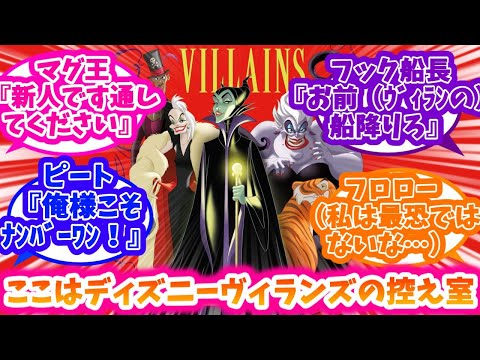
▶ Watch the original YouTube video
Inside Disney’s Villains Backstage: Fan Reactions Reveal Why We’re Fascinated by the Darker Side of Magic
A viral video showcasing Disney’s villains in their backstage waiting areas has sparked widespread discussion about the humanity behind iconic antagonists. The footage reveals how theme park performers blur the line between complete character immersion and authentic human emotion, fundamentally changing how fans perceive these complex characters.
What Happened
Disney theme parks have recently drawn attention for their backstage villain character areas, where performers are captured in moments between full character performance and subtle authenticity. Video footage of these spaces has circulated widely on social media, showing Disney villains like Ursula, Gaston, and Maleficent displaying nuanced expressions and body language that hint at the human performers beneath the costumes. Rather than maintaining absolute character immersion, these moments reveal a deliberate theatrical technique that acknowledges the humanity of both the performers and the characters themselves.
Why It Matters
This phenomenon reflects a broader shift in how modern audiences engage with storytelling and character complexity. For over 15 years, theme park culture and entertainment media have increasingly embraced the idea that villains are not one-dimensional obstacles but rather complex characters with understandable motivations. The Disney villains backstage presentation taps into this evolved audience expectation, creating a deeper emotional connection between fans and antagonistic characters. This approach also demonstrates how theme parks function as sophisticated narrative spaces that can layer meaning and encourage multiple interpretations of the same content.
Background
Disney villains have long been central to the company’s storytelling tradition, from Maleficent in Sleeping Beauty to Ursula in The Little Mermaid and Gaston in Beauty and the Beast. However, the portrayal of these characters has evolved significantly. Modern Disney films increasingly present villains with complex psychological motivations rather than simple evil intentions. This shift reflects changes in audience preferences and broader entertainment industry trends toward morally ambiguous characters. The backstage villain areas represent a physical manifestation of this evolution—a space where the theatrical performance itself acknowledges the layered nature of character portrayal.
Key Points
- Disney’s villains backstage areas deliberately showcase the boundary between complete character performance and authentic human expression
- Fan reactions emphasize appreciation for the “humanity” of villainous characters, deepening emotional investment in antagonists
- The theatrical technique mirrors broader entertainment industry trends toward complex, psychologically nuanced antagonists seen in anime, games, and prestige television
- This presentation strategy differentiates Disney from other major theme parks, which typically maintain stricter character immersion
- Audience responses reveal a sophisticated understanding that acknowledging performer humanity actually enhances rather than diminishes the “magic” of theme park experiences
- The concept represents Disney’s response to modern audience demand for narrative complexity and character depth
The Psychology Behind the Performance
The villains backstage presentation employs a carefully calculated psychological technique. By allowing glimpses of the performer’s authentic expression, the experience creates what might be called a “gradient of authenticity”—the subtle shift between complete character performance and genuine human emotion. This mirrors techniques used in other media: the slight inconsistencies in animation that make characters feel alive, or the unpredictable behavior of AI in video games that creates a sense of genuine presence.
Disney’s approach recognizes that modern audiences operate on multiple levels of engagement simultaneously. Fans understand that performers are human, yet they also want to experience the magic of character immersion. By acknowledging both realities, the backstage presentation paradoxically deepens the enchantment rather than diminishing it. This reflects what psychologists call “cognitive dissonance resolution”—when audiences encounter complexity and contradiction, they become more engaged in trying to understand and reconcile these elements.
Villain Complexity in Modern Entertainment
The fascination with Disney villains reflects a broader entertainment industry trend. Over the past 15 years, antagonistic characters have become increasingly complex across anime, video games, and streaming content. Series like Attack on Titan reveal that supposed enemies possess legitimate political motivations and human complexity. Code Geass: Lelouch of the Rebellion blurs the line between protagonist and antagonist entirely. Fate/Zero presents multiple characters who are simultaneously enemies and sympathetic figures with understandable desires.
Disney’s villains fit naturally into this landscape. Ursula is not simply power-hungry; she represents loneliness and the loss of former status. Gaston embodies insecurity masked by narcissism. Maleficent demonstrates how victimization can transform someone into a perpetrator. These psychological dimensions make villains compelling precisely because they are not purely evil—they are human.
Comparative Analysis: Disney vs. Other Theme Parks
Tokyo Disneyland: Maintains complete character world immersion while strategically revealing performer humanity through backstage presentation, creating layered narrative depth.
Universal Studios Japan: Prioritizes strict adherence to film world accuracy, with villains functioning primarily as antagonistic obstacles rather than complex characters. Performer authenticity remains largely hidden.
Sanrio Puroland: Emphasizes cute, approachable character personas with minimal villain concepts, prioritizing intimate character connection over psychological complexity.
Disney’s strategy of foregrounding villain humanity and performer authenticity creates a distinctive competitive advantage, appealing to audiences seeking narrative sophistication and emotional depth.
Fan Reactions and Interpretations
Positive Reception: The majority of fan responses emphasize that witnessing villains’ “humanity” deepens their emotional connection to these characters. Many report that understanding the complexity behind antagonistic roles actually amplifies their appreciation for the theme park experience. Notably, fans describe a paradoxical effect: learning the “truth” behind the magic—that performers are human—somehow makes the magic feel more powerful rather than less.
Critical Concerns: Some fans express worry that revealing performer authenticity undermines Disney’s foundational promise of a magical, escapist experience. This reaction reflects what might be called a “surface-level” engagement with the theme park concept, where the illusion of complete immersion is valued above all else.
Both responses are psychologically valid and reflect different layers of audience engagement. The diversity of reactions actually demonstrates the sophistication of Disney’s approach—the content supports multiple valid interpretations simultaneously.
Practical Guidance for Maximizing the Experience
Review Source Material: Watching the villain’s original film before visiting the theme park significantly enhances appreciation for performer nuance. Understanding a character’s psychological complexity makes subtle performance choices visible and meaningful.
Observe Transitional Moments: The most revealing moments occur during brief transitions between full performance and backstage presence. Recording video allows for detailed observation of these subtle shifts in expression and body language.
Make Comparative Connections: Analyzing Disney villains alongside complex antagonists from anime and games (such as comparing Gaston to Attack on Titan‘s Eren Yeager) reveals deeper patterns about how modern storytelling treats the protagonist-antagonist boundary.
Respect Performer Effort: Recognizing that cast members are executing a sophisticated theatrical technique—balancing character immersion with authentic human presence—enhances appreciation for their craft and the overall experience.
Broader Implications
The villains backstage presentation represents Disney’s evolution in response to changing audience expectations. Modern audiences no longer seek simple, binary moral frameworks in their entertainment. Instead, they crave complexity, psychological depth, and acknowledgment of the human effort behind performance.
This approach also suggests a maturation in how theme parks function as narrative spaces. Rather than maintaining strict separation between “real world” and “magical world,” contemporary theme park design acknowledges that audiences are sophisticated enough to hold multiple realities in mind simultaneously. The magic is not diminished by understanding how it works; rather, it is deepened by recognizing the skill and intention behind it.
The success of this strategy indicates that audiences value authenticity and complexity over pure escapism. When fans understand that performers are human beings executing a carefully crafted theatrical vision, their emotional investment actually increases. This represents a fundamental shift in how entertainment companies should think about audience engagement.
Looking Forward
Based on current industry trends, Disney’s villain presentation will likely evolve in several directions. First, expect more explicit psychological portrayal of character internal conflict—villains may increasingly display visible tension between their antagonistic role and their underlying humanity. Second, interactive elements using AR technology or projection mapping may allow audiences to participate in villain psychology rather than simply observe it. Third, coordination with Disney’s live-action film adaptations will likely intensify, bringing film-based villain interpretations into theme park spaces.
The villains backstage phenomenon ultimately reveals something profound about contemporary storytelling: audiences are ready for complexity. They want characters who are neither purely good nor purely evil. They appreciate performers who acknowledge their humanity while maintaining character integrity. And they understand that the most powerful magic comes not from perfect illusion, but from the honest acknowledgment of effort, skill, and shared human experience.