▶ Watch the original YouTube video
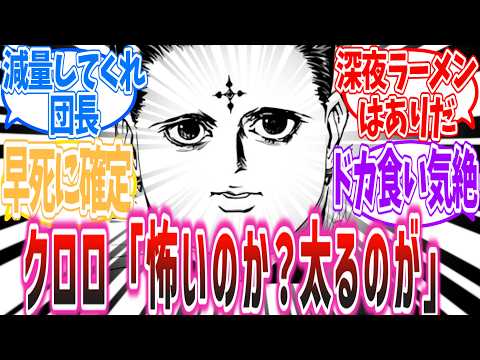
How Chrollo’s Unexpected Kindness Redefined the Phantom Troupe: Internet Reacts to Hunter x Hunter’s Most Human Villain
A seemingly simple line from Chrollo Lucilfer in the Dark Continent arc—”Are you afraid of gaining weight?”—has sparked widespread discussion online about the complexity of the Phantom Troupe’s leader. The moment reveals an unexpected dimension of care and leadership that challenges viewers’ perceptions of one of anime’s most compelling antagonists.
What Happened
During the Dark Continent arc of Hunter x Hunter, Chrollo Lucilfer, leader of the Phantom Troupe, addresses one of his members with a seemingly mundane question: “Are you afraid of gaining weight?” This brief exchange has become a focal point of fan discussion, sparking extensive analysis across social media platforms including Twitter, Reddit, and YouTube.
The line appears to reference a member’s anxiety about physical changes during their dangerous journey. Rather than dismissing this concern, Chrollo acknowledges it directly, demonstrating an unexpected layer of emotional awareness and consideration for his team members.
Why It Matters
This moment represents a significant evolution in how modern anime portrays antagonists. For nearly two decades, the Hunter x Hunter fanbase has watched Chrollo develop from a mysterious villain into a complex, multidimensional character. This particular scene encapsulates a broader trend in contemporary anime: the humanization of antagonists through moments of genuine care and vulnerability.
The scene challenges the traditional “pure evil” archetype, suggesting that even leaders of criminal organizations can demonstrate authentic concern for their subordinates. This complexity resonates with modern audiences who increasingly reject binary moral frameworks in favor of nuanced character development.
Background
Hunter x Hunter, created by Yoshihiro Togashi, has been serialized since the early 2000s. The Phantom Troupe, a group of elite thieves led by Chrollo, has served as a primary antagonistic force throughout the series. The Dark Continent arc, which began in 2012, marks a significant shift in the narrative, emphasizing character relationships and psychological depth over traditional action sequences.
Chrollo’s character arc has consistently subverted expectations. Initially presented as a cold, calculating criminal mastermind, subsequent arcs have gradually revealed his capacity for strategic thinking, loyalty to his members, and unexpected moments of humanity. The anime adaptation, which aired on TV Asahi beginning in 2011, has maintained this character development while adding visual and emotional depth to key scenes.
Key Points
- Chrollo’s line about weight gain serves as an unexpected moment of emotional intelligence and leadership awareness
- The scene disrupts the “perfect villain” archetype, revealing Chrollo’s capacity for genuine concern for his team
- Online reactions have been predominantly positive, with viewers praising the unexpected compassion as realistic and compelling
- The moment exemplifies a broader industry trend toward humanizing antagonists through moments of vulnerability
- The scene demonstrates Yoshihiro Togashi’s signature technique of revealing character depth through seemingly casual dialogue
- Fans interpret the moment as evidence of sophisticated leadership that extends beyond combat ability to psychological awareness
Timeline
- Early 2000s: Hunter x Hunter serialization begins; Chrollo introduced as mysterious antagonist
- 2011: TV Asahi anime adaptation launches, beginning long-term visual storytelling of the series
- 2012 onward: Dark Continent arc begins, shifting focus toward character relationships and psychological complexity
- Recent episodes: Chrollo’s line about weight gain airs, generating widespread online discussion
Perspectives
Fan Interpretation: The majority of online responses frame this moment as a revelation of Chrollo’s authentic leadership qualities. Twitter users highlighted the “unexpected kindness,” while forum discussions on 5channel emphasized how the line demonstrates his qualifications as a troupe leader. YouTube commenters expressed emotional responses, with several noting that this type of subtle care represents the strongest form of leadership.
Character Analysis: The line functions on multiple levels. Psychologically, it addresses the members’ underlying anxiety about environmental change—the physical transformation symbolizes broader fears about their dangerous situation. By articulating this unspoken concern, Chrollo creates what organizational psychology terms “psychological safety,” allowing team members to acknowledge their vulnerabilities without shame.
Narrative Function: Some analysts interpret the moment as foreshadowing. By addressing his members’ psychological state at this particular juncture, Chrollo may be preparing them for an impending crisis or major decision. This aligns with Togashi’s established pattern of embedding future plot developments within seemingly casual character moments.
Critical Perspective: A minority of viewers expressed skepticism, questioning whether Chrollo’s apparent kindness aligns with his established character as a ruthless criminal leader. However, these dissenting opinions remain significantly outnumbered by positive interpretations.
Insights
This scene exemplifies a fundamental shift in antagonist portrayal across contemporary anime. Rather than depicting villains as one-dimensional forces of evil, modern storytelling increasingly presents them as complex individuals whose capacity for cruelty coexists with genuine human emotions and relationships.
The positive reception of this moment reflects evolving audience expectations. Viewers no longer seek simple moral binaries; instead, they appreciate characters whose contradictions mirror real human complexity. Chrollo’s simultaneous identity as both a criminal leader and a caring team manager creates the psychological tension that modern audiences find most compelling.
Togashi’s technique of revealing character depth through brief, contextual dialogue demonstrates sophisticated storytelling craft. Rather than explicit exposition, the author trusts viewers to recognize the significance of small moments. This approach has proven particularly effective in the Dark Continent arc, where psychological nuance increasingly supersedes action-based spectacle.
The scene also illustrates how anime continues to evolve as a medium. Compared to earlier villain archetypes from series like Death Note, contemporary antagonists in works like Attack on Titan and Code Geass display multifaceted motivations and emotional authenticity. Hunter x Hunter positions itself at the forefront of this evolution, using Chrollo’s character to explore what true leadership means beyond combat prowess.
Looking forward, this moment may serve as a crucial character beat that informs Chrollo’s decisions in subsequent story arcs. In Togashi’s narrative design, seemingly minor character moments frequently carry significant thematic weight, suggesting that this exchange about weight gain may connect to larger developments in the Dark Continent arc.