▶ Watch the original YouTube video
Tatsuhana Tetsu: The Mastercraft Antagonist of Yakuza 0 and Player Reactions
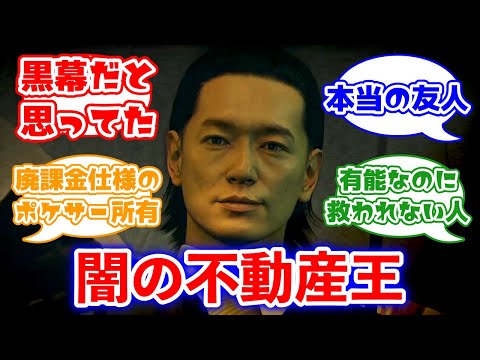
Tatsuhana Tetsu, the “Dark Real Estate King” of Yakuza 0, stands as one of gaming’s most compelling antagonists. Rather than relying on direct violence, he exercises structural economic control over Hiroshima, sparking diverse and passionate reactions from players worldwide about what makes a villain truly unforgettable.
- What Happened
- Why It Matters
- Background
- Key Points
- Character Analysis: The Architecture of a Rational Villain
- The Broader Context: Rational Villains in 2010s Gaming
- Perspectives: Diverse Player Interpretations
- Voice Acting and Performance
- Gameplay Integration: Playing Against Structure
- Insights
- Recommended Approach for New Players
What Happened
Yakuza 0, released in 2014, introduced Tatsuhana Tetsu as a primary antagonist whose influence extends far beyond traditional yakuza violence. Unlike earlier villains in the Yakuza series who wielded direct power through organized crime or political influence, Tetsu dominates through economic systems and real estate manipulation. This fundamental shift in how antagonistic power is portrayed sparked extensive discussion across gaming communities, with players analyzing his character depth, motivations, and psychological impact on the narrative.
Why It Matters
Tatsuhana Tetsu represents a significant evolution in video game antagonist design. His character embodies a shift from emotionally-driven villains to rationally-motivated ones who justify their actions through systematic logic. This approach resonates particularly with modern audiences because his methods—economic control and structural dominance—mirror real-world anxieties about invisible systems of power. The character demonstrates how contemporary game design can explore complex social themes through carefully constructed antagonists, elevating narrative sophistication in the medium.
Background
The Yakuza series has long been recognized for its cinematic storytelling and complex character development. Yakuza 0 serves as a prequel, exploring the origins of the series’ main characters in 1980s Japan. The game’s narrative construction emphasizes how individual characters become trapped within larger systems of power. Tatsuhana Tetsu emerges as the architect of one such system—a network of economic control centered on real estate that subjugates Hiroshima’s population not through fear of violence, but through structural necessity. This represents a departure from earlier Yakuza antagonists like Sawamura Ryotaro from the original game, who relied primarily on yakuza organizational power, or Tsurumi Kazuhiko from Yakuza 2, whose influence stemmed from political connections.
Key Points
- Tatsuhana Tetsu exercises control through economic systems and real estate manipulation rather than direct violence or political authority
- His character represents a “rational villain” archetype—all decisions are calculated and justified through logic rather than emotion
- Players experience complex emotional responses combining fear, respect, and intellectual understanding rather than simple antagonism
- His dominance method—invisible structural control—reflects contemporary anxieties about modern economic systems
- The character’s success influenced subsequent Yakuza series antagonists toward more rational, systemically-motivated characterization
- Voice acting and dialogue design reinforce his psychological impact, with repeated emphasis on concepts of “order” and “structure”
Character Analysis: The Architecture of a Rational Villain
Structural Dominance vs. Direct Power
What distinguishes Tatsuhana Tetsu from traditional antagonists is his reliance on systemic control rather than personal strength or organizational hierarchy. While players expect to eventually confront and defeat a villain through combat, Tetsu’s power operates on a different plane—one where the protagonist must dismantle an entire economic structure rather than simply overcome a single opponent. This creates a psychological dynamic where the antagonist cannot be defeated through conventional means, intensifying the sense of threat.
Rationality as Terror
Tetsu’s decisions follow pure logic. He is not a “mad villain” driven by personal vendetta or emotional instability. Instead, every action serves his stated goal of creating order through economic control. This rationality paradoxically makes him more frightening than emotionally-driven antagonists. Players can understand his reasoning, predict his actions, and recognize the internal consistency of his worldview—yet this understanding does not diminish the threat he poses. Rather, it creates what might be termed “comprehensible evil,” where the antagonist’s motivations are transparent but no less destructive.
Comparison Within the Series
Examining Tetsu alongside other Yakuza antagonists reveals his unique positioning:
| Character | Game | Method of Control | Primary Motivation | Player Experience |
|---|---|---|---|---|
| Sawamura Ryotaro | Yakuza 1 | Yakuza organization | Power acquisition | Direct threat |
| Tsurumi Kazuhiko | Yakuza 2 | Political influence | Revenge | Conspiratorial threat |
| Tatsuhana Tetsu | Yakuza 0 | Economic systems | Order construction | Structural threat |
This progression illustrates how Tetsu represents the most contemporary form of antagonistic power—one grounded in economic mechanisms rather than violence or politics. His methods are more realistic and, consequently, more unsettling to modern audiences familiar with real-world economic inequality and systemic control.
The Broader Context: Rational Villains in 2010s Gaming
Yakuza 0’s release in 2014 coincided with a broader industry shift toward “rational antagonists” who embody systemic rather than personal evil. Games like Persona 4 and Final Fantasy XIII introduced villains motivated by maintaining order rather than personal ambition. This trend reflects evolving player sophistication and industry recognition that moral complexity generates deeper engagement than straightforward good-versus-evil narratives.
Tetsu’s character design suggests intentional thematic resonance with early 2010s social anxieties. The 2008 financial crisis had recently exposed how invisible economic systems could devastate populations. Japan specifically was navigating post-earthquake reconstruction and economic uncertainty. Tetsu—a figure who dominates through real estate speculation and economic control—embodies these contemporary fears in narrative form.
Perspectives: Diverse Player Interpretations
Admiration and Fear
Online communities reveal that players experience simultaneous admiration and fear toward Tetsu. This duality is psychologically significant. Rather than viewing him as simply “the enemy to defeat,” players recognize him as a figure worthy of respect—someone whose intelligence and systematic approach command acknowledgment. This mirrors psychological phenomena like the Milgram experiments, where authority figures inspire compliance even when their directives conflict with personal morality.
Narrative Complexity Appreciation
Across platforms—Twitter, YouTube, Reddit, and 2channel—players consistently praise Tetsu as among the finest antagonists in gaming. This consensus stems from recognition that his character demands intellectual engagement. Understanding Tetsu requires analyzing his philosophy, recognizing the internal logic of his actions, and grappling with uncomfortable questions about whether his “order” might possess legitimacy. This intellectual demand elevates him beyond typical antagonists.
Accessibility Concerns
Some players report difficulty fully comprehending Tetsu’s control structure and motivations. Rather than representing a flaw, this criticism paradoxically validates the character’s sophistication. The complexity that challenges some players demonstrates the narrative’s refusal to simplify systemic power into easily digestible concepts. This mirrors real-world economic systems, which are deliberately obscured and difficult for ordinary people to fully understand.
Voice Acting and Performance
Tetsu’s impact extends beyond narrative design to vocal performance. His dialogue emphasizes recurring concepts—particularly “order” and “structure”—creating psychological reinforcement of his philosophical framework. The voice acting conveys authority without aggression, rationality without coldness. This performance design ensures that even players who intellectually oppose Tetsu’s methods experience his presence as commanding and legitimate.
Gameplay Integration: Playing Against Structure
Unlike traditional boss encounters where players directly confront an antagonist, confronting Tetsu requires dismantling his economic apparatus. This gameplay-narrative integration means that defeating him demands understanding and systematically deconstructing the very structures he has built. The player’s victory becomes not a moment of combat triumph but a process of structural deconstruction—a narrative approach that reinforces thematic messaging about challenging systemic power.
Insights
Tatsuhana Tetsu’s reception and design significance reveal several important truths about contemporary game narratives. First, antagonists who embody systemic rather than personal evil generate deeper player engagement because they mirror real-world power structures. Second, rational villains whose motivations are comprehensible—even if disagreeable—create more memorable experiences than emotionally unstable antagonists. Third, the most effective modern antagonists reflect contemporary social anxieties; Tetsu’s economic dominance resonates precisely because invisible economic systems represent genuine modern concerns.
The character also demonstrates that game narratives can explore complex social and psychological themes through careful antagonist design. Rather than explicit exposition about economic inequality or systemic control, Yakuza 0 embeds these concepts within a character whose actions and philosophy naturally raise these questions. This approach respects player intelligence and creates space for interpretation and discussion.
Furthermore, Tetsu’s influence on subsequent Yakuza antagonists suggests that his success established a new template for the series. Later games increasingly feature antagonists motivated by rational systems rather than personal ambition, indicating that the industry recognized the effectiveness of this approach. This represents genuine creative evolution—a shift in how power and villainy are conceptualized in interactive narratives.
Finally, Tetsu’s enduring presence in player memory—years after the game’s release—confirms that exceptional antagonist design creates lasting cultural impact. He transcends the game itself to become a reference point in broader discussions about narrative sophistication in gaming. This permanence in player consciousness distinguishes truly masterful character design from competent but forgettable antagonists.
Recommended Approach for New Players
For those beginning Yakuza 0, paying close attention to Tetsu’s introduction and subsequent appearances significantly enriches the experience. Rather than viewing him merely as an obstacle to overcome, consider his perspective throughout the narrative. Examining his dialogue for recurring philosophical concepts—particularly his emphasis on order and structure—reveals the internal logic driving his actions. Comparing Yakuza 0 with earlier series entries, particularly the original Yakuza, highlights how Tetsu represents evolved antagonist design. Replaying key scenes after completing the game often reveals layers of meaning initially overlooked, as Tetsu’s systematic approach becomes clearer in retrospect.