▶ Watch the original YouTube video
Mobile Suit Gundam SEED FREEDOM: Unpacking the “True Happy Ending (Except Aura)” Debate
Following the theatrical release of Mobile Suit Gundam SEED FREEDOM, online communities have coalesced around a peculiar phrase: “the only true happy ending (excluding Aura).” This observation reveals a fundamental disconnect between the film’s narrative conclusion and viewer expectations, raising critical questions about how modern anime defines closure and redemption.
What Happened
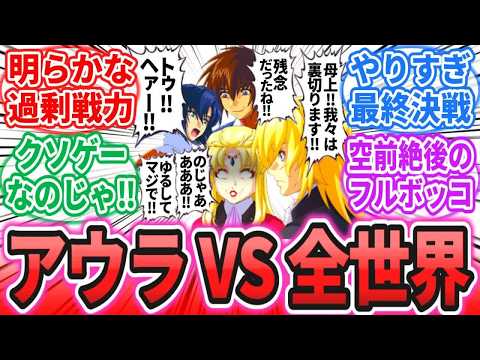
Mobile Suit Gundam SEED FREEDOM has sparked widespread debate across social media platforms regarding the nature of its ending. Viewers have repeatedly used the phrase “here alone is a true happy ending (Aura excluded)” to describe their interpretation of the film’s conclusion. This specific phrasing suggests that while most characters achieve satisfactory resolutions, one character—Aura—remains unresolved, creating a structural inconsistency that challenges traditional definitions of a happy ending.
The film brings closure to multiple narrative threads left open by Mobile Suit Gundam SEED DESTINY, particularly regarding Shin Asuka’s character arc and the broader conflict between the Earth Forces and the Coordinators. However, the treatment of Aura as a character who does not receive redemption has become the focal point of fan discourse.
Why It Matters
This debate illuminates a significant shift in how contemporary anime approaches narrative resolution. Rather than providing unambiguous closure, SEED FREEDOM appears to deliberately construct an incomplete happy ending, forcing viewers to confront uncomfortable questions about sacrifice, redemption, and the cost of peace.
The repeated use of the qualifier “except Aura” indicates that audiences recognize the film’s structural choice to exclude one character from salvation. This is not accidental; it represents a deliberate creative decision that challenges the viewer’s expectations and invites critical analysis of what constitutes a satisfying conclusion in modern storytelling.
Background
The Gundam franchise has long grappled with the definition of “happy endings.” From the original Mobile Suit Gundam through Gundam ZZ, Char’s Counterattack, and the SEED series, each iteration has presented different interpretations of closure. The SEED narrative, in particular, has been characterized by moral ambiguity and the absence of clear victors.
Mobile Suit Gundam SEED DESTINY (2004-2005) left significant unresolved tensions, particularly surrounding protagonist Shin Asuka’s character development and his relationship to the primary cast. SEED FREEDOM, released nearly two decades later, directly addresses these lingering narrative threads. The film brings back key characters including Kira Yamato, Athrun Zala, and Shin Asuka, providing what many viewers anticipated would be definitive closure.
The introduction of new antagonist Aura and her ultimate fate has become the lens through which viewers evaluate the film’s thematic success. Unlike previous Gundam conclusions, SEED FREEDOM does not extend redemption to all characters, creating a moral hierarchy that troubles many fans.
Key Points
- Online communities have adopted the phrase “true happy ending (Aura excluded)” to describe SEED FREEDOM’s conclusion, indicating widespread recognition that the ending is incomplete
- The film resolves major character arcs for Kira Yamato, Athrun Zala, and Shin Asuka, but leaves Aura without redemption or salvation
- Secondary characters including Lacus, Orphe, Shura, and Ingrid receive varying degrees of narrative closure, with some resolutions remaining ambiguous
- The phrase “true happy ending” itself reveals a gap between viewer expectations and the film’s actual narrative structure
- Aura’s exclusion from redemption serves as the central symbol of the film’s refusal to provide complete catharsis
- This narrative choice echoes similar structures in other contemporary anime, particularly the Rebuild of Evangelion film series
Timeline
- 2004-2005: Mobile Suit Gundam SEED DESTINY airs, introducing unresolved tensions around Shin Asuka’s character and his role in the narrative
- 2005: Initial viewer reactions to SEED DESTINY raise questions about whether Shin Asuka was treated fairly as a character
- 2024: Mobile Suit Gundam SEED FREEDOM releases theatrically, addressing DESTINY’s unresolved plot threads
- Post-release: Online communities begin discussing the film’s ending, with the phrase “true happy ending (Aura excluded)” gaining traction across Twitter, 5channel, and YouTube
Perspectives
The Redemption Interpretation: Some viewers argue that Aura should have received redemption alongside other characters, viewing her exclusion as narratively inconsistent. This perspective holds that a truly satisfying happy ending would extend salvation to all major characters, regardless of their antagonistic roles.
The Realistic Interpretation: Other viewers defend the film’s choice to exclude Aura from redemption, arguing that this reflects a more mature, realistic approach to conflict resolution. From this perspective, the film’s refusal to provide universal salvation is a strength, not a weakness, as it acknowledges that not all conflicts can be resolved through reconciliation.
The Thematic Interpretation: A third perspective suggests that Aura’s exclusion is intentional and thematically significant. Rather than representing a narrative failure, her lack of redemption serves as the film’s central message: that peace and happiness are built upon sacrifice and that some individuals cannot be saved. This interpretation views the film as deliberately subverting traditional happy ending conventions.
The Comparative Analysis: Some analysts draw parallels to the Rebuild of Evangelion film series, particularly Evangelion 3.0, which similarly withholds redemption from certain characters. This perspective suggests that contemporary anime is increasingly moving away from universal happy endings toward more complex, morally ambiguous conclusions.
Insights
The widespread adoption of the phrase “true happy ending (Aura excluded)” represents more than casual fan commentary; it indicates a fundamental shift in how audiences engage with narrative closure. The qualifier “except Aura” functions as an implicit critique of the film’s structure, suggesting that viewers recognize the ending as incomplete.
This debate reveals a significant gap between creator intent and audience expectation. The film’s refusal to provide universal redemption appears deliberate, suggesting that the production team chose to present a morally complex conclusion rather than a conventionally satisfying one. Whether this choice succeeds depends largely on individual viewer philosophy regarding narrative responsibility and character treatment.
The film’s treatment of Shin Asuka—who receives redemption after being positioned as a tragic figure in SEED DESTINY—contrasts sharply with Aura’s exclusion from salvation. This disparity raises questions about the criteria by which characters are deemed worthy of redemption. If Shin Asuka, whose actions caused significant harm, can be redeemed, why cannot Aura receive similar treatment?
Ultimately, SEED FREEDOM appears to function not as a definitive conclusion but as a deliberate provocation. By constructing an ending that most viewers recognize as incomplete, the film forces audiences to confront uncomfortable truths about the nature of peace, sacrifice, and the impossibility of universal redemption. Whether this approach constitutes artistic success or narrative failure remains contested, but the intensity of the debate itself suggests that the film has achieved its apparent goal: to challenge conventional understandings of what a happy ending should be.