▶ Watch the original YouTube video
One Punch Man Chapter 159: The Truth About Genos Finally Revealed
Chapter 159 of One Punch Man finally unveils Genos’s true identity as a cyborg modified by the Mad Cyborg, stripping away years of mystery surrounding the character. The revelation reshapes our understanding of the series’ philosophical themes about free will, identity, and the nature of evil itself.
What Happened
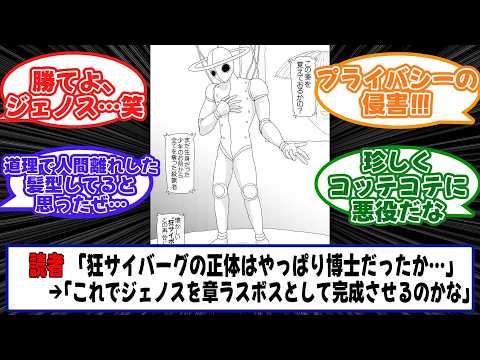
Chapter 159 of One Punch Man delivers a pivotal revelation: Genos is not a human who became a cyborg through accident or choice, but rather a being fundamentally altered by the Mad Cyborg (Heart Gear). His original human life has been erased, and his consciousness may be permanently integrated into the cyborg system itself. The Mad Cyborg, revealed to be the architect of this transformation, has been continuously upgrading Genos as a final weapon. Additionally, the chapter confirms that Blast—a mysterious powerful figure—destroyed the original restraint device, inadvertently creating Genos’s current predicament.
Why It Matters
This revelation transcends a simple plot twist. It reframes the entire One Punch Man narrative around questions of identity, free will, and the nature of evil. Rather than presenting a complex villain with nuanced motivations, the series deliberately chooses to portray the Mad Cyborg as driven by simple, primal desires for control—a choice that reflects contemporary anxieties about systems, technology, and individual autonomy. The chapter forces readers to confront uncomfortable philosophical questions: Can Genos reclaim his humanity? Is his consciousness truly his own? What does it mean to be human when your very existence is a product of another’s design?
Background
One Punch Man, created by ONE, began as a web manga in 2012 and has since evolved into a cultural phenomenon spanning multiple adaptations. The series follows Saitama, an ordinary man who has become impossibly strong, and his interactions with various heroes and villains. Genos, a cyborg hero obsessed with becoming stronger and defeating the Mad Cyborg, has been a central character since early in the series. His quest for revenge and self-improvement has driven much of the narrative tension, making Chapter 159’s revelation particularly significant as it recontextualizes everything readers thought they understood about his character arc.
Key Points
- Genos’s identity completely exposed: Genos is a cyborg created and continuously modified by the Mad Cyborg, with his original human identity lost or fundamentally altered.
- The Mad Cyborg is simpler than expected: Rather than possessing complex motivations, the villain is driven by a straightforward desire to control humanity, which stems logically from his creation of a crime-prevention system that eliminates 99% of human free will.
- Ongoing modifications: The Mad Cyborg has been continuously upgrading Genos to serve as a ultimate weapon, suggesting the transformation is not complete.
- Blast’s crucial role: The destruction of the restraint device by Blast set in motion the events that led to Genos’s current situation, making Blast a pivotal figure in the larger narrative.
- Irreversible consequences: Even if the Mad Cyborg is defeated, Genos may never recover his lost human life, raising existential questions about redemption and identity.
- Philosophical depth: The chapter explores themes of systems, control, and individual autonomy in ways that elevate One Punch Man beyond typical action manga.
The Nature of Evil: A Philosophical Analysis
Chapter 159 presents evil not as complex or sympathetic, but as fundamentally logical. The Mad Cyborg’s desire to control humanity emerges naturally from his construction of a system that prevents 99% of crimes by eliminating human free will. This progression from crime prevention to total domination represents the logical endpoint of unchecked systematic thinking—a theme that resonates with contemporary concerns about AI, surveillance, and technological control.
This approach contrasts sharply with recent anime and manga trends that emphasize morally gray antagonists with understandable motivations. By deliberately choosing simplicity, One Punch Man challenges readers’ expectations and forces deeper engagement with the underlying philosophical questions. The apparent “smallness” of the Mad Cyborg’s villainy—his straightforward desire for power—paradoxically makes him more terrifying because his evil emerges from pure logic rather than passion or trauma.
Comparative Analysis with Similar Characters
| Series | Character | Similarity | Key Difference |
|---|---|---|---|
| Fate/Zero | Kiritsugu Emiya | Tragedy born from idealism versus reality | Kiritsugu consciously chose evil; Genos is a victim |
| Attack on Titan | Eren Yeager | Protagonist manipulated by their own power | Eren acted voluntarily; Genos is controlled |
| Code Geass | Lelouch | Power fundamentally changes one’s existence | Lelouch sought power; Genos was given it |
| NieR: Automata | A2 | Loss of bodily autonomy while maintaining will | Both struggle to preserve identity within systems |
Genos’s Possible Futures
The chapter leaves Genos at a crossroads with three potential paths forward:
- Sacrifice: Defeat the Mad Cyborg but destroy himself in the process, choosing self-annihilation over continued existence as a weapon.
- Rebirth: Overcome the Mad Cyborg and build a new life with his remaining cyborg body, embracing transformation rather than rejecting it.
- Integration: Coexist with the Mad Cyborg and establish a new order, merging rather than destroying.
Given One Punch Man’s thematic emphasis on resilience and standing back up after defeat, the rebirth scenario appears most likely. This would align with the series’ core message that identity and humanity are not fixed states but continuous choices and actions.
Fan Reactions and Internet Response
Twitter: Readers expressed shock and divided opinions. While some felt disappointed by the Mad Cyborg’s apparent simplicity, others praised the choice as more realistic and philosophically honest. The diversity of reactions itself became significant—it demonstrated how ONE’s deliberate subversion of expectations prompted deeper critical engagement.
Reddit and Forums: More analytical discussions emerged, with readers questioning fundamental aspects: “Was there ever a human named Genos?” “If Genos’s brain is integrated into Heart Gear, is he physically identical to the Mad Cyborg?” These existential questions indicate that readers understood the chapter’s deeper implications.
YouTube: Viewers expressed heightened interest in Blast’s role and anticipated Genos’s final form. The consensus suggested that Chapter 159 elevated the series’ thematic complexity rather than diminishing it.
Insights and Broader Implications
Chapter 159 demonstrates that One Punch Man operates on a level beyond typical action manga. By revealing the Mad Cyborg as driven by logical simplicity rather than complex motivation, ONE forces readers to confront uncomfortable truths: evil often emerges not from passion or trauma, but from the systematic pursuit of order. The chapter suggests that the greatest threat to human freedom may not come from chaotic villains, but from perfectly logical systems designed to eliminate chaos.
Genos’s situation mirrors contemporary anxieties about technology, identity, and autonomy. In an age of AI, surveillance, and algorithmic control, his struggle to maintain individual will within a system designed to eliminate it becomes profoundly relevant. The chapter asks: What remains of identity when the body is artificial and the mind may be integrated into a larger system?
Furthermore, the revelation that Blast—a figure of immense power—inadvertently created this tragedy suggests that even heroic intervention can have devastating unintended consequences. This adds moral complexity to the broader narrative and hints at larger forces at play in the One Punch Man universe.
Chapter 159 stands as a masterclass in subverting reader expectations to deepen philosophical engagement. Rather than providing satisfying answers, it poses increasingly difficult questions about the nature of identity, freedom, and what it means to be human in a world where consciousness can be transferred, modified, and controlled.