▶ Watch the original YouTube video
Why Pop Team Epic Became a Global Cult Phenomenon: Inside the Anime That Broke All Rules
Pop Team Epic, a deliberately absurdist anime that aired in 2018, has transcended cultural and language barriers to become an international meme phenomenon. By intentionally breaking industry conventions—including broadcasting identical footage twice with different voice actors—the series transformed what could be dismissed as “bad anime” into a revolutionary commentary on the medium itself.
What Happened
Pop Team Epic, based on Bukubu Okawa’s four-panel manga that began serialization in 2014, received a television anime adaptation in 2018 that defied conventional production logic. The series aired 30-minute episodes split into two identical 15-minute segments, each featuring different voice actors—typically female voice actors in the first half and male voice actors in the second half. This unconventional approach, combined with wildly inconsistent animation styles ranging from 3D CGI to stop-motion to live-action segments, created a viewing experience that was deliberately confusing, absurdist, and intentionally difficult to categorize.
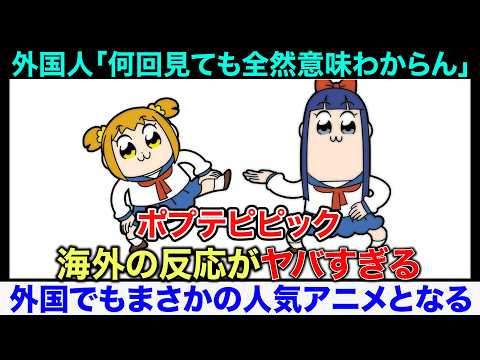
The series follows two characters, Popuko and Pipimi, who engage in surreal comedy that often lacks traditional punchlines, frequently breaks the fourth wall, and parodies everything from Japanese entertainment industry figures to internet culture itself. Rather than hiding its apparent low production values, the series invested enormous resources into making intentionally cheap-looking content—a paradoxical approach that became its defining characteristic.
Why It Matters
Pop Team Epic represents a fundamental shift in how anime engages with its audience and industry conventions. In an era when anime had become increasingly focused on narrative sophistication and visual polish, Pop Team Epic asked a radical question: what if an anime deliberately rejected those values?
The series’ success—both domestically and internationally—demonstrates that audiences are hungry for content that challenges medium conventions rather than perfects them. It proved that “bad” anime, when executed with intentional artistry, could resonate more powerfully than conventionally excellent productions. This has broader implications for creative industries: it suggests that authenticity, subversion, and audience participation can matter more than technical perfection.
Furthermore, Pop Team Epic’s international success reveals how internet culture and meme formats have created a universal language that transcends traditional barriers of language and cultural context. The series became a global phenomenon not despite being incomprehensible to non-Japanese audiences, but partly because of it.
Background
Pop Team Epic originated as a four-panel manga serialized on the Takeshobo website “Manga Life” beginning in 2014. The manga’s humor relied heavily on non-sequiturs, absurdist scenarios, and references to Japanese internet culture. Before the anime adaptation, the series had already begun circulating as memes on Western platforms like Tumblr and 4chan, with individual panels being repurposed as reaction images and edited into various internet formats.
The 2018 anime adaptation was produced by J.C.Staff and aired during the winter 2018 season. It was simultaneously distributed internationally through platforms including Crunchyroll, HiDive, and Funimation, with English dubs produced for Western audiences. Notably, the series aired on Adult Swim in the United States just six months after its Japanese broadcast—an unusually rapid international rollout for a niche comedy anime.
The series’ creator, Bukubu Okawa, has stated in interviews that she had no interest in following industry conventions, a philosophy that directly influenced the anime’s production approach. This anti-establishment stance became central to the work’s identity and appeal.
Key Points
- Intentional Absurdism: Pop Team Epic deliberately rejects narrative structure, character consistency, and traditional comedy pacing. The lack of conventional punchlines is a feature, not a bug.
- Production Paradox: The series invested significant resources and technical expertise to create content that appears cheap and hastily made. This reversal of typical production priorities became its most distinctive characteristic.
- Dual Voice Acting Strategy: Broadcasting identical footage twice with different voice actors transformed the same scenes into completely different experiences, challenging fundamental assumptions about how animation works.
- Domestic Dominance: On Niconico (Japan’s primary video platform), all episodes exceeded one million views. The series won first place in Niconico’s “Best Winter 2018 Anime” poll with a 21.94% special vote rate, winning across both male and female voter categories.
- International Meme Status: Before the anime aired, Pop Team Epic panels were already circulating as reaction images on Western image boards and social media. The series became known internationally as a meme before most viewers encountered it as a complete work.
- Cultural Translation: Despite heavy reliance on Japanese-specific references, the series resonated globally because its fundamental appeal—absurdist humor and internet culture—transcended language barriers.
Timeline
- 2014: Bukubu Okawa’s Pop Team Epic manga begins serialization on Takeshobo’s Manga Life website
- 2014-2017: Individual manga panels circulate as memes on Western platforms including Tumblr and 4chan
- January 2018: Television anime adaptation premieres in Japan
- January 2018: Simultaneous international distribution begins on Crunchyroll, HiDive, and Funimation
- February 2018: Series wins first place in Niconico’s “Best Winter 2018 Anime” poll
- June 2018: Adult Swim begins broadcasting the series in the United States
- 2018: Opening theme “Pop Team Epic” receives millions of streams on Spotify; nominated for Best Opening at Crunchyroll Anime Awards 2019
- 2018: Series wins Yahoo Search Awards in the anime category
Perspectives
Japanese Audience Reception: Domestic viewers embraced Pop Team Epic as a revolutionary work that finally gave voice to internet culture within mainstream anime. Phrases from the series became widely used memes, and the show’s apparent “laziness” was reinterpreted as sophisticated commentary on industry practices. The dual voice-acting approach was celebrated as a creative innovation rather than a cost-cutting measure.
International Critical Response: Western media outlets described the series as “the shitpost anime,” “meme generation anime,” and “high production values applied to internet garbage.” Publications like Anime Feminist praised it for subverting traditional character archetypes—particularly the rejection of the “cute female character” trope in favor of crude, aggressive, and incomprehensible humor. The series was recognized as having unusual compatibility with Adult Swim’s programming philosophy.
Industry Perspective: The anime industry’s response was mixed. While some saw Pop Team Epic as innovative and boundary-pushing, others viewed it as a troubling precedent that might encourage genuinely low-effort productions to claim artistic merit. The distinction between “intentionally appearing cheap” and “actually being cheap” became a point of debate.
Audience Confusion: Many viewers, both Japanese and international, expressed genuine bewilderment. Comments like “What is this?” and “I understood 80% of nothing” were common. However, this confusion became recognized as the appropriate response—the series had successfully created an experience where not understanding was the correct way to engage with the content.
Insights
Pop Team Epic marks a watershed moment in anime history, signaling the medium’s transition from a “maturity phase” focused on narrative sophistication to a “diversification phase” that embraces fragmentation, absurdism, and anti-establishment aesthetics.
The series succeeded by inverting traditional quality metrics. Where previous revolutionary anime like Neon Genesis Evangelion challenged narrative structure and The Melancholy of Haruhi Suzumiya played with broadcast order, Pop Team Epic questioned whether quality itself was a necessary criterion for artistic merit. By executing “bad anime” with technical precision and intentional artistry, it demonstrated that the concept of “quality” is contextual and negotiable.
The international success of Pop Team Epic reveals that internet culture has created a genuinely universal language. The series’ appeal didn’t depend on viewers understanding Japanese celebrity references or local advertising culture—in fact, that incomprehension became part of the appeal. The work’s fundamental absurdism and embrace of meaninglessness transcended the specific cultural context of its creation.
Perhaps most significantly, Pop Team Epic proved that audiences don’t always want perfection. They want authenticity, subversion, and participation. The series invited viewers to become part of the joke, to argue about whether it was good or bad, to create their own interpretations. This participatory model—where audience engagement and debate become part of the artwork itself—may represent the future direction of media in an age of memes and social media commentary.
The series also raises important questions about the anime industry’s sustainability. If high production values and narrative sophistication no longer guarantee success, what should studios prioritize? Pop Team Epic suggests that cultural relevance, audience connection, and willingness to break conventions might matter more than technical polish.
Finally, Pop Team Epic’s existence as a “cult work with global reach” rather than a “worldwide blockbuster” suggests a fundamental change in how media achieves success. In an era of algorithmic distribution and niche communities, a work doesn’t need mass appeal to achieve cultural significance. It simply needs to resonate intensely with the right audience—and in Pop Team Epic’s case, that audience turned out to be scattered across the internet worldwide.