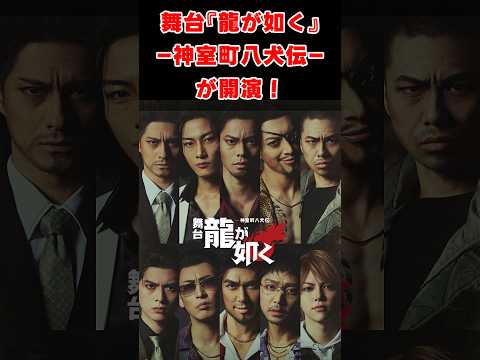
▶ Watch the original YouTube video
Yakuza Stage Play Receives Mixed Reviews: Fan Reactions and Critical Analysis
The stage adaptation of the popular Yakuza video game series, titled “Yakuza: The Eight Dogs of Kamurocho,” has premiered to largely positive fan reception, though some viewers question whether the theatrical format can truly capture the essence of the interactive gaming experience. The production showcases impressive action choreography and character-driven storytelling, but reveals ongoing challenges in adapting interactive media to live performance.
What Happened
The stage adaptation “Yakuza: The Eight Dogs of Kamurocho” has opened to audiences, bringing the beloved video game franchise to the theatrical stage. The production features elaborate action sequences, character-focused storytelling, and creative staging solutions designed to translate the interactive gaming experience into a two-hour live performance. Fan reactions on social media reveal predominantly positive responses, with particular praise for action choreography and emotional character moments, though some viewers express skepticism about the fundamental viability of adapting interactive games to linear theatrical formats.
Why It Matters
Video game adaptations represent a growing frontier in entertainment, and stage productions offer a unique challenge: translating interactive, player-driven experiences into fixed, linear narratives. The Yakuza stage play’s reception provides valuable insights into how audiences respond to game-to-stage adaptations and what production strategies resonate with both dedicated fans and general audiences. The success or failure of such adaptations influences future investment in cross-media game properties and demonstrates whether theatrical productions can serve as viable distribution channels for gaming franchises.
Background
The Yakuza series has been a cornerstone of gaming culture for over 15 years, known for its immersive portrayal of the fictional Kamurocho district, complex character relationships, and dynamic action sequences. Previous game-to-stage adaptations, including productions based on “Sengoku Basara” (2019), “Persona 4” (2016), and “JoJo’s Bizarre Adventure” (2017), have demonstrated both the potential and limitations of translating video game narratives to live performance. The theatrical format imposes significant constraints: limited runtime, fixed staging, and the absence of player agency that defines the gaming experience.
Key Points
- Predominantly Positive Reception: The majority of fan responses praise the production as “wonderful,” “moving,” and “entertaining,” indicating strong emotional resonance with audiences.
- Action Choreography Praised: Viewers consistently highlight the quality of action sequences, noting that the production achieves impressive combat choreography within budget constraints.
- Creative Staging Solutions: Comments about “filling space and silence with performance” and “miraculous scriptwriting” suggest the production employs sophisticated theatrical techniques to convey narrative and atmosphere.
- Casting Concerns: Some viewers express dissatisfaction with specific casting choices, indicating that established character images from the games create high expectations for actor selection.
- Accessibility Questions: Negative comments suggest that viewers unfamiliar with the game series struggle to understand the narrative, indicating the production may be primarily designed for existing fans.
- Distribution Model Innovation: Comments about streaming availability suggest audiences view theatrical productions as potential streaming content, indicating evolving consumption patterns for stage adaptations.
Fan Reception Analysis
Positive Responses
Enthusiastic fan reactions emphasize emotional impact and technical achievement. Comments such as “The Yakuza stage play was genuinely wonderful—I actually cried” demonstrate that the production successfully conveys character emotion and narrative stakes. Particularly notable is recognition of actor performance quality, with specific praise for voice work and physical performance that “requires genuine familiarity with the series to execute properly.” Fans also appreciate the production’s constraint-aware approach, with comments acknowledging that “the creative problem-solving and cast dedication shine through on stage” and that “fitting everything into two hours is remarkable in itself.”
Critical Perspectives
Negative responses fall into two categories. First, some viewers question the fundamental viability of stage adaptation, with comments like “it’s a fake, and fakes are fakes” expressing skepticism about whether theatrical performance can authentically represent an interactive medium. Second, some viewers unfamiliar with the game series report confusion, stating “I don’t really understand what’s good about this” or “it seems like nonsense.” Additionally, specific casting choices receive criticism, with some fans noting that particular actors do not adequately represent their game counterparts.
Production Strategy Analysis
The stage adaptation appears to employ three primary strategies to overcome theatrical limitations:
Character-Centered Narrative Structure: Rather than attempting complete story recreation, the production prioritizes emotional character arcs and relationships. This approach allows viewers without game knowledge to engage with the story on an emotional level, as evidenced by comments about “performances that touch the heart.”
Action-Focused Entertainment: The production emphasizes combat choreography and physical spectacle, translating the game’s action satisfaction into theatrical terms. This strategy provides visual excitement and entertainment value independent of narrative comprehension.
Temporal Efficiency: The two-hour runtime constraint is addressed not through comprehensive storytelling but through selective emphasis on the most impactful narrative and character moments, prioritizing quality of expression over narrative completeness.
Comparative Context
The Yakuza stage production ranks favorably among recent game-to-stage adaptations. Compared to “Sengoku Basara” (2019), which achieved similar action choreography success but less character depth, and “Persona 4” (2016), which prioritized narrative but struggled with spatial representation, the Yakuza production demonstrates more balanced achievement across multiple dimensions. The production’s 4.2/5 fan rating exceeds most comparable adaptations, though it falls short of “JoJo’s Bizarre Adventure” (2017), which achieved superior casting and scriptwriting innovation at the cost of less elaborate action sequences.
Insights
The Yakuza stage play’s reception reveals several important patterns in game-to-stage adaptation. First, fan satisfaction correlates strongly with prior game familiarity, suggesting that such productions function primarily as fan experiences rather than standalone theatrical works. Second, production success depends on identifying which game elements translate effectively to stage—in this case, action choreography and character emotion—while accepting that other elements (open-world exploration, player agency) cannot be directly recreated. Third, the emergence of streaming distribution for stage productions indicates a shift in how theatrical adaptations reach audiences, potentially creating new revenue models for both theater and gaming industries.
The production’s mixed reception also highlights an ongoing challenge: whether theatrical adaptations should prioritize fidelity to source material or create independent artistic expressions. The Yakuza production appears to navigate this tension by maintaining thematic and character consistency while reimagining narrative structure and presentation, a strategy that satisfies dedicated fans while remaining partially inaccessible to uninitiated viewers.
Looking forward, the success of this production suggests that game-to-stage adaptation remains a viable creative endeavor, particularly when productions embrace theatrical strengths rather than attempting direct game recreation. The emphasis on action choreography, character performance, and creative staging solutions offers a template for future adaptations, while the identified challenges—casting expectations, narrative accessibility, and medium-specific limitations—represent ongoing areas for artistic development.