▶ Watch the original YouTube video
How Touhou’s Minor Maid Character Challenges the Popularity Contest System
A viral “Yukkuri Charanko” video featuring Koakuma, a minor character from Touhou Project, offers a satirical critique of the franchise’s popularity voting system. The video exposes how fan communities value characters differently than official rankings, revealing deeper truths about fan culture and character appreciation in anime and gaming communities.
What Happened
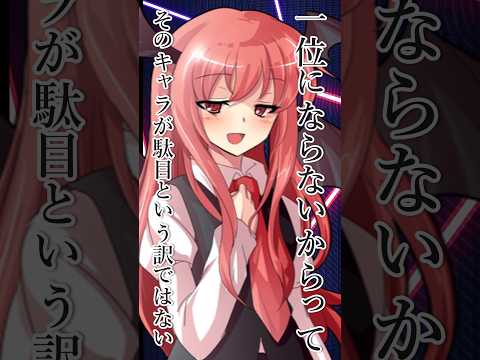
A Yukkuri Charanko video has gained attention for depicting Koakuma, a minor maid character from Touhou Project’s Scarlet Devil Mansion, reacting to her consistently low rankings in the franchise’s official popularity polls. The video uses the Yukkuri format—a comedic medium featuring simple animated characters with distinctive voices—to express what Koakuma might genuinely feel about her perpetually low popularity status.
Koakuma occupies a unique position in the Touhou universe. While she serves as a maid in the Scarlet Devil Mansion alongside more prominent characters like Patchouli, Remilia, and Flandre, her official appearances remain limited. This limited exposure directly correlates with her consistently low rankings in popularity polls, creating a narrative that the video cleverly exploits for both comedic and philosophical effect.
Why It Matters
This video represents a significant shift in how fan communities evaluate and appreciate characters. Rather than accepting official popularity rankings as the definitive measure of character value, the video—and the community response to it—demonstrates that fans recognize a fundamental disconnect between institutional popularity metrics and genuine fan affection.
The phenomenon reflects broader changes in fan culture over the past 15 years. The emergence of “oshi culture” (supporting a favorite character or creator) has evolved to valorize supporting minor or underappreciated characters as a marker of authentic fandom. In this context, Koakuma’s low popularity ranking paradoxically becomes evidence of her status as a “true oshi”—a character worthy of genuine, unconditional support precisely because she lacks mainstream recognition.
Additionally, the video demonstrates how alternative media formats like Yukkuri Charanko can serve as platforms for expressing perspectives that official channels would never permit, effectively democratizing character interpretation within fan communities.
Background
Touhou Project is a long-running bullet-hell shooter franchise that has spawned an enormous doujin (fan-created) culture. The series conducts regular popularity polls that rank characters by fan votes, with results that typically correlate strongly with characters’ prominence in official media.
The Scarlet Devil Mansion, one of the primary settings in Touhou, features a clear hierarchical structure: Remilia (mansion owner) at the top, followed by Patchouli (de facto vice-administrator), Flandre (the owner’s sister), and finally Koakuma (junior maid) at the bottom. This in-universe hierarchy has historically mirrored the characters’ popularity poll rankings with remarkable consistency.
Yukkuri Charanko emerged approximately 8 years ago as a distinctive fan-created format. The medium strips characters down to their simplest visual forms and pairs them with distinctive voice acting, creating a space where character interpretations can deviate significantly from official canon. The format has proven remarkably effective at expressing character perspectives that official media would constrain or prohibit entirely.
Key Points
- Koakuma’s low popularity rankings directly reflect her minor role in official Touhou media and her position as a junior maid within the Scarlet Devil Mansion’s hierarchy
- The Yukkuri Charanko format allows characters to express authentic emotional responses to their popularity status, creating a space for commentary on the popularity voting system itself
- Fan community responses reveal that character appreciation operates on multiple dimensions beyond simple popularity metrics, including character depth, creative potential, and emotional resonance
- Modern fan culture increasingly valorizes supporting minor characters as an expression of authentic fandom, inverting traditional hierarchies where popularity equals value
- The video functions as implicit social commentary on the limitations of one-dimensional evaluation systems and the richness of fan interpretation
- Koakuma’s status as an underappreciated character paradoxically strengthens fan affection by preserving interpretive freedom and creative possibility
The Yukkuri Charanko Format and Character Expression
The Yukkuri Charanko medium operates fundamentally differently from official anime or game media. In official Touhou productions, character dialogue and behavior are strictly controlled by creators to maintain canon consistency and narrative coherence. Yukkuri Charanko, by contrast, relaxes these constraints significantly, enabling creators to explore character perspectives and emotional states that official media would never permit.
This freedom proves particularly valuable for minor characters. Koakuma’s limited official appearances mean that her internal emotional life remains largely unexplored in canon. The Yukkuri format fills this void, allowing fan creators to imagine and express what Koakuma might genuinely feel about her marginal status—frustration, resignation, defiance, or dark humor about her position at the bottom of the mansion’s hierarchy.
The format thus serves a democratizing function within fan communities. Rather than accepting official hierarchies and popularity metrics as final judgments, Yukkuri Charanko creators can voice alternative perspectives, effectively challenging the authority of official evaluation systems.
The Psychology of Minor Character Appreciation
Character appreciation in fan communities operates according to principles that differ substantially from popularity voting. While popularity polls measure immediate appeal and visibility, fan communities often develop deeper attachments to characters precisely because of their minor status.
Several factors contribute to this phenomenon. First, minor characters typically receive less official content, which paradoxically increases their interpretive potential. Fans can project their own ideas and emotions onto characters with minimal canonical constraints. Second, supporting a minor character requires more deliberate effort and commitment, creating a stronger sense of personal investment. Third, the community of fans supporting the same minor character often develops stronger bonds, as they share a sense of collective appreciation for an undervalued character.
Koakuma benefits from all three factors. Her limited appearances in official Touhou media leave substantial room for fan interpretation. Supporting her requires conscious effort against the grain of official popularity hierarchies. And fans who appreciate Koakuma form a community united by their recognition of her value despite her low ranking.
The Hierarchy Paradox
A striking feature of the Koakuma situation is the inversion of hierarchies between official canon and fan community evaluation. In official Touhou lore, Koakuma occupies the bottom rung of the Scarlet Devil Mansion’s hierarchy as a junior maid. In popularity polls, she consistently ranks in the lower percentiles. Yet within fan communities, particularly among those who engage with Yukkuri Charanko and other fan media, Koakuma is frequently described as one of the mansion’s most compelling characters.
This inversion reflects a fundamental principle of modern fan culture: that official status and fan appreciation operate on entirely different axes. A character’s canonical importance and her fan-community value need not correlate. In fact, the disconnect between official marginalization and fan appreciation can actually deepen emotional investment, as fans feel they are recognizing value that official systems overlook or undervalue.
Community Response and Interpretation
Online responses to Koakuma-focused Yukkuri Charanko content reveal consistent patterns. On Twitter, fans frequently comment that Koakuma’s situation is “painfully relatable” and that her minor status makes her more worthy of support, not less. YouTube comments emphasize that “character value cannot be measured by popularity poll rankings.” Discussions on imageboards like 5channel feature arguments that Koakuma represents the Scarlet Devil Mansion’s most interesting character, despite—or perhaps because of—her official marginalization.
These responses indicate that fan communities have developed sophisticated frameworks for evaluating characters that explicitly reject popularity polls as authoritative measures. Instead, fans consider character depth, narrative potential, creative interpretive possibilities, and community resonance. By these alternative metrics, Koakuma scores highly precisely because her minor status creates interpretive freedom and emotional space for fan creativity.
Broader Implications for Fan Culture
The Koakuma phenomenon reflects larger transformations in fan culture over the past 15 years. The rise of “oshi culture,” particularly in VTuber communities, has fundamentally reframed what it means to support a character or creator. Increasingly, supporting someone or something that lacks mainstream popularity is understood not as contrarian behavior but as authentic fandom.
This shift has profound implications. It suggests that fan communities are developing independence from official evaluation systems. Rather than accepting institutional hierarchies as final judgments, fans are constructing their own frameworks of value and appreciation. In this context, a character’s low official ranking becomes irrelevant or even advantageous, as it signals that the character has not been fully “claimed” by mainstream popularity and remains available for creative reinterpretation.
The Yukkuri Charanko format facilitates this shift by providing a medium through which alternative perspectives can be expressed and shared. The format’s simplicity and accessibility make it an ideal vehicle for fan commentary on official systems and hierarchies.
Limitations of Popularity Voting Systems
The Koakuma video implicitly critiques the fundamental limitations of one-dimensional popularity voting systems. Such systems measure only immediate appeal and visibility. They cannot capture the depth of character appreciation, the richness of fan interpretation, or the strength of emotional investment that develops over time within communities.
A character’s low popularity ranking may reflect limited official appearances rather than limited fan appreciation. It may reflect the character’s position within a fictional hierarchy rather than her actual value to the community. It may reflect the character’s lack of visual prominence rather than her narrative or emotional significance.
By highlighting these limitations, the Koakuma video and community responses to it suggest that fan communities recognize popularity polls as incomplete measures of character value. This recognition does not invalidate popularity voting—such polls remain useful for understanding immediate fan preferences. Rather, it contextualizes popularity voting as one metric among many, useful for certain purposes but insufficient as a comprehensive evaluation framework.
Insights
The Koakuma phenomenon reveals several important truths about contemporary fan culture. First, fan communities have developed sophisticated independence from official evaluation systems. Rather than accepting institutional hierarchies as final judgments, fans construct their own frameworks of value based on character depth, interpretive potential, and emotional resonance.
Second, the emergence of alternative media formats like Yukkuri Charanko demonstrates how fan communities create spaces for expressing perspectives that official channels would constrain or prohibit. These formats serve a democratizing function, allowing marginalized voices and alternative interpretations to circulate within communities.
Third, modern fan culture increasingly valorizes supporting minor or underappreciated characters as an expression of authentic fandom. This represents a significant shift from earlier fan culture, where popularity and official prominence were more closely aligned with fan appreciation. Today, a character’s low official ranking can paradoxically strengthen fan affection by preserving interpretive freedom and creative possibility.
Finally, the Koakuma case suggests that the relationship between official canon and fan interpretation has fundamentally transformed. Rather than fan communities serving as secondary elaborations on official content, fan communities now operate as independent spaces with their own evaluation frameworks, creative practices, and value systems. Official content provides raw material, but fan communities determine meaning and significance.
The question of whether this appreciation would persist if Koakuma suddenly received major official roles or achieved high popularity rankings remains unanswered. The answer will reveal whether fan appreciation of minor characters reflects genuine character affection or primarily represents a form of contrarian positioning against official hierarchies. For now, Koakuma’s status as a minor character remains the foundation of her significance within fan communities—a paradox that encapsulates the complexity of contemporary fan culture.