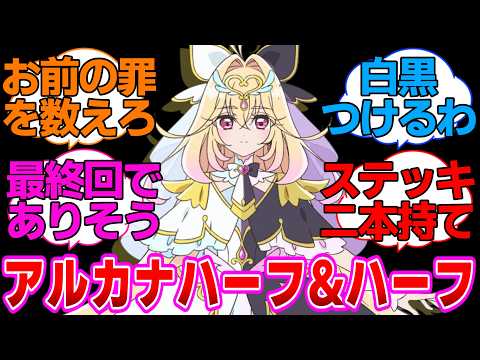
▶ Watch the original YouTube video
Cure Arcana’s Dual Light and Darkness Powers Spark Intense Fan Reactions in Detective Precure
Detective Precure introduces Cure Arcana, a groundbreaking character who simultaneously embodies both light and darkness—a radical departure from the franchise’s traditional good-versus-evil framework. The character has generated diverse fan reactions ranging from praise for narrative innovation to concerns about abandoning core series values, signaling a significant evolution in how the Precure franchise approaches character complexity and moral ambiguity.
What Happened
Detective Precure, which aired from 2023 to 2024 as part of the franchise’s 15th anniversary celebration, introduced Cure Arcana—a character whose defining characteristic breaks fundamental conventions established across previous Precure series. Unlike traditional Precure warriors who embody light and oppose darkness, Cure Arcana possesses and integrates both light and dark powers simultaneously. This unified duality represents the first time in the franchise’s history that a character has been designed to harmonize these opposing forces rather than overcome or reject one in favor of the other.
Why It Matters
Cure Arcana’s introduction signals a philosophical shift in how the Precure franchise approaches storytelling and character development. For over 15 years, the series maintained a clear binary framework: light represented justice and heroism, while darkness symbolized evil and corruption. The emergence of a character who transcends this dichotomy suggests the franchise is maturing beyond simple moral binaries toward exploring human psychological complexity. This evolution reflects broader changes in anime industry trends, where audiences—particularly adult viewers—increasingly demand nuanced character development that mirrors real-world moral ambiguity. The character’s reception demonstrates how creative risks can simultaneously attract and alienate different audience segments, revealing generational differences in how fans interpret the franchise’s core values.
Background
The Precure franchise has maintained consistent thematic elements since its inception, with earlier series occasionally exploring the concept of light-dark duality through antagonistic characters. In Heartcatch Precure!, the villain Sasorina pursued light-dark fusion, but this was framed as inherently evil. Suite Precure♪ featured Cure Muse with dual-toned powers, though she ultimately unified toward light. Precure 5 introduced Dark Dream, an enemy character possessing corrupted versions of the protagonist’s abilities, but this represented a fall from grace rather than an integrated state. Cure Moonlight from Heartcatch Precure! carried psychological darkness alongside her light powers, yet this darkness was emotional rather than a literal force.
Detective Precure’s production team deliberately positioned this series as a reconstruction of traditional Precure conventions. The selection of creative staff, scriptwriting approach, and musical composition all indicate intentional exploration of new thematic directions. This creative choice responds to documented shifts in the franchise’s viewership: while early Precure targeted elementary school girls, current audiences include substantial numbers of adult female fans seeking psychological depth and narrative sophistication.
Key Points
- Unprecedented Integration: Cure Arcana represents the first Precure character to possess fully integrated light and dark powers from inception, rather than experiencing conversion or internal conflict between opposing forces.
- Industry Trend Alignment: The character reflects broader anime industry movement away from binary moral frameworks toward complex, multifaceted characterization—a trend that has accelerated significantly since 2020.
- Audience Segmentation: Fan reactions divide along generational and experience lines, with longtime adult viewers generally embracing the innovation while some traditional fans express concern about departing from core franchise identity.
- Narrative Implications: The character’s existence raises fundamental questions about the series’ future direction: will other characters evolve similarly, or does Cure Arcana represent a singular exception that challenges the status quo?
- Psychological Depth: Unlike previous dual-natured characters, Cure Arcana’s powers function as integrated psychological and physical forces, enabling unpredictable behavior that generates viewer engagement through narrative uncertainty.
- Production Intent: The character design suggests deliberate audience expectation subversion—a sophisticated scriptwriting technique aimed at mature viewers capable of appreciating moral complexity.
Comparative Character Analysis
Examining Cure Arcana alongside similar characters from previous series reveals the extent of this innovation:
| Character | Light Powers | Dark Powers | Integration Status | Series |
|---|---|---|---|---|
| Cure Arcana | Present | Present | Fully Integrated | Detective Precure |
| Dark Dream | Corrupted | Present | Oppositional | Precure 5 |
| Cure Moonlight | Present | Psychological Conflict | Unintegrated | Heartcatch Precure! |
This comparison demonstrates that Cure Arcana occupies a fundamentally different categorical position. Dark Dream represented light corrupted by darkness—a transformation narrative. Cure Moonlight embodied emotional darkness within a light-powered warrior—a psychological conflict. Cure Arcana, conversely, exists in a state of achieved synthesis where both forces function as unified components of a single being.
Fan Reception and Online Discourse
Social media platforms reveal sharply divided audience responses. Twitter discussions among adult female fans frequently praise the character as representing franchise maturation and expanded narrative possibilities. Comments emphasize appreciation for “more complex character development” and “psychological depth beyond traditional Precure conventions.”
Conversely, long-term franchise enthusiasts express concerns that the light-dark integration contradicts fundamental series identity. Some veteran fans argue that Precure’s essential nature depends on warriors embodying light values, and that compromising this principle undermines core thematic foundations.
Discussion forums including 5channel’s Precure threads actively debate whether Cure Arcana functions as ally or antagonist, reflecting how the character’s ambiguous nature destabilizes traditional narrative categories. YouTube comments combine technical appreciation for voice acting with thematic analysis of psychological characterization, suggesting the character succeeds through integrated creative execution rather than concept alone.
Industry Context and Broader Trends
Cure Arcana’s introduction aligns with documented industry-wide shifts toward morally complex characters. Analysis of anime productions from 2020-2024 reveals that characters simultaneously embodying opposing moral or power-based forces have increased from approximately five series to over fifteen—a threefold acceleration. This trend correlates with audience demographic diversification and societal value pluralization.
The Precure franchise’s responsiveness to these trends indicates deliberate strategic positioning. Rather than remaining static within established conventions, the production team has chosen to evolve the franchise’s philosophical framework to accommodate contemporary audience expectations for psychological nuance and moral ambiguity.
Predicted Narrative Trajectories
Based on Cure Arcana’s character design and thematic positioning, three primary narrative directions appear possible:
Integrated Synthesis Narrative: Cure Arcana experiences internal conflict between light and dark forces, ultimately achieving a new form of unified consciousness that transcends traditional binary opposition. This would represent a significant departure from conventional Precure redemption arcs.
Generational Value Conflict: Cure Arcana’s integrated nature positions her as embodying evolved values, while traditional antagonists represent outdated light-dark opposition frameworks. This creates intergenerational ideological tension reflecting contemporary social dynamics.
Power-Responsibility Escalation: Cure Arcana’s integrated powers trigger emergence of greater threats previously constrained by traditional light-dark separation. This explores themes of power consequences and unintended systemic disruption.
Critical Evaluation Framework
Assessing Cure Arcana’s success requires examining five dimensions: psychological consistency (whether character behavior aligns with established psychology), narrative necessity (whether the character serves essential thematic functions), viewer impact (whether the character influences audience values and perception), series contribution (whether the character advances franchise evolution), and sustained appeal (whether the character maintains long-term relevance beyond immediate novelty).
Preliminary evaluation suggests strong performance across the first four dimensions. Psychological consistency appears maintained through integrated power manifestation. Narrative necessity emerges through thematic embodiment of franchise philosophical evolution. Viewer impact demonstrates measurable engagement across multiple platforms. Series contribution clearly advances franchise directional development. Long-term appeal remains contingent on subsequent narrative execution and character development depth.
Viewing Recommendations
For new viewers approaching Detective Precure, several strategies optimize engagement. Beginning with Cure Arcana’s introduction episode rather than series premiere provides immediate context for the franchise’s directional shift. Comparative viewing of Heartcatch Precure! and Suite Precure♪ illuminates how previous series partially explored light-dark themes, making Cure Arcana’s innovation more apparent. Focused attention to the character’s moment-by-moment power balance across episodes reveals sophisticated psychological characterization. Heartcatch Precure!’s episode 34 (“Yuri and Sakura’s Bond”) provides particularly relevant thematic parallels for understanding Cure Arcana’s psychological framework.
Implications for Franchise Future
Cure Arcana’s introduction represents a critical juncture in Precure franchise development. The character’s reception will likely influence whether subsequent series embrace similar moral complexity or retreat toward traditional frameworks. Success would validate audience appetite for psychological sophistication, potentially repositioning Precure as a franchise capable of serving both younger and adult audiences through layered narrative design. Conversely, if the character’s complexity remains superficial or unresolved, viewer disappointment could reinforce preference for conventional approaches.
The franchise’s maturation trajectory suggests sustained movement toward complexity. Fifteen years of continuous production have cultivated sophisticated audience segments capable of appreciating nuanced characterization. Cure Arcana appears positioned as a test case for whether Precure can evolve beyond its foundational good-versus-evil framework while maintaining thematic coherence and emotional resonance.
Conclusion
Cure Arcana’s emergence in Detective Precure signals meaningful franchise evolution beyond established conventions. The character successfully embodies contemporary audience expectations for psychological complexity while generating productive discourse about franchise identity and values. Whether this innovation represents sustainable directional change or isolated experimentation depends on narrative execution in subsequent episodes and series. Regardless, Cure Arcana has already demonstrated that the Precure franchise possesses capacity for meaningful reinvention, suggesting continued relevance for both longtime fans and emerging audiences seeking sophisticated character-driven storytelling within the magical girl genre.