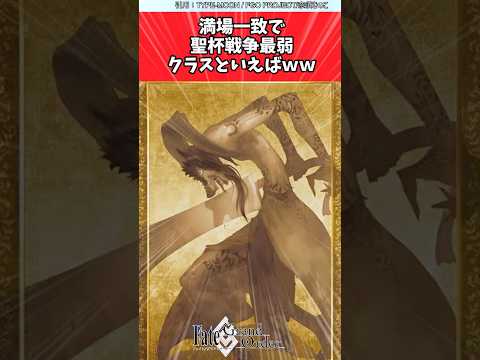
▶ Watch the original YouTube video
Why the Fate Series Can’t Agree on Its Weakest Servant: A 15-Year Analysis of Fan Debate
After 15 years immersed in the Fate franchise, a comprehensive analysis reveals why the gaming community remains fundamentally divided over which servant truly ranks as the weakest. The debate exposes a deeper truth: “weakness” in Fate is not a fixed attribute but a complex intersection of game mechanics, narrative design, and player perspective.
What Happened
A video compilation of Masters (players) discussing which servants qualify as the weakest in the Holy Grail War sparked renewed interest in a longstanding community debate. Rather than reaching consensus, the responses revealed stark disagreement—what some players consider objectively weak, others defend as strategically viable or narratively powerful. This phenomenon reflects a fundamental shift in how the gaming community evaluates character strength across multiple dimensions.
Why It Matters
The inability to reach consensus on a servant’s weakness reveals important truths about game design philosophy and community diversity. Fate/Grand Order (FGO) deliberately incorporates multiple evaluation frameworks—game performance, narrative significance, practical utility, versatility, and fan attachment—that often contradict each other. Understanding this complexity matters because it demonstrates how modern gaming communities operate: not as monolithic entities seeking objective truth, but as diverse groups with legitimately different priorities and values.
Background
The Fate series began with Fate/stay night in 2004, introducing players to the Holy Grail War and its seven servants. Over nearly two decades, the franchise expanded dramatically, particularly with FGO’s 2015 launch, which introduced hundreds of playable servants. This expansion transformed “weakness” from a simple designation into a complex, multifaceted evaluation challenge. The original observation that sparked this analysis dates to 2015, when early FGO players debated servants like Cu Chulainn and Jeanne d’Arc as the weakest options—only to see both receive significant buffs by 2018, fundamentally altering their competitive viability.
Key Points
- Multiple evaluation axes exist: Game performance (numerical stats), narrative setting (lore-based strength), practical utility (quest-specific effectiveness), versatility (multi-scenario applicability), and fan preference all create different “weakness” hierarchies.
- Weakness is temporally unstable: Over seven years of FGO gameplay, at least 15 servants have experienced complete reversals in evaluation—from “weakest” to “essential for high-difficulty content.”
- Community fragmentation reflects player diversity: Gamers prioritize DPS metrics; story-focused players value narrative impact; competitive players optimize for specific content; fan communities defend their favorites regardless of performance data.
- Design philosophy intentionally creates weakness: Fate’s creators deliberately design some servants with lower combat stats but unique strategic advantages, embedding the message that “not all servants should be evaluated on identical scales.”
- Industry trend toward weak-character narratives: Recent FGO events increasingly feature “weak” servants as protagonists, reflecting broader anime and gaming industry trends celebrating underdog growth narratives.
- The concept itself is becoming obsolete: With 600+ servants and continuous balance patches, identifying a single “weakest” servant grows increasingly impossible, suggesting the term itself may eventually disappear from community discourse.
Timeline
- 2004: Fate/stay night releases; players first question why servants like Caster possess such limited combat ability.
- 2015: FGO launches; early community identifies Cu Chulainn and Jeanne d’Arc as weakest servants; debate intensifies with expanded servant roster.
- 2015–2018: Multiple servants receive skill enhancements; previously “weakest” servants become essential for high-difficulty quests.
- 2018: Amadeus receives major balance update; transforms from consensus weakest servant to high-difficulty content staple.
- 2020 onward: FGO events deliberately feature “weak” servants in protagonist roles; industry trend toward underdog narratives accelerates.
- 2024: FGO servant roster exceeds 600 units; objective “weakest” designation becomes functionally impossible.
Perspectives
The Competitive Gamer Perspective: For players focused on DPS metrics and clear-speed optimization, weakness is objectively measurable through damage output, skill multipliers, and attack speed. These players view “weakest” as a mathematical designation, not subject to interpretation. However, this perspective often overlooks servants with niche utility or specific enemy matchups.
The Narrative-Focused Player: Story-driven players evaluate servants through their lore significance and in-game narrative moments. A servant might rank as “weak” in game mechanics but “strong” in storytelling impact. This group frequently argues that servants like Caster possess unique magical knowledge and servant-enhancement abilities that transcend simple combat metrics.
The Fan Community Advocate: Players with favorite servants actively resist “weakest” designations, arguing that their preferred character possesses hidden strengths or specific use cases. This perspective, while subjective, often identifies legitimate strategic applications that competitive players overlook.
The Competitive Content Creator: High-difficulty quest specialists recognize that “weakness” is context-dependent. A servant weak against most enemies might excel against specific boss types. This perspective emphasizes matchup analysis over absolute rankings.
The Game Designer’s Intent: According to director Aoki Ei (Fate/Zero), the Holy Grail War’s outcome depends less on servant strength than on master compatibility and master capability. This design philosophy intentionally creates servants with varied power distributions, ensuring no single evaluation metric captures complete servant value.
Insights
The persistent inability to reach consensus on Fate’s weakest servant reveals that the franchise’s design philosophy has succeeded in creating genuine diversity. Unlike Pokémon, where objective stat comparisons produce clear hierarchies, Fate deliberately incorporates narrative, mechanical, and strategic dimensions that resist unified evaluation. This is not a flaw but a feature—it reflects the franchise’s core belief that different servants possess different value types.
The debate also demonstrates how modern gaming communities operate across multiple, sometimes contradictory value systems. The same servant can simultaneously be “weakest” (by DPS metrics), “strongest” (by narrative impact), and “essential” (for specific quests). Rather than representing confusion, this multiplicity indicates a mature community capable of holding complex, context-dependent evaluations.
Looking forward, the concept of “weakest servant” will likely fade as servant rosters expand beyond 1,000 units and continuous balance patches eliminate persistent power gaps. The real value of this debate lies not in reaching a final answer but in what the discussion reveals: that Fate’s community has learned to appreciate characters across multiple dimensions, and that “weakness” in one context often masks strength in another.
The most significant insight emerges from personal gameplay experience: the greatest satisfaction comes not from deploying the strongest servants, but from strategically utilizing “weak” servants to overcome challenges. This suggests that the community’s inability to agree on weakness reflects something deeper—a shared recognition that every servant possesses untapped potential, waiting for the right player, the right strategy, and the right moment to shine.