▶ Watch the original YouTube video
A pivotal apology press conference scene in My Hero Academia demonstrates how the series has evolved to explore complex themes of responsibility and moral growth. This analysis examines why this moment represents a turning point in how modern anime portrays character accountability and societal expectations.
What Happened
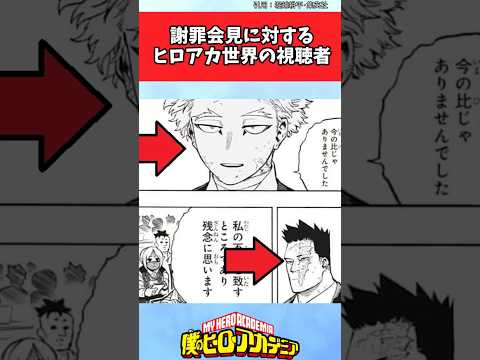
My Hero Academia features a significant scene in which multiple characters face a public apology press conference. This moment serves as a critical juncture in the narrative where characters must confront the consequences of their actions and take responsibility before the public eye. The scene represents more than a simple apology—it embodies a fundamental reconsideration of what it means to be a hero in the series’ universe.
Why It Matters
The apology press conference scene is significant because it reflects broader shifts in how contemporary anime addresses moral responsibility and character development. In an era of social media visibility and public accountability, this scene captures the tension between personal growth and societal expectations. The way characters handle this moment reveals their psychological maturity and the series’ underlying ethical framework. For viewers who have followed the characters’ journey since 2016, this scene represents a culmination of their development from aspiring heroes into individuals who must grapple with the real consequences of their choices.
Background
Apology scenes in anime have evolved significantly over the past 15 years. Early examples, such as the Survey Corps’ report scene in Attack on Titan (2013-2019), focused on organizational accountability and power structures. More recent works like Demon Slayer explored apologies within mentor-student relationships. My Hero Academia’s approach differs by centering on the tension between individual responsibility and societal expectations of heroism. This shift reflects changing audience demographics—viewers who began watching the series as teenagers in 2016 are now adults capable of engaging with more complex ethical questions. The timing of this scene also coincides with a broader industry trend since 2018, where anime productions increasingly emphasize moral complexity and social responsibility in their narratives.
Key Points
- The apology press conference represents a turning point where characters transition from “aspiring heroes” to individuals bearing real responsibility for their actions
- Unlike organizational accountability scenes in other anime, this moment emphasizes personal moral growth and the redefinition of heroism itself
- The public nature of the apology reflects contemporary social media culture, where accountability is increasingly visible and demanded
- Viewer reactions range from emotional support for character growth to demands for concrete behavioral change beyond words
- The scene demonstrates how modern anime addresses the gap between societal expectations and individual capability
- This moment establishes the series’ ethical foundation: true heroism requires acknowledging failure and taking responsibility
Comparative Analysis: How Apology Scenes Have Evolved
Different anime handle apology scenes in distinct ways. Attack on Titan’s organizational accountability scenes prioritize collective responsibility over individual conscience, revealing power structures within institutions. Demon Slayer emphasizes reconciliation and deepening bonds through apologies rooted in past failures. My Hero Academia’s approach uniquely combines social responsibility with individual psychological growth, positioning the apology as a moment where the very concept of heroism is reconsidered. This evolution reflects changing audience expectations and societal values regarding accountability.
Perspectives
Positive viewer reactions emphasize emotional resonance with character maturity and growth. Many fans expressed admiration for characters taking responsibility, viewing it as a natural progression of their development. However, critical responses questioned whether apologies alone suffice without corresponding behavioral change. Some viewers noted that the scene reflects real-world social issues, suggesting that My Hero Academia’s fictional narrative resonates with contemporary concerns about public accountability. This range of reactions indicates that audiences now apply sophisticated ethical standards to anime narratives, expecting consistency between words and future actions.
Broader Implications
The apology press conference scene symbolizes the maturation of anime as a medium. Fifteen years ago, sincere depictions of character accountability were uncommon in anime. Today, such scenes are standard, reflecting the medium’s evolution toward greater narrative complexity. The scene also addresses a fundamental question: does apology constitute genuine responsibility, or must it be followed by demonstrable change? This uncertainty mirrors real-world debates about accountability and redemption. For the series itself, the true test lies in how characters act after this moment—whether they genuinely transform or merely return to previous patterns. The scene ultimately serves as a message to the series’ aging fanbase, acknowledging their own growth from teenagers to adults capable of understanding nuanced moral questions. The success of this narrative choice will be determined by the story’s subsequent development and whether it honors the weight this moment carries.