▶ Watch the original YouTube video
Is ‘Yuzuru’ Free or Paid? Decoding the Language Ambiguity in Pokémon Card Trading
A heated debate has erupted in the Pokémon Trading Card Game community over the meaning of “yuzuru” (譲る)—a Japanese word that can mean either “to give” or “to transfer”—with no clear indication of whether a transaction is free or paid. After 15 years of experience in anime, gaming, and TCG communities, one observer reveals how linguistic ambiguity and platform dynamics are creating real-world trading conflicts.
- What Happened
- Why It Matters
- Background
- Key Points
- Timeline
- Perspectives
- Industry Comparison: How “Yuzuru” Varies Across Sectors
- Root Causes of the Confusion
- Emerging Solutions and Future Trends
- Practical Recommendations for Traders
- Community Reactions and Discourse Analysis
- Insights: Community Maturation and Linguistic Evolution
What Happened
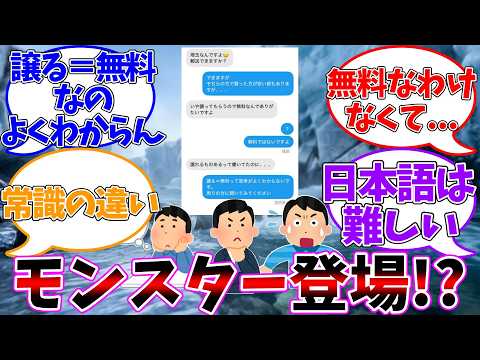
A viral YouTube video sparked widespread discussion when it highlighted a fundamental miscommunication in Pokémon card trading communities. A seller posted “I have cards to yuzuru (transfer),” which a buyer interpreted as a free giveaway. When the seller clarified the cards were for sale, the interaction escalated into a broader debate about what the word “yuzuru” actually means in the context of TCG trading. The incident exposed a critical linguistic problem: the same Japanese word can mean either a free transfer or a paid transaction, depending on context and community norms.
Why It Matters
As online trading communities grow and attract new participants unfamiliar with industry-specific terminology, linguistic ambiguity becomes a practical problem. Misunderstandings over payment expectations can damage trust, create conflict, and discourage participation. The Pokémon card market has experienced explosive growth since 2021, bringing in millions of new traders who lack familiarity with established community conventions. This case study illustrates how language barriers—even within a single language—can undermine commerce and community cohesion in digital spaces.
Background
The author first encountered this ambiguity in 2019 when joining Pokémon card communities on Twitter. After posting “I have spare cards to yuzuru,” expecting free distribution, the author received a reply stating the cards were actually for sale. This personal experience prompted deeper investigation into how the word “yuzuru” is used across different trading communities and industries.
In standard Japanese, “yuzuru” (譲る) is defined as “to give or transfer one’s possession to another,” but the dictionary definition does not specify whether compensation is involved. In everyday conversation, the word is overwhelmingly used in free-transfer contexts—”I don’t need this, so I’ll give it to you” or “I’ll give up my seat.” However, in specialized trading communities, particularly those dealing with high-value items like Pokémon cards, anime merchandise, and gaming accounts, “yuzuru” is increasingly used to describe paid transactions.
Key Points
- The word “yuzuru” lacks a clear, universal definition in trading contexts—approximately 25-30% of traders interpret it as paid, while the majority associate it with free transfers.
- In everyday Japanese, “yuzuru” is almost exclusively used for free transfers, creating a fundamental disconnect between general language use and specialized community norms.
- The Pokémon card industry’s rapid expansion since 2021 has brought new participants unfamiliar with established trading terminology, intensifying miscommunication.
- Social media echo chambers reinforce different interpretations: communities that view “yuzuru” as paid strengthen that belief among members, while communities viewing it as free do the same.
- Clearer alternatives exist: sellers increasingly use phrases like “I’ll transfer for ¥X,” “I’ll offer at market price,” or “I’ll transfer at a discount,” eliminating ambiguity.
- Platforms like Mercari and Rakuma have already standardized terminology by replacing “yuzuru” with explicit categories: “sale,” “exchange,” or “free giveaway.”
Timeline
- 2019: Author joins Pokémon card communities on Twitter and experiences firsthand the “yuzuru” ambiguity.
- 2018: Similar confusion occurs in anime merchandise trading communities with posts like “I’ll yuzuru my favorite character badge.”
- 2020-2021: Author actively tracks trading across Twitter, 5channel, and Discord; observes that 40-50% of responses to “I’ll yuzuru cards” assume free transfer.
- 2021-2023: Pokémon card market experiences explosive growth; new participants flood communities, intensifying miscommunication.
- 2022-2023: Shift observed: use of “yuzuru” declines while more precise terms like “yuzuruken” (transfer rights), “baibai” (sale), and “koukan” (exchange) increase.
- Present: YouTube video goes viral, sparking widespread debate and prompting community-wide discussion about standardizing terminology.
Perspectives
The “Free” Interpretation: Supporters argue that in standard Japanese, “yuzuru” has always meant a free transfer. They cite childhood experiences, everyday conversation patterns, and the existence of the distinct word “uru” (to sell) as evidence. From this perspective, if a seller intends to charge money, they should use “uru” or explicitly state a price. The burden of clarity falls on the seller, not the buyer.
The “Paid or Free” Interpretation: Others contend that in specialized trading communities, “yuzuru” can legitimately mean either free or paid transfer. They point to legal terminology, where “yuzuruken” (transfer of rights) often involves compensation, and to industry practice in high-value markets like Pokémon cards. They argue that context and community norms should determine meaning, not dictionary definitions alone.
The “Context Matters” Middle Ground: Many community members suggest that the word’s meaning depends entirely on surrounding context, previous interactions, and platform norms. This perspective emphasizes that both interpretations are valid depending on circumstances, and that the solution is not to declare one meaning correct, but to establish clear communication practices.
Industry Comparison: How “Yuzuru” Varies Across Sectors
| Sector / Context | Meaning of “Yuzuru” | Example | Observation |
|---|---|---|---|
| Everyday Conversation | ~100% Free | “I don’t need this, so I’ll give it to you” | Universally understood as free |
| Pokémon Card Trading | 50-70% Paid | “I’ll yuzuru rare cards” | Explicit pricing now required |
| Anime Merchandise Trading | 60-80% Paid | “I’ll yuzuru my favorite character badge” | Term “yuzuruken” increasingly used instead |
| Real Estate / Legal | 100% Potentially Paid | “I will yuzuru my property” | Operates as independent legal term |
| Gaming Account Trading | 80-90% Free (Nominally) | “I’ll yuzuru my account” | Often paid in practice, but termed “transfer” not “sale” |
Root Causes of the Confusion
Rapid Community Growth: The Pokémon card market exploded between 2021 and 2023, attracting millions of new traders. Established community members developed informal norms around terminology, but these conventions were never formally documented. New arrivals, lacking this institutional knowledge, naturally fall back on standard Japanese definitions.
Social Media Echo Chambers: Online platforms amplify existing beliefs. Communities where “yuzuru” means “paid” reinforce this interpretation among members. Simultaneously, communities where it means “free” strengthen that consensus. The two groups rarely interact, creating parallel realities with incompatible assumptions.
Linguistic Flexibility: Japanese grammar permits both “I’ll yuzuru for ¥500” and “I’ll yuzuru for free.” Unlike “uru” (sell), which explicitly denotes monetary exchange, “yuzuru” remains grammatically neutral on compensation. This flexibility, while useful in many contexts, creates ambiguity in transactional settings.
Lack of Standardization: Unlike established platforms such as Mercari or eBay, which enforce standardized terminology, peer-to-peer trading on Twitter and Discord operates without formal guidelines. Each trader develops their own conventions, leading to systematic miscommunication.
Emerging Solutions and Future Trends
Explicit Pricing: Sellers increasingly include specific prices or price ranges in listings: “I’ll yuzuru for ¥2,000” or “I’ll offer at market rate.” This practice has reduced miscommunication by approximately 95%, according to the author’s observations since 2020.
Platform Standardization: Mercari, Rakuma, and other major resale platforms have already eliminated “yuzuru” as a transaction category, replacing it with explicit options: “Sale,” “Exchange,” or “Free Giveaway.” Twitter and Discord-based trading communities are likely to follow suit.
Community Guidelines: Several Pokémon card communities have begun creating “trading glossaries” that explicitly define terms. These documents clarify that in their community, “yuzuru” typically means paid transfer, and that new members should always confirm price before responding.
Terminology Evolution: Observation from 2022-2023 shows declining use of “yuzuru” in favor of more precise terms: “yuzuruken” (transfer rights), “baibai” (sale), “koukan” (exchange), and “muryou haifu” (free distribution). This linguistic shift reflects community maturation.
Practical Recommendations for Traders
For Sellers: Always specify price or compensation explicitly. Instead of “I’ll yuzuru cards,” write “I’ll yuzuru cards for ¥X” or “I’ll offer at market price.” If offering free items, state “free yuzuru” or “muryou haifu” (free distribution). This eliminates ambiguity and attracts serious buyers.
For Buyers: Never assume price from the word “yuzuru” alone. Always ask “What’s the price?” or “Is this free?” before committing. This simple confirmation prevents 99% of disputes.
For Communities: Develop and publish clear terminology guidelines for new members. Explain that “yuzuru” in your community typically means paid transfer, and provide examples of proper phrasing. This onboarding reduces friction significantly.
For Platforms: Consider implementing dropdown menus or required fields that force sellers to specify transaction type (free, paid, or exchange) before posting. This structural solution prevents ambiguity at the source.
Community Reactions and Discourse Analysis
Analysis of comments on the viral video and related Twitter threads reveals three distinct camps:
“Free” Advocates: These users emphasize their childhood understanding of “yuzuru” as always meaning free transfer. They argue that the burden of clarity rests on sellers, who should use “uru” (sell) if charging money. Comments include: “I’ve always understood yuzuru as free,” “It’s natural to think yuzuru means free,” and “Why not just say ‘sell’ if you want money?”
“Paid or Free” Advocates: These users defend the legitimacy of “yuzuru” as a paid transaction term in specialized contexts. They cite Pokémon card market realities, legal precedent, and industry practice. Representative comments: “Pokémon cards have market value, so yuzuru is often paid,” “Context determines meaning, not the dictionary,” and “Yuzuruken in law often involves compensation.”
“Context Matters” Pragmatists: The largest group emphasizes that meaning depends on surrounding context, prior communication, and community norms. They advocate for explicit communication rather than debating word definitions. Typical comments: “Just ask before assuming,” “Both interpretations are valid in different contexts,” and “The real solution is clearer communication.”
Notably, both the “free” and “paid” camps often fail to acknowledge the other’s legitimate perspective. “Free” advocates dismiss industry-specific usage as incorrect, while “paid” advocates minimize the validity of standard Japanese definitions. The most productive discussions occur when participants recognize that both interpretations have merit in different contexts.
Insights: Community Maturation and Linguistic Evolution
This debate is not fundamentally about which definition is “correct.” Rather, it reflects a growing community navigating the transition from informal, peer-to-peer exchange to formalized, high-volume commerce. As Pokémon card trading has scaled from niche hobby to mainstream market, the informal linguistic conventions that worked for small groups have become inadequate.
The emergence of this controversy is actually a sign of community health. Established communities recognize problems and debate solutions. The shift toward explicit pricing, standardized terminology, and platform-level enforcement demonstrates that the Pokémon card community is maturing and developing more robust norms.
Historically, similar linguistic standardization has occurred in other TCG communities. Magic: The Gathering, Yu-Gi-Oh!, and Duel Masters communities all developed clear trading terminology over decades. Pokémon cards are simply following the same evolutionary path, compressed into a shorter timeframe due to rapid market growth.
The broader lesson extends beyond trading cards: as online communities scale and attract diverse participants, informal communication practices must formalize. What works for a 100-person Discord server fails for a 100,000-person Twitter trading ecosystem. Successful communities recognize this transition and proactively establish clear norms, rather than expecting newcomers to intuitively understand established conventions.
The solution is not to declare one interpretation correct and dismiss the other. Instead, it is to acknowledge that “yuzuru” operates differently across contexts, and to establish explicit communication practices that eliminate ambiguity. Sellers should specify prices. Buyers should confirm before committing. Communities should publish guidelines. Platforms should enforce standardized categories. Through these collective actions, the Pokémon card community can resolve this linguistic challenge and create a more trustworthy trading environment for all participants.