▶ Watch the original YouTube video
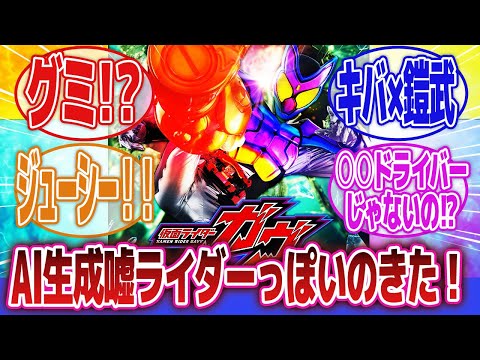
The announcement of Kamen Rider Gab, a new candy-themed rider in the Kamen Rider Gatchaard series, has ignited intense debate within the fan community. With its minimalist design drawing comparisons to AI-generated imagery and accusations of hoax leaks, the new rider represents both a departure from traditional hero aesthetics and a potential evolution in the franchise’s 50-year history.
What Happened
In July 2024, midway through the broadcast of Kamen Rider Gatchaard, the franchise announced a new rider: Kamen Rider Gab. The reveal immediately trended on Twitter under the hashtag “ordinary combination,” triggering widespread discussion across fan communities. The announcement was notable not only for introducing a candy-themed rider—the first food-based rider in 15 years—but also for its unusually minimalist design aesthetic and the decision to withhold the screenwriter’s name from the initial announcement.
Why It Matters
Kamen Rider is one of Japan’s most iconic tokusatsu franchises, spanning over 50 years with a dedicated global fanbase. Each new rider design typically becomes a cultural touchstone, and the introduction of Gab signals a potential shift in the franchise’s design philosophy. The candy motif and simplified aesthetic challenge long-established expectations of what a Kamen Rider should look like, raising questions about the franchise’s direction and its approach to balancing child-friendly appeal with complex storytelling. For longtime fans, this announcement represents either a bold creative evolution or a concerning departure from series traditions.
Background
The Kamen Rider franchise has continuously evolved since its 1971 debut. In recent years, the Reiwa-era riders—Zero-One (2019), Saber (2020), Revice (2021), and Gatchaard (2023)—have each introduced distinct design philosophies. Zero-One employed geometric AI-inspired aesthetics, Saber featured sword and book motifs with varied designs, Revice adopted a darker demon-inspired approach, and Gatchaard presented complex alchemy-themed designs.
The last food-themed rider was Kamen Rider Gaim in 2009, which featured fruit motifs and achieved significant popularity by balancing child-friendly accessibility with complex historical narrative elements. The 15-year gap since Gaim makes Gab’s candy motif particularly significant, as it represents a deliberate return to food-based theming after more than a decade of other conceptual directions.
Key Points
- Design Controversy: Gab’s minimalist gradient-painted design has sparked “AI-generated” and “fake leak” accusations, with critics noting the simple mask resembles background characters rather than a traditional hero.
- Candy Motif Significance: The first food-themed rider in 15 years, Gab represents a return to the approach pioneered by Kamen Rider Gaim, potentially expanding the franchise’s thematic range.
- Belt Innovation: The transformation device appears to feature a face-like element and may incorporate chewing sounds during transformation, suggesting a companion-type belt system rather than a traditional driver.
- Complementary Narrative Structure: Gatchaard functions as the “creator,” while Gab operates as the “consumer,” establishing a complementary relationship that facilitates potential crossover storytelling.
- Withheld Creative Credits: The screenwriter’s name remains undisclosed, an unusual practice suggesting either high-profile talent involvement or undisclosed industry circumstances.
- Design Philosophy Shift: Gab’s simplicity may represent intentional minimalism following the increasingly complex designs of recent Reiwa-era riders, reflecting broader design industry trends toward simplification.
Fan Reception Analysis
Positive Reception: Supporters have praised the purple color scheme, with comments such as “I’m committed to watching because the protagonist’s base form is purple” appearing frequently. Fans also expressed enthusiasm for series continuation, with statements like “I’ve had enough fun with Gatchaard, so a new installment is welcome.”
Critical Reception: Detractors questioned the design’s legitimacy as a Kamen Rider, with criticism focusing on the simplistic aesthetic. Comments such as “the face looks like a mob character or generic enemy” and “it doesn’t look like a hero” reflect a disconnect between fan expectations and the actual design.
Skeptical Reception: Significant portions of the community expressed doubt about the announcement’s authenticity, citing “AI generation suspicions” and “fake leak theories.” This skepticism highlights the importance of design credibility in tokusatsu franchise announcements.
Design Philosophy and Intent
The simplicity of Gab’s design may represent an intentional creative choice rather than cost-cutting. Following the increasingly elaborate designs of Zero-One, Saber, Revice, and Gatchaard, Gab’s minimalism could reflect a deliberate return to design fundamentals—what might be termed “the aesthetics of subtraction.” This aligns with broader design industry trends toward minimalism and accessibility.
The candy motif itself suggests a dual-audience strategy. Like Kamen Rider Gaim before it, Gab appears designed to appeal to younger viewers through familiar, relatable imagery while potentially concealing deeper thematic complexity beneath its surface simplicity. The rumored final form “Gabriel”—referencing the archangel—hints at a narrative arc ascending from everyday candy to sacred symbolism, mirroring Kamen Rider Ghost’s spiritual thematic progression.
Relationship to Gatchaard
The proposed dynamic between Gatchaard and Gab—creator and consumer—establishes a complementary relationship that extends beyond simple character interaction. Gatchaard protagonist Takaaki Kaidou creates items through alchemy, while Gab consumes candy to transform and strengthen. This structural pairing facilitates collaborative storytelling opportunities, particularly for theatrical releases, and represents a calculated narrative design similar to the relationship between Kamen Rider Build and Kamen Rider Cross Z.
Production Mysteries
The decision to withhold the screenwriter’s name while revealing action director Fujita remains unusual. This asymmetry suggests either high-profile talent involvement or undisclosed circumstances. The emphasis on action direction over narrative credits may indicate production priorities favoring action choreography over plot exposition, a notable shift in franchise emphasis.
Insights
Kamen Rider Gab represents a potential inflection point in the franchise’s evolution. The minimalist design, after years of increasing complexity, suggests the Reiwa era has reached a point of deliberate simplification—a maturation of design philosophy rather than regression. The candy motif’s return after 15 years signals the franchise’s willingness to revisit successful thematic approaches while adapting them to contemporary sensibilities.
The divided fan response reflects a fundamental tension within long-running franchises: the balance between honoring established iconography and embracing creative evolution. Gab challenges viewers to reconsider what defines a “Kamen Rider,” potentially expanding the franchise’s aesthetic boundaries. Whether this represents bold innovation or problematic departure will likely depend on the narrative execution and how effectively the show justifies its design choices through storytelling.
For franchise observers, Gab serves as a case study in how tokusatsu properties navigate the intersection of commercial appeal, creative ambition, and fan expectations. The coming months will reveal whether the design’s simplicity conceals the thematic depth suggested by its narrative positioning, or whether it represents a genuine departure from established franchise conventions.