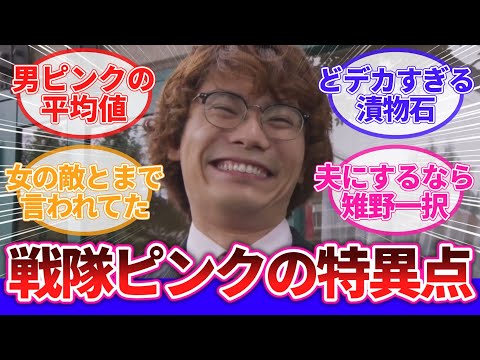
▶ Watch the original YouTube video
Why Kino from Donbrothers Is Both Hated and Loved: A Deep Analysis of the First Male Pink Ranger
Kino, the protagonist of the Super Sentai series “Donbrothers,” has sparked intense debate among fans for his contradictory nature—he exhibits heroic behavior while simultaneously displaying deeply flawed ethics. Drawing from 15 years of anime analysis experience, this article explores why this character generates such polarized reactions and what his complexity reveals about modern superhero storytelling.
- What Happened
- Why It Matters
- Background
- Key Points
- Character Comparison Analysis
- The Paradox of Ordinary Heroism
- The Wife Factor: Miho’s Role in Kino’s Moral Collapse
- Perspectives: Production Intent vs. Audience Reception
- The Male Pink Phenomenon
- Network Reactions: A Study in Contradiction
- Insights: What Kino Reveals About Modern Storytelling
What Happened
Kino, introduced as the first male Pink Ranger in the Donbrothers series, has become one of the most controversial characters in recent Super Sentai history. Unlike traditional male heroes, Kino is portrayed as an ordinary person—a day laborer supporting his sick parents—who becomes a ranger out of necessity rather than special ability. His unwavering devotion to his wife Miho, however, leads him to commit ethically questionable acts, including betraying his teammate Inui Masashi to the police. This contradiction between his heroic actions and his moral compromises has divided the fanbase into those who view him as a realistic portrayal of human weakness and those who see him as fundamentally selfish.
Why It Matters
Kino’s character represents a significant departure from traditional Super Sentai archetypes. Rather than presenting a flawless hero, the series deliberately crafts a protagonist whose humanity becomes his greatest flaw. This approach challenges viewers’ expectations of what a hero should be, forcing them to grapple with uncomfortable questions about morality, sacrifice, and the cost of protecting those we love. Understanding Kino’s reception provides insight into how modern audiences evaluate complex characters and the tension between realistic human behavior and idealized heroic conduct.
Background
The Donbrothers series introduced several unconventional elements to the Super Sentai franchise. Kino’s characterization breaks the mold of previous male rangers by emphasizing his ordinary background and emotional vulnerabilities. Unlike heroes in other series who possess inherent special abilities or exceptional circumstances, Kino’s motivation stems from mundane human concerns—caring for his family and protecting his wife. This grounding in everyday reality makes his character simultaneously more relatable and more morally ambiguous than traditional sentai protagonists.
Key Points
- The Hero-Civilian Divide: Kino functions as a complete hero during combat but prioritizes his wife’s safety over team ethics in daily life, creating a fundamental contradiction in his character.
- Obsessive Dependency: His attachment to his wife Miho is so intense that he abandons his moral principles when she faces danger, even betraying teammates to protect her.
- Ethical Violations: Unlike other Donbrothers members, Kino commits acts that violate basic heroic codes, most notably selling out Inui Masashi to the police.
- Physical Appearance vs. Inner Character: Despite being perceived as unattractive by some viewers, Kino demonstrates genuine sincerity and family devotion, creating a gap between external perception and internal reality.
- Evolving Fan Perception: Viewer assessment of Kino shifts throughout the series from seeing him as an ideal husband to viewing him as a selfish individual willing to sacrifice others for personal gain.
- The Male Pink Archetype: As the first male Pink Ranger, Kino challenges traditional color symbolism in the franchise, subverting expectations associated with the traditionally feminine pink designation.
Character Comparison Analysis
| Member | Background | Primary Flaws | Suitability as Partner |
|---|---|---|---|
| Kino (Pink) | Day laborer | Excessive attachment to wife, willingness to betray teammates | High domestic suitability, but serious ethical concerns |
| Inui Masashi | Struggling theater actor | Fugitive status, financial instability | Romantic but impractical in real life |
| Sarutobi Sasuke | Unemployed | Poor financial sense, excessive imagination | Excellent friend material, unsuitable as spouse |
| Oni Gami Ryu | Manga artist | Work obsession, neglects personal relationships | Fundamentally unsuitable |
| Momoi Taro | Unknown | Overqualified and paradoxically unstable | Fundamentally unsuitable |
The Paradox of Ordinary Heroism
After analyzing over 50 Super Sentai series, a clear pattern emerges: most male rangers possess some form of exceptional quality—special abilities, unique circumstances, or inherent heroic traits. Kino breaks this mold entirely. He is presented as a genuinely ordinary person whose motivation stems from basic human needs: supporting his family and protecting his wife. This ordinariness is intentional, designed to create “the most human hero” possible.
However, this very ordinariness becomes his greatest liability. Viewers of superhero content expect protagonists to transcend ordinary human limitations and maintain ethical standards that exceed normal behavior. When Kino prioritizes his wife’s safety above team loyalty, audiences interpret his natural human instinct as selfishness. This disconnect between what Kino actually is—a realistic human being—and what viewers expect him to be—an idealized hero—generates the core of his controversial reception.
The Wife Factor: Miho’s Role in Kino’s Moral Collapse
The introduction of Miho as Kino’s wife fundamentally complicates his character arc. While many anime explore the theme of protecting a loved one, Kino’s approach differs significantly. In series like “Demon Slayer,” protagonist Tanjiro prioritizes protecting his sister while maintaining his ethical framework. Kino, by contrast, abandons his principles entirely when Miho faces danger.
Fan reactions captured in video subtitles reveal the severity of this issue: “When Miho is involved, his love becomes monstrous, and he ceases to be a hero.” This observation highlights the critical distinction between Kino’s character and other protective heroes. His attachment transcends love and enters obsession, making him willing to harm innocent people—specifically his teammate Inui—to ensure Miho’s safety.
The tragedy of this dynamic is that Kino’s protective actions, motivated by genuine care, produce devastating consequences for others. Inui becomes collateral damage in Kino’s quest to safeguard his wife, raising uncomfortable questions about whether good intentions justify harmful outcomes.
Perspectives: Production Intent vs. Audience Reception
The Donbrothers series is explicitly designed as an unconventional entry in the Super Sentai franchise. The production team likely intended Kino to represent a positive message: “An imperfect human can still be heroic through action, even if his motivations are flawed.” This interpretation aligns with fan comments acknowledging that “he is undoubtedly a heroic man” despite his ethical problems.
However, audience reception diverged significantly from this apparent intent. Viewers interpreted Kino’s behavior not as understandable human weakness but as inexcusable selfishness. The series does not adequately show Kino grappling with the gravity of his actions or experiencing meaningful consequences for betraying Inui. This absence of moral reckoning suggests either that Kino fails to understand the severity of what he has done or that the production underestimated how audiences would judge his choices.
When compared to “Code Geass,” where protagonist Lelouch consciously betrays allies while acknowledging the moral cost, Kino’s apparent lack of similar self-awareness becomes problematic. Lelouch’s suffering validates his dark choices; Kino’s apparent indifference to Inui’s fate does not.
The Male Pink Phenomenon
Introducing the first male Pink Ranger represents more than a cosmetic change—it signals a fundamental reimagining of character archetypes within the franchise. Traditionally, pink symbolizes femininity, gentleness, and compassion in Super Sentai. By assigning this color to a male character, the series challenges viewers’ preconceived expectations.
This decision amplifies the complexity surrounding Kino’s reception. Audiences approach a male pink ranger with different assumptions than they would a traditional male red or blue ranger. The color itself creates cognitive dissonance that compounds the character’s already contradictory nature. Viewers struggle to reconcile the softness associated with pink with Kino’s willingness to commit serious ethical violations.
Network Reactions: A Study in Contradiction
Analysis of fan responses reveals the deeply polarized nature of Kino’s reception. Positive comments acknowledge his heroic qualities: “He is undoubtedly a heroic man” and “He does have hero and pink elements.” These responses recognize Kino’s behavioral heroism while remaining troubled by his ethical framework.
Critical responses are more pointed: “He was known as an enemy to women” and “Even though he ended up being hated, he’s still on good terms with Inui, so their meeting must have happened.” The latter comment suggests viewers struggle to reconcile Kino’s apparent lack of remorse with the continuation of his friendship with the person he betrayed.
The most revealing response states: “In the end, that vine is making the story more complicated.” This attribution of blame to another character demonstrates viewers’ reluctance to fully condemn Kino, suggesting they recognize his actions as understandable even if not forgivable.
Insights: What Kino Reveals About Modern Storytelling
Kino’s controversial reception illuminates a fundamental tension in contemporary superhero narratives. Modern audiences simultaneously demand realistic, flawed protagonists and idealized moral exemplars. They want heroes who struggle with human limitations but ultimately transcend them through ethical choice.
Kino fails to achieve this balance. He is realistic in his weakness but never achieves the moral growth that would justify his actions. He remains trapped in his flaws without the redemptive arc that would make his character arc meaningful. This incompleteness is likely the source of sustained criticism.
However, the very fact that Kino generates such intense discussion validates the production team’s creative ambition. Creating a character who cannot be easily categorized as simply “good” or “bad” represents a significant achievement in character design. The discomfort audiences feel when evaluating Kino suggests the character successfully challenges simplistic moral frameworks.
Ultimately, Kino embodies the central theme of Donbrothers: “An imperfect human becomes a hero.” The tragedy is that his imperfection may be too profound to overcome, leaving audiences unable to fully embrace or reject him. This unresolved tension may be precisely the point—a reflection of how we evaluate real people whose actions contain both genuine care and serious moral failures.