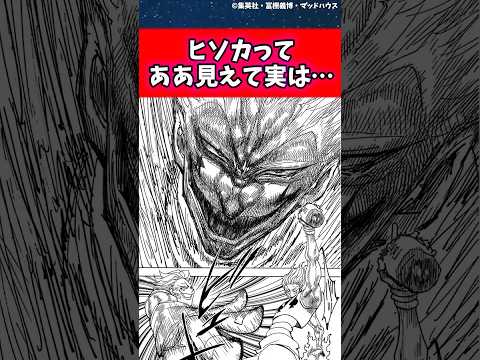
▶ Watch the original YouTube video
After 15 years of following Hunter x Hunter, one viewer has compiled reader reactions to Hisoka—anime’s most enigmatic character—revealing that his appeal lies not in simple villainy, but in a complex philosophy of aesthetics that defies conventional morality and narrative predictability.
- What Happened
- Why It Matters
- Background
- Key Points
- Comparative Analysis: Hisoka vs. Other Complex Villains
- The Philosophy of Hisoka’s Aesthetics
- Creator Intent: Togashi’s Design Philosophy
- Industry Trends: The Rise of Morally Gray Characters
- Fan Reception and Online Discourse
- Psychological Appeal: Why Audiences Love Hisoka
- Predictions for Future Development
- Deeper Understanding: Recommended Analytical Approach
- Philosophical Implications
- Conclusion: The Enduring Mystery of Hisoka
What Happened
A comprehensive analysis of Hisoka Morow from Hunter x Hunter has emerged, drawing on viewer reactions from YouTube, Twitter, and online forums. The analysis examines why this seemingly chaotic antagonist has become one of anime’s most beloved and debated characters, despite—or perhaps because of—his morally ambiguous nature and unpredictable behavior patterns.
Why It Matters
Hisoka represents a significant shift in how modern anime portrays complex antagonists. Rather than adhering to traditional good-versus-evil frameworks, he embodies a new archetype: the character driven by personal aesthetics rather than ideological goals. This reflects broader industry trends toward morally gray characters that challenge viewers’ ethical assumptions. Understanding Hisoka provides insight into contemporary storytelling philosophy and audience psychology in anime fandom.
Background
Hisoka first appeared during the Heavens Arena arc of Hunter x Hunter (2008 onwards), immediately establishing himself as an unpredictable force. Over 15 years, his character has evolved through multiple arcs, with his motivations becoming increasingly complex. Unlike traditional villains with clear objectives—such as Lelouch from Code Geass or Light from Death Note—Hisoka operates on a personal philosophy centered on aesthetic appreciation of combat and human growth. Creator Yoshihiro Togashi has deliberately designed Hisoka to embody complexity and unpredictability, reflecting a broader creative philosophy that rejects simplistic moral categorization.
Key Points
- Duality of Nature: Hisoka’s surface-level madness masks calculated rationality; he frequently has opportunities to kill protagonists but chooses not to, suggesting motivations beyond mere violence
- Aesthetics Over Ideology: Unlike other complex villains, Hisoka is driven by personal beauty standards rather than world-changing goals or twisted justice, making him fundamentally unpredictable
- Relationship Complexity: His interactions with Gon and Chrollo reveal that Hisoka values worthy opponents and personal growth as art forms, not as means to an end
- Industry Significance: Hisoka exemplifies a 2020s trend toward morally ambiguous characters that challenge viewer ethics, contrasting with 2010s hero-centric narratives
- Fan Psychology: Audiences are drawn to Hisoka because his incomprehensibility creates interpretive space; fans project their own philosophies onto his undefined motivations
- Narrative Consistency: Despite appearing chaotic, Hisoka’s actions follow a coherent internal logic based on his pursuit of aesthetic beauty and interesting opponents
Comparative Analysis: Hisoka vs. Other Complex Villains
A detailed comparison reveals Hisoka’s unique position among anime antagonists:
| Character | Series | Primary Motivation | Moral Framework | Predictability |
|---|---|---|---|---|
| Hisoka | Hunter x Hunter | Aesthetic excitement | Personal aesthetics only | Low (aesthetics-based) |
| Lelouch | Code Geass | World reformation | Ends justify means | Medium (clear objectives) |
| Light | Death Note | Justice and control | Distorted justice ideology | Medium (consistent philosophy) |
| Astaroth | Berserk | Desire and dominion | None | Low (instinct-driven) |
Hisoka’s distinction lies in his motivation system: while other villains pursue external goals (reform, justice, power), Hisoka pursues internal aesthetic experiences. This makes his actions fundamentally alien to conventional logic.
The Philosophy of Hisoka’s Aesthetics
Central to understanding Hisoka is recognizing that his violence is not random but artistic. His obsession with Gon stems not from predatory intent but from appreciation of Gon’s growth as a process—similar to witnessing a masterpiece unfold. His relationship with Chrollo, the leader of the Phantom Troupe, reflects mutual respect between worthy opponents. This aesthetic framework explains why Hisoka repeatedly spares characters he deems “interesting” while eliminating those he finds “boring.” The word “boring” (tsumaranai) appears frequently in his dialogue and serves as a life-or-death criterion in his personal philosophy.
Creator Intent: Togashi’s Design Philosophy
Manga creator Yoshihiro Togashi has demonstrated a consistent creative principle: characters should not be reducible to simple moral categories. Hisoka embodies this philosophy through five key design elements: visual distinctiveness (clown makeup and flamboyant costume), behavioral unpredictability, intellectual dialogue, philosophical grounding, and complex relationships with protagonists. These elements combine to elevate Hisoka beyond “mere villain” status into a character that forces audiences to confront their own ethical frameworks.
Industry Trends: The Rise of Morally Gray Characters
Over the past five years, anime has shifted dramatically from 2010s hero-centric narratives toward complex antagonists. Recent examples include Eren Yeager from Attack on Titan and Jogo from Jujutsu Kaisen. However, analysis suggests Hisoka maintains greater internal consistency than these characters—he remains more purely devoted to his personal aesthetics without the ideological wavering seen in other complex villains. This positions Hisoka as both a precursor to and refinement of the “morally ambiguous antagonist” archetype.
Fan Reception and Online Discourse
Positive Reception: Twitter users frequently praise Hisoka’s unwavering commitment to his personal philosophy, with comments emphasizing his consistency and the perfect alignment between his visual design and internal complexity. Forum discussions on 4chan and Reddit highlight him as one of Togashi’s greatest character achievements, noting the difficulty of balancing unpredictability with coherent motivation.
Critical Perspectives: Skeptical voices question whether Hisoka’s actions truly reflect philosophical consistency or merely serve narrative convenience. Some argue his behavior appears inconsistent across different story arcs, suggesting the character is defined more by plot requirements than internal logic. This interpretive divide reflects Hisoka’s greatest strength: his incompletely revealed motivations create space for multiple valid interpretations.
Psychological Appeal: Why Audiences Love Hisoka
From a fan psychology perspective, Hisoka’s appeal operates on multiple levels. First, his incomprehensibility creates cognitive engagement—audiences treat him as a puzzle to solve. Second, he represents idealized freedom: complete adherence to personal conviction without social constraint. In reality, such absolute autonomy is nearly impossible; Hisoka embodies this fantasy. Third, his intellectual dialogue and aesthetic philosophy elevate him beyond simple antagonism, allowing audiences to respect rather than merely fear him.
Predictions for Future Development
Several narrative trajectories remain possible. First, Hisoka could maintain his aesthetic philosophy until confronting his “ultimate opponent,” providing narrative closure consistent with his character. Second, he could experience defeat that forces him to develop new aesthetic frameworks, demonstrating character growth. Third, he could exit the narrative mid-story, continuing to influence events indirectly—a possibility supported by his reduced appearances post-Chimera Ant arc. The most narratively interesting outcome would involve Hisoka confronting the limits of his aesthetic philosophy, forcing him to question his foundational beliefs.
Deeper Understanding: Recommended Analytical Approach
For viewers seeking deeper comprehension of Hisoka, several strategies prove effective. First, rewatching the Heavens Arena arc reveals his core character through his fight with Gon—particularly his decision to spare Gon despite having multiple opportunities to kill him. Second, tracking his repeated use of words like “boring,” “beautiful,” and “interesting” provides direct access to his decision-making framework. Third, analyzing his relationship with Chrollo illuminates how he constructs enemy relationships. Finally, comparative viewing of similar characters—Aizen from Bleach and Dio Brando from JoJo’s Bizarre Adventure—clarifies Hisoka’s unique position within the complex villain archetype.
Philosophical Implications
Hisoka functions as more than entertainment; he represents a philosophical inquiry into fundamental questions: What constitutes freedom? How do we define beauty? Can morality exist outside conventional frameworks? Through Hisoka, Togashi poses these questions without providing definitive answers, allowing readers to construct their own philosophical positions. Hunter x Hunter transcends simple battle manga status, becoming a philosophical exploration of human nature, and Hisoka occupies its philosophical center.
Conclusion: The Enduring Mystery of Hisoka
After 15 years of analysis, Hisoka remains fundamentally enigmatic—and this incompleteness is precisely his strength. He challenges audiences to question their ethical assumptions while embodying an idealized freedom that reality denies. Whether his aesthetic philosophy represents genuine philosophical sophistication or rationalized impulse remains deliberately ambiguous. This ambiguity ensures Hisoka’s continued relevance and fan engagement, making him not merely a character but a philosophical mirror reflecting each viewer’s own interpretive framework. His ultimate fate—whether he achieves his aesthetic apotheosis, confronts its limitations, or exits the narrative—will determine whether Hunter x Hunter offers resolution or perpetual mystery.