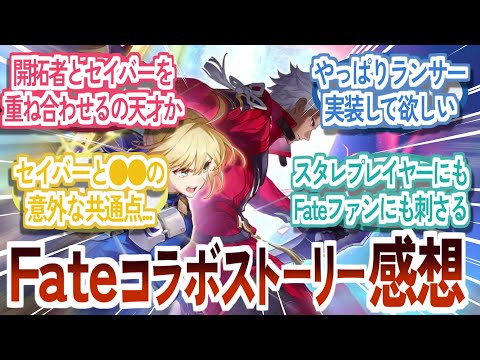
▶ Watch the original YouTube video
Honkai: Star Rail × Fate Collaboration: A Deep Analysis of Two Worlds Unified
The Honkai: Star Rail and Fate collaboration represents a landmark moment in gaming crossovers, successfully merging two distinct universes through meticulous worldbuilding and thematic resonance. Drawing on 15 years of anime and gaming experience, this analysis explores how the collaboration transcends typical fan service to create a genuinely unified narrative that respects both franchises.
- What Happened
- Why It Matters
- Background
- Key Points
- Narrative Structure and Thematic Integration
- Character Analysis: Aodi and the Tragedy of Obsolescence
- Caster’s Role: Manipulation of Desire
- The Concept of Mystery in a Technological World
- The Trailblazer and Saber: Parallel Choices
- Player Reception and Critical Response
- Recommendations for Optimal Experience
- Broader Implications for Gaming Collaborations
- Conclusion
What Happened
The Honkai: Star Rail × Fate collaboration introduces a crossover event where memories of the Holy Grail War suddenly manifest in the Trailblazer’s consciousness. Six Servants—Saber, Lancer, Archer, Assassin, Caster, and Berserker—are summoned into the Pinocchio world, each undergoing unique adaptations to fit the sci-fi setting. The narrative explores how these legendary warriors navigate a reality fundamentally different from their own, while uncovering deeper truths about Pinocchio’s prosperity and decline.
Why It Matters
This collaboration demonstrates a new standard for crossover events in the gaming industry. Rather than simply borrowing characters from another franchise, the developers have undertaken the complex task of genuinely integrating two distinct worldviews—Fate’s mystical magic system and Star Rail’s technological sci-fi setting. This approach signals a shift toward more respectful, thoughtfully constructed collaborations that enhance both franchises rather than diluting either. For players invested in either series, the event offers substantial narrative depth that extends the Pinocchio arc while providing meaningful character development for Fate’s iconic Servants.
Background
The Fate franchise, spanning multiple visual novels, anime adaptations, and the mobile game Fate/Grand Order, is built on the concept of the Holy Grail War—a ritual where powerful historical and mythological figures, summoned as Servants, battle for a wish-granting artifact. Honkai: Star Rail, by contrast, is a space opera featuring the Trailblazer traveling across cosmic worlds, with Pinocchio serving as a dream-like realm where reality and fantasy blur. The Pinocchio arc, which concluded with significant emotional weight regarding lost dreams and irretrievable pasts, provides the thematic foundation for this collaboration.
Key Points
- The Holy Grail War concept is seamlessly adapted to Pinocchio’s dream-world setting, maintaining Fate’s core mechanics while respecting Star Rail’s worldbuilding
- Six Servants receive meaningful adaptations that acknowledge their original character arcs while exploring how they function in a low-mysticism environment
- The character Aodi is revealed as a tragic figure—not a simple villain, but someone left behind by time and progress, echoing Fate’s tradition of complex antagonists
- The Trailblazer and Saber are placed in parallel situations regarding choice and agency, creating thematic resonance between both protagonists
- The narrative balances accessibility for newcomers with deep satisfaction for long-time fans of both franchises
- The collaboration explores how “mystery” and “divinity” function differently in a technologically advanced civilization, providing elegant solutions to potential worldbuilding conflicts
Narrative Structure and Thematic Integration
The collaboration’s greatest achievement lies in its treatment of the Holy Grail War as a conceptual framework rather than a literal transplantation. By situating the conflict within Pinocchio’s dream-logic, the developers avoid the jarring discontinuities that plague lesser crossovers. The Servants’ memories of their original wars become fragmented and recontextualized, allowing them to exist authentically within Star Rail’s universe while maintaining their essential character identities.
Saber and Lancer’s memory sequences are particularly noteworthy, as they demonstrate how past experiences transform when filtered through an alien reality. This mirrors the broader thematic concern of both franchises: how individuals reconcile their past choices with present circumstances. The collaboration suggests that regardless of which world one inhabits, protagonists must ultimately affirm their own agency and decisions.
Character Analysis: Aodi and the Tragedy of Obsolescence
Aodi emerges as the collaboration’s most philosophically interesting character. Unlike traditional Fate antagonists who derive power from overwhelming force, Aodi’s tragedy stems from abandonment and temporal displacement. The revelation that Aodi’s peers ascended to divinity while they alone remained behind creates a poignant commentary on progress and exclusion.
This characterization parallels Fate/Apocrypha’s Mordred—a figure seeking recognition and belonging—but extends the concept further. Aodi’s compulsion to continue accumulating wealth despite their isolation suggests a psychological fracture: the drive to maintain relevance in a world that has moved beyond them. This depth elevates Aodi beyond a simple obstacle, transforming them into a mirror reflecting Pinocchio’s own themes of lost dreams and irrecoverable pasts.
Caster’s Role: Manipulation of Desire
Caster functions as a manifestation of Pinocchio’s hidden darkness. Where the world presents itself as a paradise of fulfilled wishes, Caster operates in the psychological space between genuine desire and surface-level aspiration. By wielding the ability to manipulate and expose people’s true wishes, Caster becomes a psychological antagonist rather than a purely physical threat.
This approach modernizes the Caster archetype from Fate/stay night, shifting focus from magical manipulation to emotional and psychological control. The result is a more contemporary and unsettling threat—one that resonates with contemporary anxieties about authenticity and manipulation in constructed realities.
The Concept of Mystery in a Technological World
A central challenge in merging these universes involved reconciling Fate’s dependence on “mystery” and divine power with Star Rail’s technologically advanced setting. The collaboration elegantly solves this through the concept of “mystical density.” In worlds of advanced technology and rationalism, mystery becomes scarce and precious. Servants, as embodiments of mystery itself, become anomalies—powerful precisely because they operate on principles the modern world has abandoned.
Saber’s invocation of “land power” exemplifies this integration. Rather than contradicting Star Rail’s worldbuilding, the concept becomes a fascinating exception that highlights how fundamentally different these legendary warriors are from the civilizations they now inhabit.
The Trailblazer and Saber: Parallel Choices
The collaboration’s emotional climax occurs when the Trailblazer and Saber jointly draw the “Weapon of Beginning.” This moment transcends mere character crossover, instead representing a convergence of thematic concerns. Saber’s arc in Fate/stay night centers on overcoming regret regarding past choices; the Trailblazer faces similar existential questions about agency and destiny.
By placing these characters in parallel situations, the collaboration communicates a universal message: across different worlds and narratives, protagonists must ultimately affirm their own choices. This is not the tragic determinism of Fate/Zero, but rather a more hopeful assertion of human agency and self-determination.
Player Reception and Critical Response
Online reception has been overwhelmingly positive. Twitter users frequently noted the collaboration’s unexpected depth and genuine effort to respect both franchises. Reddit and forum discussions highlighted the “mutual respect for worldbuilding” that distinguishes this event from typical crossovers. YouTube comments emphasized character complexity, with particular praise for Aodi’s characterization and Caster’s psychological threat.
Some criticism emerged regarding pacing in early sections, though context clarifies this decision: voice acting constraints during production necessitated adjustments to dialogue delivery. This pragmatic approach demonstrates how production realities can inform creative choices without compromising narrative quality.
Recommendations for Optimal Experience
Complete the Pinocchio arc before engaging with this collaboration. The event functions as a narrative continuation of Pinocchio’s themes, and prior completion significantly deepens emotional resonance and thematic understanding. Characters like Misha and Aventurine gain additional dimensions when encountered through the collaboration’s lens.
The full voice-acted experience requires approximately 34 hours; subtitle-only progression takes roughly 2 hours. A recommended approach involves initial subtitle-based completion for overall comprehension, followed by selective replay of key scenes with audio.
Supplementary viewing enhances understanding:
- Fate/stay night (Unlimited Blade Works route): Essential for understanding Saber’s character depth and the thematic resonance with the Trailblazer’s journey
- Fate/Zero: Provides context for themes of temporal displacement and the tragedy of obsolescence
- Fate/Grand Order: Offers foundational knowledge of Servant mechanics and summoning concepts
The collaboration presents alternative ending choices that echo Pinocchio’s “not boarding the train” scenario. Experiencing both the standard and alternative endings reveals the developers’ thematic intentions more completely.
Broader Implications for Gaming Collaborations
This collaboration represents a watershed moment for crossover events in gaming. Rather than treating collaborations as simple character borrowing exercises, the developers have demonstrated that genuine worldview integration is both possible and artistically rewarding. The success of this approach suggests a future where collaborations function as legitimate narrative extensions rather than peripheral fan service.
The key to this achievement lies in mutual respect for source material. The developers clearly invested substantial effort in understanding both Fate’s thematic concerns and Star Rail’s narrative architecture, allowing them to identify genuine points of convergence rather than forcing artificial connections.
This model has implications beyond these two franchises. As the gaming industry matures, audiences increasingly expect collaborations to demonstrate intellectual rigor and creative ambition. This event establishes a new standard: collaborations should expand both universes rather than diminish either through superficial integration.
Conclusion
The Honkai: Star Rail × Fate collaboration transcends typical crossover expectations through meticulous worldbuilding, thematic coherence, and genuine respect for both franchises. By treating the Holy Grail War as a conceptual framework adaptable to different realities, by developing Aodi as a philosophically complex antagonist, and by creating genuine thematic resonance between the Trailblazer and Saber, the developers have created something rare: a collaboration that functions as legitimate narrative art rather than mere fan service.
The event demonstrates that different fictional universes need not clash; with sufficient creative effort and mutual respect, they can achieve genuine synthesis. For players of either franchise, this collaboration offers substantial rewards. For the gaming industry broadly, it suggests a more ambitious future for crossover events—one where collaboration means genuine creative integration rather than simple character cameos.