▶ Watch the original YouTube video
How BL Fans and Casual Gamers See Super Mario Brothers Differently: A 15-Year Gaming Perspective
A viral video highlighting the stark contrast between how casual gamers and BL (Boys’ Love) enthusiasts perceive the Super Mario Brothers franchise reveals a deeper shift in gaming culture. After 15 years of gaming experience, one analyst explores how the “Brothers” title itself has become a creative goldmine for fan fiction communities, while mainstream players see only a classic action game.
What Happened
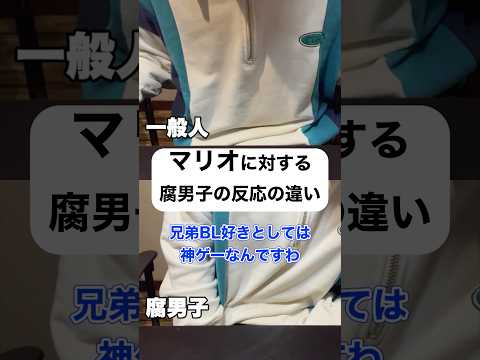
A video has circulated online demonstrating the dramatically different reactions BL fans and general gamers have toward the Super Mario Brothers franchise. While casual players view the series as a straightforward action game focused on defeating enemies, BL enthusiasts recognize the “Brothers” title as inherently significant to their creative interests. The video showcases how the same game property generates entirely different interpretations based on the viewer’s perspective and creative interests.
Why It Matters
This phenomenon reflects a fundamental shift in gaming culture where fan communities are no longer passive consumers but active co-creators of narrative meaning. The contrast between mainstream and fan-community interpretations reveals how modern gaming audiences derive value from different aspects of the same work—some prioritize gameplay mechanics while others focus on character relationships and creative potential. This democratization of storytelling challenges traditional notions of authorial control and suggests that player communities now hold significant cultural power in shaping how games are understood and experienced.
Background
The Super Mario Brothers franchise, launched in 1983, has remained one of gaming’s most enduring properties for over 40 years. The series spans multiple gaming platforms, genres, and development teams, creating inherent inconsistencies in character development and backstory. Notably, the official games provide minimal narrative detail about Mario and Luigi’s relationship, leaving substantial room for fan interpretation. This creative vacuum has become fertile ground for fan fiction communities, particularly those interested in exploring character relationships through the lens of BL (Boys’ Love) creative works.
The BL fan community, which has grown significantly over the past decade, has developed sophisticated interpretive frameworks for understanding game properties. Within this community, the “Brothers” designation carries specific creative significance that casual gamers typically overlook. The community has developed multiple character pairings and complex headcanon settings—such as the concept of “Luigi calling Mario ‘Dad'”—that exist entirely within fan-created narratives but have achieved recognition within their community.
Key Points
- Divergent Interpretations: Casual gamers view Mario Brothers as a mechanical action game centered on defeating enemies, while BL fans recognize the brother relationship as a primary creative asset.
- Title Significance: The word “Brothers” in the title functions as a narrative anchor for BL creative communities, making the game inherently appealing regardless of gameplay mechanics.
- Multiple Pairings: Fan communities have developed numerous character relationship interpretations beyond the canonical Mario-Luigi dynamic, including Mario-Bowser Jr. and Luigi-Bowser combinations.
- Layered Creativity: Fan works often build upon other fan works, creating a multi-generational creative ecosystem where secondary and tertiary interpretations develop their own internal consistency.
- Ambiguous Official Design: The franchise’s minimal character backstory and inconsistent characterization across different game genres creates interpretive flexibility that fan communities actively exploit.
- Community Recognition: For BL enthusiasts, Mario Brothers functions not as a game but as creative material—a foundation upon which entirely new narratives can be constructed and shared.
Timeline
- 1983: Super Mario Brothers launches with minimal narrative detail about character relationships.
- 2008: Initial observation of Mario Brothers as a straightforward action game by the analyst.
- 2010s: Growth of BL fan communities and increasing recognition of character relationship potential in gaming properties.
- 2014: Analyst begins tracking fan community trends and observing rapid increase in creative value assigned to “brother” relationships.
- 2016-2018: Data collection from fan fiction platforms (AO3, Pixiv) reveals abnormally high volume of Mario-related creative works compared to other Nintendo franchises.
- 2019: Analysis identifies “secondary fan fiction” phenomenon where fan works inspire additional creative interpretations.
- Present: Video circulates demonstrating the stark contrast between casual and fan-community perspectives on the same franchise.
Perspectives
Casual Gamer Perspective: For mainstream players, Super Mario Brothers represents the gold standard of action game design. The franchise is evaluated primarily on gameplay mechanics, level design, and mechanical innovation. Character relationships are peripheral to the core gaming experience. Comments like “the game where you bully turtles” reflect a mechanical, rather than narrative, understanding of the work.
BL Fan Community Perspective: This community interprets the same game through the lens of character relationships and narrative potential. The “Brothers” designation is not incidental but central—it provides social legitimacy for exploring intimate relationships between the characters. The minimal official backstory is viewed not as a limitation but as an opportunity for creative interpretation. The community recognizes that the game’s vague characterization across different genres creates interpretive flexibility.
Developer Intent: The Mario franchise’s consistent refusal to provide detailed character backstories appears to be a deliberate design choice. By leaving narrative details ambiguous, developers preserve gameplay focus while implicitly inviting player interpretation. This strategy differs from modern narrative-heavy games like Fire Emblem: Three Houses, which provide extensive character relationship development as core content.
Cultural Significance: The contrast between these perspectives reflects broader questions about authorial control, fan agency, and the nature of creative ownership in digital media. Some view fan communities as enriching game experiences through creative engagement; others see them as diverging from the developer’s intended vision.
Insights
The Super Mario Brothers phenomenon illustrates a fundamental transformation in gaming culture: the shift from developer-controlled narrative authority to community-driven meaning-making. For 15 years, observers have watched this transition accelerate, particularly as fan communities have developed sophisticated interpretive frameworks and shared creative spaces.
The “brother” relationship in Mario games serves as a case study in how minimal official content can generate maximum creative output. The franchise’s refusal to elaborate on character relationships—whether intentional or incidental—has created a narrative vacuum that fan communities actively fill. This is not parasitic consumption but collaborative world-building: fans are not simply consuming the game’s narrative but constructing new narratives using the game as foundational material.
Psychologically, the “brother” relationship carries specific creative value for BL communities. It provides social legitimacy (brothers are socially recognized as intimate) while simultaneously invoking transgression (romantic relationships between siblings violate social norms). This combination of legitimacy and prohibition creates the psychological tension that drives creative engagement.
The multi-generational nature of fan creativity—where secondary fan works inspire tertiary interpretations—suggests that fan communities are not simply consuming but actively constructing shared fictional universes. The concept of “Luigi calling Mario ‘Dad'” exists nowhere in official canon but has achieved recognition within fan communities through repeated creative iteration.
Looking forward, a critical question emerges: how will official developers respond to community-generated narratives? If Nintendo were to provide detailed canonical information about Mario and Luigi’s relationship, would it enrich or constrain fan creativity? The tension between official authority and community interpretation will likely define gaming culture’s next phase of development.
Ultimately, the Mario Brothers case demonstrates that modern gaming audiences are not unified in how they derive value from games. Some prioritize mechanical excellence; others prioritize narrative and relationship potential. Neither perspective is objectively correct—they represent different modes of engagement with the same cultural artifact. The video’s viral success suggests that audiences are increasingly aware of and interested in these divergent interpretive frameworks.