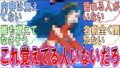
▶ Watch the original YouTube video
Puella Magi Madoka Magica: Analyzing Shiko’s True Identity and Tragic Past in Walpurgis Ascending
The new theatrical film “Walpurgis Ascending” introduces Shiko, a character whose role as an antagonist contradicts her deeply sympathetic backstory. Through careful analysis of visual symbolism, character design, and production notes, evidence suggests she is not a villain but rather a victim of poverty and systemic exploitation seeking redemption through Madoka’s unconditional kindness.
What Happened
“Walpurgis Ascending,” a new theatrical installment in the Puella Magi Madoka Magica franchise, introduces a new character named Shiko (nicknamed “the Rubber Witch”). Unlike traditional antagonists, Shiko presents an unusual case: she exhibits all the characteristics of a victim rather than a convincing villain. Her combat abilities are notably weak compared to other new characters, her mental state is fragile, and her motivations stem from desperation rather than malice. The film’s narrative suggests she was originally written to be killed early in the story but was ultimately allowed to survive, leading to a redemptive encounter with Madoka.
Why It Matters
Shiko’s characterization challenges conventional storytelling by blurring the line between antagonist and victim. Her presence in the film raises important questions about systemic exploitation, poverty, and the possibility of redemption through compassion. For longtime Madoka Magica fans, Shiko represents a continuation of the franchise’s central theme: that the boundary between victim and perpetrator is often ambiguous, and that unconditional kindness can serve as a powerful force for salvation. Her character arc also demonstrates how production decisions—such as changing her fate from death to survival—can fundamentally alter a narrative’s emotional impact.
Background
The Puella Magi Madoka Magica franchise, which began in 2011, is known for its subversive take on the magical girl genre. Rather than presenting a straightforward story of heroism, the series explores themes of sacrifice, systemic manipulation, and the psychological toll of becoming a magical girl. The original series introduced characters like Kyoko Sakura and Sayaka Miki, whose tragic backstories revealed them to be victims of circumstance rather than true villains. “Walpurgis Ascending” continues this tradition by introducing Shiko, whose character design and narrative arc suggest a similarly tragic origin.
According to production notes referenced in the theatrical pamphlet, Shiko’s character underwent significant changes during development. In the original manuscript, she was scheduled to be killed when another character named Selma intruded into the narrative. However, the final version allows Shiko to survive, creating space for a pivotal scene where she encounters Madoka’s genuine compassion.
Key Points
- Shiko exhibits characteristics inconsistent with a traditional villain: low combat ability, mental fragility, and a wish motivated by family welfare rather than personal ambition
- Visual symbolism—particularly a scene where cake and cream scatter across her face when her father is mentioned—suggests deep trauma related to family abuse or neglect
- Her nickname “Rubber Witch” and her impoverished background raise questions about economic desperation and potential exploitation
- The original manuscript planned for Shiko’s death, but the final version allows her survival and redemption through Madoka’s unconditional kindness
- Shiko’s weakness in combat is a deliberate narrative choice that positions her as a victim requiring rescue rather than an enemy requiring defeat
- Her desire for a single chocolate bar over an abundance of sweets suggests she sought emotional connection rather than material wealth
Character Analysis: Poverty, Trauma, and Systemic Victimization
Shiko’s characterization reveals layers of trauma consistent with severe poverty and family dysfunction. Her stated wish—”for the sake of family”—appears superficial upon examination. Production materials and visual cues suggest a more complex reality: a girl from an impoverished household attempting to support her family through unspecified means, possibly including exploitation.
The cake scene deserves particular attention. When Shiko attempts to consume an excessive amount of dessert, she does so with compulsive intensity. However, when her father is mentioned, her glasses shatter and cream splatters across her face. This is not merely a comedic moment; it functions as visual metaphor for psychological trauma. The sudden intrusion of paternal imagery into a moment of consumption suggests deep-seated anxiety or fear related to her father—potentially indicating abuse.
The distinction between what Shiko desires and what she actually receives is crucial. She wished for her family’s welfare, yet what materialized was personal abundance—cakes and sweets meant for her alone. This gap between intention and outcome may have triggered despair, ultimately contributing to her transformation into a witch.
Comparative Character Study
Within the broader context of magical girl anime, Shiko occupies a unique position. Characters like Kyoko Sakura from the original Madoka Magica series possess conviction and agency, even when their circumstances are tragic. Shiko, by contrast, lacks such conviction. She appears to be “forced into the role of antagonist” rather than choosing it. Her combat encounters with Homura reveal not a skilled fighter but a frightened girl, screaming with each wound inflicted.
This deliberate portrayal of weakness serves a narrative purpose: it prevents viewers from perceiving Shiko as a legitimate threat to be defeated. Instead, it cultivates sympathy and a desire to protect her. The production team’s decision to depict her as fragile rather than formidable fundamentally shapes audience reception.
Production Decisions and Narrative Revision
The revelation that Shiko was originally written to be killed by Selma provides insight into the production team’s evolving vision. This change suggests that creators recognized the character’s potential for deeper emotional resonance. Rather than serving as a brief obstacle, Shiko was given the opportunity to experience genuine human connection through Madoka’s intervention.
This revision aligns with the franchise’s thematic core: the contrast between mechanical systems (represented by Kyubey) and human compassion (represented by Madoka). Shiko, initially trapped within the magical girl system, is ultimately saved not by power or strategy but by unmediated human kindness.
The Redemptive Power of Unconditional Kindness
The most emotionally resonant moment in Shiko’s arc occurs when Madoka reaches toward her witch form without hesitation or judgment. This gesture carries profound significance: Madoka offers salvation not based on Shiko’s worthiness or past actions, but simply because she is suffering. For a character whose entire existence has been defined by systemic exploitation and conditional relationships, this unconditional acceptance represents genuine redemption.
Shiko’s realization—”What I thought was a system turned out to be a kind person when I met them directly”—encapsulates the franchise’s central message. Systems are impersonal and exploitative; individual human compassion is transformative.
Viewer Interpretations and Ambiguity
The deliberate ambiguity surrounding Shiko’s backstory has generated multiple interpretations within the fan community. Some viewers emphasize poverty as her defining circumstance. Others focus on paternal abuse. Still others speculate about economic exploitation based on her epithet. This multiplicity of interpretation is not a flaw but a strength—it allows viewers to project their own understanding of systemic victimization onto Shiko’s character, deepening emotional engagement.
The production team’s decision to omit explicit details about Shiko’s past may have been intentional, designed to preserve interpretive space for audiences. This approach respects viewer intelligence and encourages active analysis rather than passive consumption.
Insights
Shiko’s character arc demonstrates that the Madoka Magica franchise remains committed to its core philosophical project: interrogating the boundary between victim and villain, and asserting that unconditional compassion can transcend systemic harm. Her weakness is not a narrative liability but a deliberate choice that positions her as someone deserving of rescue rather than defeat.
The decision to allow Shiko to survive—contrary to her original manuscript fate—suggests that the production team recognized the emotional power of redemption narratives. In a franchise often defined by tragedy and despair, Shiko’s survival and connection with Madoka offers a rare moment of genuine hope.
However, significant questions remain unanswered. The nature of her father’s role in her trauma, the specific mechanisms of her economic desperation, and the full implications of her wish all remain deliberately obscured. Future Madoka Magica media—particularly manga adaptations—may provide additional context that deepens understanding of this complex character.
Ultimately, Shiko embodies the franchise’s enduring message: that even those shaped by systemic exploitation and personal trauma retain the capacity for redemption when met with genuine human kindness. Her story is not one of villainy overcome but of victimhood acknowledged and transcended.