▶ Watch the original YouTube video
Hidden Foreshadowing in Kamen Rider Maice Opening Revealed: A 15-Year Fan’s Deep Analysis
The opening sequence of Kamen Rider Maice contains multiple layers of narrative foreshadowing that suggest a complex dual-protagonist structure, time-crossing plot elements, and revelations about the true nature of key characters. A veteran Rider franchise analyst breaks down the hidden clues embedded in the opening visuals and soundtrack.
What Happened
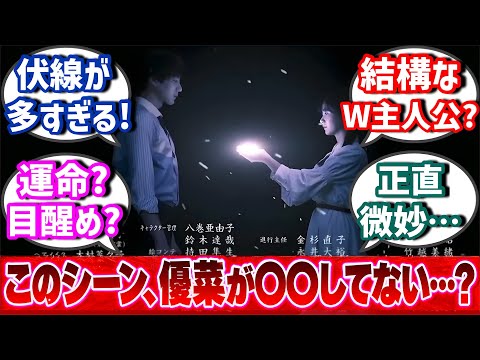
The opening sequence for Kamen Rider Maice has sparked intense fan discussion and analysis regarding its carefully constructed visual and narrative elements. The opening presents several unusual design choices compared to previous Kamen Rider series, including a haunting musical composition paired with unsettling imagery that suggests darker plot developments ahead. Key visual moments include the disappearance of the character Yuna at the sequence’s conclusion, the interweaving of present-day and 100-year-old historical timelines, and the equal narrative weight given to both Sora and Yuna as apparent co-protagonists.
Why It Matters
Opening sequences in the Kamen Rider franchise have historically served as blueprints for major plot developments and character arcs. The unusual composition of Maice’s opening—combining elements of unease with visual beauty—suggests that this series may deviate significantly from established franchise conventions. The foreshadowing embedded in the opening sequence provides viewers with critical interpretive frameworks for understanding character motivations, plot twists, and the fundamental nature of the story’s central conflict. Understanding these visual cues enhances appreciation of the series’ narrative architecture and allows viewers to anticipate major turning points.
Background
The Kamen Rider franchise has maintained a consistent tradition of using opening sequences as narrative tools since the series began. Previous entries such as Kamen Rider W, Kamen Rider Kiva, and Kamen Rider Saber have all embedded significant plot foreshadowing within their opening visuals. Kamen Rider Maice introduces a notably different aesthetic approach, incorporating anime-influenced visual direction alongside traditional tokusatsu elements. The series features an unusually large cast of characters referred to as the “Twelve Guides,” and introduces the concept of “Seed Exes”—a mysterious energy source that appears central to character survival and transformation mechanics.
Key Points
- Dual Protagonist Structure: Sora and Yuna are depicted with equal visual weight throughout the opening, suggesting they function as co-protagonists rather than following the traditional protagonist-supporting character hierarchy seen in previous Rider series.
- Timeline Convergence: The opening explicitly interweaves present-day imagery with scenes from 100 years in the past, strongly suggesting time travel or historical narrative elements will play a central role in the plot.
- Yuna’s Disappearance: The final scene shows Yuna vanishing from a motorcycle, which may indicate she is not a conventional human but rather a being dependent on Seed Exes for existence.
- Large Ensemble Cast: The appearance of multiple characters from the Twelve Guides suggests both significant character development opportunities and potential character exits, following the pattern established by Kamen Rider Saber.
- Thematic Ambiguity: The opening theme lyrics—”Did we awaken to hope, or to the beginning of the end?”—establish fundamental uncertainty about whether the story’s central events represent salvation or catastrophe.
- Control Dynamics: Visual cues suggest that Sora may be under Yuna’s control, with implications that even his transformation and de-transformation occur at her discretion rather than his own.
Comparative Analysis with Previous Rider Series
Kamen Rider Kuuga: Like Kuuga, Maice appears to feature time-transcendent narrative elements. However, while Kuuga’s temporal aspects remained ambiguous, Maice’s opening explicitly visualizes timeline convergence, suggesting more direct time-travel mechanics.
Kamen Rider Kiva: Kiva employed past-and-present narrative interweaving as its core structural device. Maice appears to adopt a similar framework but with greater visual emphasis on the temporal discord between eras.
Kamen Rider Saber: Saber introduced the franchise’s largest ensemble cast at that time. Maice’s Twelve Guides structure suggests similar large-scale character management, with the implication that multiple characters will exit the narrative during the series’ progression.
Character Analysis: The Nature of Yuna
The opening sequence provides substantial evidence that Yuna is not a conventional human character. Her disappearance from the motorcycle in the final scene, combined with thematic references to Seed Exes dependency, suggests she may be an artificial being or entity whose existence is contingent upon external energy sources. This interpretation aligns with fan observations noting that Yuna appears to exercise control over Sora’s transformation capabilities, positioning her as the dominant force in their partnership despite Sora’s status as the primary Rider.
The implications of this character dynamic are significant: if Yuna controls Sora’s transformation, then Sora functions not as an independent hero but as a tool wielded by Yuna’s will. This inverts the traditional Kamen Rider power fantasy and suggests the series may explore themes of autonomy, control, and the nature of heroism itself.
Narrative Predictions Based on Opening Analysis
Scenario One – Temporal Displacement: Sora may travel backward in time to the 100-year-old historical period referenced in the opening. This would explain the timeline convergence imagery and could reveal connections between present-day events and historical incidents.
Scenario Two – Character Transformation: Yuna’s disappearance may not indicate death but rather a fundamental transformation or revelation about her true nature. This could trigger a major narrative pivot where Sora and Yuna’s relationship undergoes significant change.
Scenario Three – Moral Inversion: The Twelve Guides may not represent a heroic faction but rather an antagonistic force. The opening’s thematic ambiguity—questioning whether awakening represents hope or catastrophe—suggests the series may subvert audience expectations about which characters represent genuine heroism.
Fan Reception and Community Interpretation
Online fan communities have responded to the opening with mixed reactions. Positive responses emphasize the opening’s aesthetic quality and anime-influenced visual direction, with viewers praising its departure from conventional Rider opening formulas. Critical responses note that the opening’s subdued musical composition may be better suited to an ending sequence rather than an opening, and some viewers express desire for greater action-oriented energy.
Fan analysis has proven remarkably insightful, with community members independently identifying the Seed Exes dependency theory, the control dynamics between Sora and Yuna, and the possibility of historical distortion affecting the Twelve Guides’ characterization. These community interpretations demonstrate sophisticated narrative literacy and have contributed meaningfully to broader understanding of the opening’s embedded foreshadowing.
Insights
The Kamen Rider Maice opening represents a deliberate departure from franchise conventions, employing visual and thematic ambiguity as a primary narrative tool. Rather than presenting clear heroic frameworks, the opening establishes fundamental uncertainty about the nature of its central characters and the moral dimensions of the central conflict. This approach suggests the series intends to explore complex themes regarding autonomy, identity, and the nature of heroism itself.
The opening’s success lies in its ability to generate viewer investment through unease rather than traditional excitement. By presenting beautiful but unsettling imagery paired with thematically ambiguous lyrics, the opening creates cognitive tension that compels viewers to seek resolution through continued engagement with the narrative. This represents a sophisticated understanding of audience psychology and demonstrates that the series’ creative team has invested considerable thought into the foundational narrative architecture.
The large ensemble cast combined with timeline convergence and character control dynamics suggests the series may attempt narrative innovations not previously explored within the Kamen Rider franchise. Whether these elements will successfully integrate into a coherent narrative remains to be seen, but the opening sequence provides compelling evidence that the creative team has constructed a complex, multi-layered story framework worthy of sustained analytical attention.