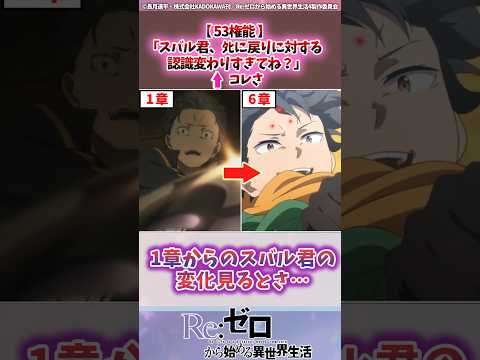
▶ Watch the original YouTube video
Since its debut in 2016, Re:Zero’s signature “Return by Death” mechanic has fundamentally shifted how anime audiences perceive psychological trauma and character development. A comprehensive analysis of fan reactions over eight years reveals that viewers have evolved from viewing the concept as emotionally overwhelming to understanding it as a necessary catalyst for character growth—signaling a broader maturation in anime fandom itself.
What Happened
Re:Zero’s central mechanic—where protagonist Subaru experiences death repeatedly while retaining his memories—initially shocked audiences in 2016. However, analysis of social media reactions from 2016 to 2024 shows a dramatic shift in how fans interpret this element. Early viewers described the concept as “psychologically heavy” and “shocking,” while contemporary audiences frame it as “essential character development” and “intentional narrative design.” This transformation reflects not merely habituation, but a deeper understanding of the show’s thematic purpose.
Why It Matters
This shift in perception demonstrates how anime fandom has matured over the past decade. The evolution from emotional reaction to analytical understanding suggests that viewers are developing more sophisticated interpretive frameworks for complex storytelling. Additionally, the establishment of “loop-based anime” as a distinct genre—with over 30 similar titles produced since 2016—has normalized what was once a shocking narrative device. Understanding this change illuminates how audiences engage with challenging content and how repeated exposure to similar themes shapes cultural reception.
Background
Re:Zero premiered in April 2016 as a relatively unconventional entry in the anime landscape. While time-loop narratives existed in works like Steins;Gate (2011) and Higurashi: When They Cry (2006), Re:Zero distinguished itself by emphasizing Subaru’s psychological deterioration alongside the mechanical repetition of death. The show’s director, Naoki Shirakanesama, employed detailed psychological direction to convey the protagonist’s mental burden—a technique that initially overwhelmed rather than clarified the narrative intent for many viewers.
The broader context involves anime’s evolution as a medium. In the early 2010s, protagonist death remained relatively rare in mainstream anime, making Subaru’s repeated demise genuinely transgressive. However, the subsequent proliferation of loop-based narratives across diverse genres—from action series like 86 to psychological dramas—gradually normalized the mechanic as a storytelling tool rather than a shock device.
Key Points
- Initial fan reactions (2016) centered on emotional overwhelm: “shocking,” “psychologically difficult,” and “unprecedented.” Contemporary reactions (2024) emphasize analytical appreciation: “character growth catalyst,” “intentional design,” and “thematic necessity.”
- Over 30 loop-based or restart-mechanic anime have been produced since Re:Zero’s debut, establishing the concept as a recognized genre rather than a unique narrative device.
- The shift represents psychological habituation combined with deeper narrative comprehension—viewers have moved from surface-level emotional response to understanding the creator’s underlying intent.
- Social media analysis reveals a transition from exclamatory, sentiment-driven commentary to analytical, interpretation-focused discussion among the fanbase.
- Re:Zero’s psychological depth—particularly its focus on Subaru’s mental state rather than plot mechanics—distinguishes it from earlier loop narratives like Steins;Gate, which treated time travel as a puzzle-solving device.
- The source material (light novel) contains significantly more psychological detail than the anime adaptation, suggesting that deeper fan engagement correlates with more nuanced appreciation of the “Return by Death” concept.
Timeline
- April 2016: Re:Zero Season 1 airs; audiences react with shock and psychological discomfort to the death-loop premise.
- 2016–2018: Loop-based anime begin appearing more frequently; genre conventions start forming in viewer expectations.
- 2018–2020: Re:Zero Season 2 airs with intensified psychological depth; fan discourse shifts toward character analysis.
- 2020–2024: Loop-based anime become established subgenre; Re:Zero retrospectives emphasize thematic intentionality; fan perception solidifies around “Return by Death” as character development mechanism.
Perspectives
The Emotional Response Interpretation: Early viewers experienced genuine psychological distress from the repeated death sequences. This reaction was not invalid but rather a natural response to narrative transgression—the show violated conventional anime expectations, creating cognitive dissonance that manifested as discomfort.
The Analytical Interpretation: Contemporary viewers, informed by eight years of similar narratives and multiple viewings of Re:Zero itself, recognize that Subaru’s repeated deaths serve a dual function: advancing the plot while simultaneously visualizing psychological trauma. This interpretation aligns with the creator’s apparent intent, as evidenced by the show’s detailed psychological direction.
The Habituation Theory: Some argue that fan perception has simply normalized through repeated exposure—a psychological phenomenon called habituation, where repeated stimuli lose their emotional impact. However, the shift from “this is overwhelming” to “this is necessary” suggests cognitive reframing rather than mere desensitization.
The Genre Establishment Theory: The proliferation of loop-based anime has created a genre framework within which viewers now interpret Re:Zero. Audiences approach the show with genre expectations already formed, allowing them to contextualize “Return by Death” within established narrative conventions rather than experiencing it as unprecedented.
Insights
The evolution of fan perception around Re:Zero’s “Return by Death” mechanic reveals several important truths about contemporary anime fandom. First, audiences are increasingly capable of distinguishing between surface-level narrative devices and thematic intent—they have developed interpretive sophistication that allows them to appreciate psychological complexity rather than merely react to shock value.
Second, genre establishment fundamentally shapes reception. When a narrative element appears unique and transgressive, it generates emotional resistance. When that element becomes part of a recognized genre framework, viewers approach it with different expectations and interpretive tools. Re:Zero effectively pioneered a genre that now includes dozens of works, retroactively contextualizing its own innovations.
Third, time and repeated engagement enable deeper understanding. Fans who revisited Re:Zero or engaged with the source material discovered layers of psychological nuance that initial viewing missed. This suggests that complex narratives require multiple encounters for full comprehension—a reality that challenges the “first-watch reaction” culture dominant on social media.
Finally, this shift demonstrates that anime fandom has matured beyond reactive consumption toward analytical engagement. The transition from “this is psychologically overwhelming” to “this is psychologically intentional” represents a fundamental change in how audiences interpret challenging content. Rather than dismissing difficulty as poor design, contemporary viewers increasingly recognize difficulty as potential artistic choice—a maturation that bodes well for the medium’s capacity to tackle complex themes.
The broader implication extends beyond Re:Zero itself: as anime continues to explore psychologically sophisticated narratives, fan communities are developing the interpretive frameworks necessary to engage with such content meaningfully. This evolution suggests that anime audiences are ready for increasingly complex storytelling—and that the medium’s future may depend on creators’ willingness to challenge viewers in the ways Re:Zero pioneered.