▶ Watch the original YouTube video
Two decades after the broadcast of Mobile Suit Gundam ∀, the Turn A and Turn X Gundams remain shrouded in deliberately vague official specifications, sparking ongoing debate within the fan community about whether this ambiguity represents artistic intent or production oversight.
What Happened
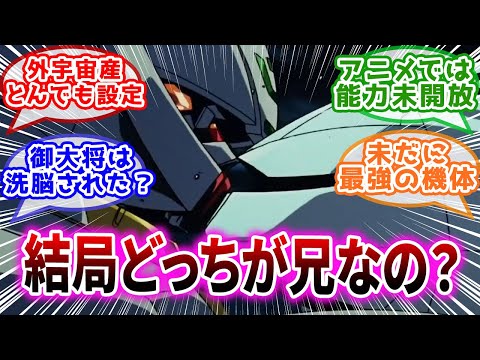
A recent video compilation analyzing fan reactions to the Turn A and Turn X Gundams has reignited discussion about the deliberately unclear specifications of these iconic mobile suits. The video highlights how, despite being central to the ∀ Gundam narrative, official documentation provides inconsistent information about their manufacturing origins, technical capabilities, and the relationship between the two units. This ambiguity has persisted for over two decades, creating a unique situation where fan communities actively work to fill gaps in the official canon.
Why It Matters
The Turn A and Turn X represent a significant anomaly within the Gundam franchise. Unlike other protagonist mobile suits across the series—which typically feature detailed specifications, manufacturing timelines, and technical documentation—these machines exist in a state of intentional obscurity. This raises important questions about creative vision versus production management in long-running anime franchises, and how fan communities respond when official sources fail to provide coherent worldbuilding. Understanding this phenomenon offers insight into the relationship between creators and audiences in the digital age.
Background
Mobile Suit Gundam ∀ aired in 1999 under the direction of Yoshiyuki Tomino, who conceived the series as an ambitious attempt to unify all previous Gundam narratives under a single overarching mythology. The story introduces the concept of “Black History”—a deliberately obscured past that serves as the narrative foundation for the entire Gundam multiverse. Within this framework, the Turn A Gundam emerges as the protagonist’s mobile suit, while the Turn X appears as its counterpart, yet neither machine receives the level of technical documentation standard to the franchise.
The Turn A’s signature weapon, the “Moonlight Butterfly,” is described in official materials as capable of reducing all machinery to dust, yet the specific mechanism behind this ability remains unexplained across multiple official sources. Similarly, the Turn X’s manufacturing origin, production timeline, and technological basis are never clearly established, leaving fundamental questions about the relationship between these two units unanswered.
Key Points
- Specification Inconsistencies: Official documentation for the Turn A and Turn X contains contradictory information regarding manufacturing timelines, with some sources citing “thousands of years ago” while others reference “tens of thousands of years ago.”
- Comparative Clarity Gap: Other Gundam series protagonists—such as Wing Gundam from Gundam Wing or Strike Gundam from Gundam SEED—feature detailed specifications including development origins, technical systems, and performance metrics, making the Turn A and Turn X anomalously vague by comparison.
- Fan Community Response: Rather than accepting the ambiguity, fan communities have actively engaged in supplementary worldbuilding, creating independent interpretations and conducting archival research to construct coherent explanations.
- Possible Directorial Intent: Director Yoshiyuki Tomino’s previous statements suggest the ambiguity may be deliberate, designed to preserve the “mystique” of the narrative and allow viewers to interpret the machines as embodying all possibilities within the Gundam universe.
- The Black History Device: The narrative concept of “Black History” functions as a built-in justification for incomplete specifications, allowing the production to deflect questions about missing information.
- Franchise Management Challenge: The ambiguity reflects broader challenges in managing increasingly complex fictional universes across multiple decades of production, where earlier creative decisions create constraints for later installments.
Timeline
- 1979: Original Mobile Suit Gundam establishes straightforward mobile suit specifications and technical documentation as franchise standard.
- 1995–1996: Gundam Wing introduces detailed technical systems (Zero System) and precise manufacturing timelines (AC 195).
- 2002–2003: Gundam SEED provides extensive technical specifications and development background for protagonist mobile suits.
- 1999: Mobile Suit Gundam ∀ broadcasts with deliberately vague specifications for Turn A and Turn X.
- 2000s–2010s: Fan communities begin systematic archival research and supplementary worldbuilding to address specification gaps.
- 2010s–2020s: Online fan communities actively debate and propose alternative interpretations of Turn A and Turn X specifications across multiple platforms.
- Present: Video compilations of fan reactions continue to generate discussion about the enduring mystery.
Perspectives
The Artistic Interpretation View: Some fans and analysts argue that the ambiguous specifications represent a deliberate artistic choice by director Yoshiyuki Tomino. Under this interpretation, the vagueness serves a thematic purpose—by refusing to pin down the Turn A and Turn X to specific technical parameters, the narrative preserves their symbolic function as machines that transcend the limitations of previous Gundam designs. The “Black History” concept becomes not a narrative flaw but a sophisticated device for exploring themes of historical uncertainty and the constructed nature of knowledge itself.
The Production Oversight View: Other observers contend that the inconsistencies reflect practical challenges in managing a franchise that had expanded dramatically over two decades. As the Gundam universe accumulated increasingly complex and sometimes contradictory specifications across multiple series, the production team may have lacked the resources or organizational structure to maintain coherent documentation. Under this interpretation, the vagueness represents a breakdown in franchise management rather than intentional design.
The Fan Supplementation View: Fan communities have adopted a pragmatic approach, treating the official ambiguity as an invitation to collaborative worldbuilding. Rather than viewing incomplete specifications as a problem, many fans see them as an opportunity to exercise creative interpretation and contribute to the franchise’s mythology. This perspective transforms the gap between official canon and fan interpretation from a deficit into a feature of the community experience.
Insights
The Turn A and Turn X Gundam mystery reveals fundamental tensions in how modern fan communities engage with complex fictional universes. The persistence of this ambiguity across two decades suggests that neither complete clarity nor total obscurity serves the franchise optimally. Instead, the ongoing discussion demonstrates that fans derive value not merely from consuming finished worldbuilding but from participating in its construction.
The case also illustrates how creative vision and production capacity can diverge in long-running franchises. Director Yoshiyuki Tomino’s ambitious concept—unifying all Gundam narratives through a deliberately mysterious framework—may have been difficult to execute within practical production constraints. The resulting ambiguity, whether intentional or circumstantial, has become the defining characteristic of these machines.
Most significantly, the Turn A and Turn X demonstrate that fan communities do not passively accept incomplete official documentation. Instead, they actively research, debate, and create supplementary materials to fill narrative gaps. This behavior suggests that the relationship between creators and audiences has fundamentally shifted: fans now function as collaborative partners in worldbuilding, rather than passive consumers of finished products. The official ambiguity, paradoxically, has strengthened fan engagement by creating space for creative participation.
For future franchise management, the Turn A case offers a cautionary lesson about the costs of specification inconsistency, while simultaneously demonstrating that some ambiguity can generate productive community engagement. The key distinction lies in whether ambiguity serves a clear thematic purpose or results from organizational breakdown—a distinction that remains contested in the case of these enigmatic mobile suits.