▶ Watch the original YouTube video
Fit Boxing Meets Touken Ranbu: Why Internet Users Are Demanding ‘Use Your Swords’
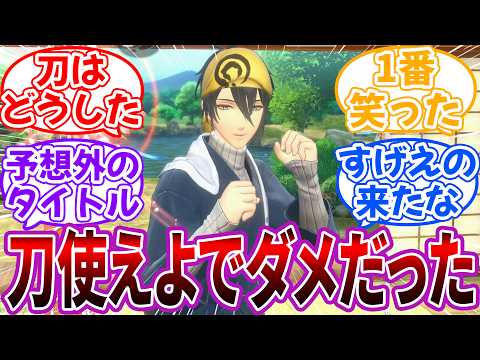
A collaboration between Nintendo Switch’s Fit Boxing and the browser game Touken Ranbu has sparked widespread internet humor due to a fundamental contradiction: sword-wielding characters are throwing punches instead of using their blades. The absurdity has generated thousands of social media comments demanding the obvious—that the swords actually be used.
What Happened
Fit Boxing, a popular rhythm-based boxing game for Nintendo Switch, has partnered with Touken Ranbu, a game where historical Japanese swords are personified as human characters. In this collaboration, Touken Ranbu characters appear within Fit Boxing’s game system, performing boxing movements rather than sword combat. This fundamental mismatch between character identity and gameplay mechanics has become the source of widespread internet commentary and humor.
Why It Matters
This collaboration exemplifies a broader shift in gaming industry strategy toward intentional genre contradictions as a means of generating viral engagement. Rather than pairing mechanically similar games, publishers are increasingly combining franchises with opposing gameplay philosophies to create talking points. The internet’s response demonstrates how perceived design flaws can paradoxically become marketing successes through social media amplification and meme culture.
Background
Fit Boxing is a rhythm-action game released in 2019 that requires players to perform boxing combinations in time with music. The game emphasizes simple, repetitive punch mechanics: jabs, straights, hooks, and uppercuts. Touken Ranbu, developed by DMM Games and launched in 2015, centers on the premise that historical Japanese swords have been given human form and personality. Each character’s identity is intrinsically tied to their specific sword type—its shape, weight, and historical significance directly influence their combat abilities and narrative role.
The core contradiction arises because Touken Ranbu’s entire design philosophy revolves around sword-specific combat mechanics, while Fit Boxing reduces all combat to standardized punching patterns. When Touken Ranbu characters are integrated into Fit Boxing’s system, their distinctive sword characteristics—curved blades, legendary decorations, unique fighting styles—are completely lost.
Key Points
- Fit Boxing and Touken Ranbu collaboration places sword-wielding characters in a boxing game system
- Internet users responded with thousands of comments demanding characters “use their swords”
- The contradiction between character design and gameplay mechanics has become a viral meme rather than a criticism
- This represents a shift in gaming industry strategy toward intentional genre mismatches for viral engagement
- Character identity and personality are completely neutralized by Fit Boxing’s simplified combat system
- The absurdity has paradoxically generated significant positive publicity for the collaboration
Timeline
- 2015: Touken Ranbu launches as a browser-based game featuring personified historical swords
- 2019: Fit Boxing releases on Nintendo Switch, becoming a major commercial success
- 2020 onwards: Gaming industry begins experimenting with intentional genre-contradiction collaborations (Animal Crossing × Final Fantasy VII, etc.)
- Recent: Fit Boxing × Touken Ranbu collaboration announced, triggering widespread internet response
Perspectives
Fan Perspective: Touken Ranbu enthusiasts view the collaboration as fundamentally misaligned with the game’s core identity. The demand to “use swords” reflects genuine attachment to the franchise’s defining characteristic—sword-based combat. However, this criticism has been reframed as affectionate mockery rather than serious complaint.
Industry Perspective: The collaboration may represent an intentional strategy to generate viral engagement through contradiction. By pairing mechanically incompatible games, publishers create inherent talking points that drive social media discussion. The “absurdity” becomes the marketing message itself.
Broader Gaming Context: This collaboration follows a pattern established by other recent cross-franchise partnerships that deliberately combine opposing gameplay genres. Unlike earlier collaborations that prioritized mechanical compatibility, newer partnerships embrace genre contradiction as a feature rather than a bug.
Insights
The Fit Boxing × Touken Ranbu collaboration reveals a fundamental shift in how gaming companies approach franchise partnerships. Rather than seeking mechanical synergy, publishers are increasingly mining comedic value from contradiction itself. The internet’s response—dominated by the phrase “use your swords”—demonstrates that perceived design failures can generate more engagement than seamless integration.
This phenomenon reflects broader internet culture, where users respond to contradiction with humor rather than frustration. When the gap between expectation and reality becomes large enough, audiences reframe criticism as entertainment. The collaboration succeeds not despite its logical inconsistency, but because of it.
For future collaborations, this model suggests that character identity loss and genre mismatches may be acceptable trade-offs if they generate sufficient social media discussion. However, the persistent demand to “use swords” indicates that fan attachment to core franchise elements remains strong—even when expressed through memes rather than serious complaints. A potential solution would involve developing hybrid mechanics that preserve sword-based combat while maintaining Fit Boxing’s accessible gameplay structure, allowing both franchises’ identities to coexist rather than conflict.