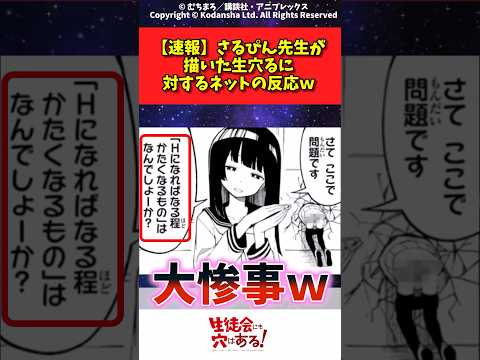
▶ Watch the original YouTube video
Salpine’s manga “There Are Holes in the Student Council!” features a character archetype known as the “deadpan” type—a seemingly composed exterior masking hidden desires. This character design has resonated strongly with readers, reflecting broader trends in anime and manga where internal contradictions between public persona and private thoughts drive both comedy and emotional connection.
What Happened
Salpine, a manga artist serializing “There Are Holes in the Student Council!” in the Young Jump anthology, has created a character known as the “deadpan student council president.” This character presents herself as a responsible, serious student leader while harboring hidden, often comedic inner thoughts and desires. The character has gained significant popularity on social media and fan communities, with readers praising both the character design and Salpine’s execution of this archetype.
Why It Matters
The deadpan character archetype reflects contemporary social psychology. In an era of social media where individuals curate different versions of themselves across platforms, this character type resonates deeply with audiences. The deadpan student council president embodies the universal human experience of maintaining a public facade while harboring private thoughts—a tension that has become increasingly visible and relatable in modern society. Understanding why this character design succeeds offers insights into current audience preferences and effective storytelling techniques in manga and anime.
Background
The deadpan character archetype has evolved significantly over the past 15 years. Early examples include Yuki Nagato from “The Melancholy of Haruhi Suzumiya” (2006), which introduced the appeal of emotionally reserved characters with hidden depths. The archetype matured through characters like Eru Chitanda in “Hyouka” (2012) and Tomoyo Koga in “Rascal Does Not Dream of Bunny Girl Senpai” (2018). Salpine’s interpretation represents the latest evolution: using the deadpan archetype primarily for comedic effect within a short-form manga format, emphasizing the gap between professional duty and private desires rather than romantic or intellectual mystery.
Key Points
- Character Design: The deadpan student council president maintains a serious, responsible public image while concealing humorous, often inappropriate inner thoughts—creating a comedic gap between appearance and reality.
- Narrative Function: Unlike previous deadpan characters whose hidden nature drove mystery or romance, this character’s contradiction serves as the primary source of humor in short-form episodes.
- Psychological Appeal: The character succeeds through three mechanisms: the contrast effect (opposing traits amplify each other), self-projection (readers see their own public-private divide reflected), and shared-secret psychology (knowing the character’s hidden thoughts creates intimacy).
- Industry Trend: Since 2018, the deadpan archetype has surpassed the tsundere archetype in popularity, reflecting how social media has made audiences more aware of the gap between public and private selves.
- Artistic Execution: Salpine demonstrates refined technique by conveying the character’s internal state through subtle facial expressions and body language rather than explicit dialogue, maximizing impact within limited space.
- Fan Reception: Social media responses emphasize both the character’s cuteness and the sophistication of her portrayal, with particular praise for how naturally the contradiction feels.
Character Comparison
Hyouka (2012) – Eru Chitanda: Deadpan expression conveyed through intellectual curiosity; character’s hidden nature drove the protagonist’s actions; viewers experienced intellectual fascination combined with character appeal.
Rascal Does Not Dream of Bunny Girl Senpai (2018) – Tomoyo Koga: Deadpan quality expressed through contradiction between words and emotions; hidden feelings became central to romantic development; viewers experienced complex emotional investment.
There Are Holes in the Student Council (2023) – Deadpan Student Council President: Deadpan quality expressed through contradiction between duty and desire; hidden thoughts drive comedic situations; viewers experience humor alongside emotional recognition.
Psychological Mechanisms
The deadpan student council president succeeds through three interconnected psychological principles. First, the contrast effect: the juxtaposition of “responsible student leader” and “hidden inappropriate thoughts” makes each aspect more pronounced and memorable. Second, self-projection: readers recognize their own experience of maintaining a public persona while harboring private thoughts, allowing them to see themselves in the character. Third, the shared-secret effect: knowing the character’s hidden nature creates a sense of special relationship and intimacy between reader and character, deepening engagement.
Industry Trends and Evolution
Analysis of anime and manga from 2018 onward reveals a significant shift in character archetype preferences. The tsundere archetype, which emphasized external emotional expression, gradually declined as audiences became more interested in internal contradiction. This shift correlates directly with increased social media usage, which made audiences acutely aware of the gap between curated online personas and private reality. By 2021, deadpan character expressions had become increasingly subtle, moving from obvious internal monologues to implicit suggestion and implication. Salpine’s work represents the cutting edge of this trend, using minimal visual cues to convey complex internal states.
Perspectives
The deadpan student council president receives overwhelmingly positive reception across social media platforms. Twitter comments emphasize both character cuteness and appreciation for Salpine’s sophisticated portrayal technique. YouTube discussions highlight how realistic the character feels, with viewers noting that such contradictions exist in real people. Forum discussions on 5channel praise the character as Salpine’s finest work and note the increasing refinement of deadpan expression across the artist’s career. A minority of critics argue the character relies too heavily on the deadpan archetype and that lower-quality humor occasionally dominates. However, quantitatively, positive responses significantly outnumber critical ones, indicating broad audience acceptance.
Future Development Possibilities
Based on industry trends and Salpine’s artistic trajectory, several developments appear likely. First, deeper character exploration: the narrative may eventually reveal why the character maintains such strict control, moving beyond surface-level comedy to psychological depth. Second, relationship development: the character may interact more meaningfully with other cast members, creating more complex social dynamics. Third, thematic expansion: hidden desires may extend beyond current comedic content to encompass ambition, control, or validation-seeking, creating more multifaceted characterization. These developments would follow the pattern established by “Rascal Does Not Dream of Bunny Girl Senpai,” which deepened its deadpan character through progressive revelation and emotional stakes.
Evaluation Framework
Using five critical criteria, the deadpan student council president ranks highly among contemporary deadpan characters. Originality: The combination of student council authority with hidden desires presents a relatively novel approach. Consistency: All character actions logically derive from the core deadpan nature, maintaining internal coherence. Growth Potential: The character possesses substantial room for development and revelation. Relatability: The character embodies the universal human experience of public-private contradiction, enabling strong reader identification. Sophistication of Expression: Within the constraints of short-form manga, Salpine achieves maximum refinement through subtle visual communication. Across all five criteria, the character ranks among the highest-quality deadpan portrayals in contemporary manga.
How to Maximize Enjoyment
For readers new to “There Are Holes in the Student Council!,” several approaches enhance appreciation. First, pay close attention to subtle changes in facial expression and body language within each episode—short-form manga conveys information through visual detail rather than dialogue. Second, consider the psychological conflict between the student council role and the character’s hidden nature; understanding this tension deepens comprehension beyond surface-level comedy. Third, familiarize yourself with related works: “Rascal Does Not Dream of Bunny Girl Senpai” (2018 anime) demonstrates psychological depth in deadpan character portrayal, while “Hyouka” (2012 anime) illustrates intellectual dimensions of the archetype. Viewing these works first provides context for understanding Salpine’s unique approach. Finally, multiple readings reveal details missed on first encounter; the character’s psychological state becomes clearer through repeated exposure.
Social Media Reception Analysis
Twitter discussions emphasize character appeal, with frequent comments praising cuteness and Salpine’s execution technique. YouTube comments focus on realism, with viewers noting that such contradictions exist in actual people and finding the portrayal relatable. 5channel forum discussions praise the character as Salpine’s finest work and note progressive refinement of deadpan expression across the artist’s career. These responses reflect a broader cultural moment: as social media has made the public-private divide more visible and conscious, audiences increasingly appreciate characters that explicitly acknowledge this contradiction. The deadpan student council president succeeds because it validates readers’ own experience of maintaining different personas across contexts.
Insights
The deadpan student council president represents a significant evolution in character design that reflects contemporary social reality. Rather than treating the gap between public and private self as a mystery to be solved or a source of romantic tension, Salpine treats it as a natural, comedic aspect of daily life. This approach resonates because it acknowledges what social media has made undeniable: most people consciously manage multiple versions of themselves. The character’s appeal lies not in exotic mystery but in recognition—readers see themselves reflected in the contradiction between duty and desire. Salpine’s artistic achievement lies in executing this concept with sophistication, using minimal visual language to convey complex psychological states. The character’s popularity suggests that contemporary audiences value authenticity about inauthenticity; they appreciate characters that acknowledge the performative nature of social existence rather than pretending such performance doesn’t occur. This represents a meaningful shift in what audiences find emotionally resonant, with implications for character design across the industry.