▶ Watch the original YouTube video
One Piece Episode 1190 Analysis: Gibban’s Rebuke as Narrative Turning Point Before Final Arc
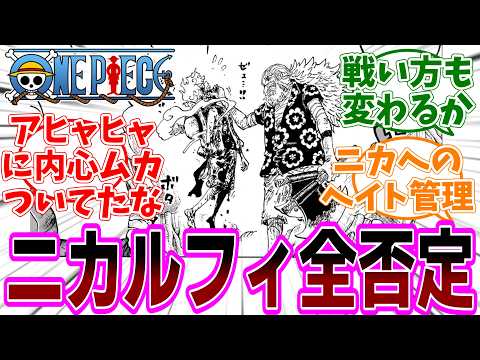
One Piece Episode 1190 introduces a critical moment where Gibban directly confronts Luffy over his use of Nika’s power, raising questions about the protagonist’s agency and foreshadowing potential consequences including left arm loss. This scene functions as both audience sentiment management and a pivotal test of Luffy’s resolve as the series approaches its final arc.
What Happened
In Episode 1190 titled “One Worthy of Being Mourned in Death,” Gibban delivers a direct rebuke to Luffy regarding his use of Nika’s godlike power. This confrontation marks a significant narrative moment where an external character questions the protagonist’s methods and choices. The episode has sparked widespread fan discussion about the implications of this criticism, particularly regarding Luffy’s autonomy, the nature of Nika’s power, and potential future consequences for the character, including speculation about left arm amputation mirroring Shanks’s sacrifice.
Why It Matters
This scene carries substantial weight as One Piece enters its final narrative phase after over 25 years of serialization. The rebuke addresses a growing concern within the fanbase: whether Luffy has retained his agency and humanity after awakening as Nika, a god-like entity. By having an external authority figure voice these concerns, the production team acknowledges fan sentiment while simultaneously preparing viewers for a thematic shift toward examining the cost of power and the true meaning of Luffy’s dream. This positioning suggests the final arc will center on fundamental questions about sacrifice, responsibility, and what it truly means to become Pirate King.
Background
Nika’s awakening represented a major turning point in One Piece, granting Luffy seemingly unlimited power. However, this development created narrative tension: absolute power traditionally undermines dramatic stakes and character agency. The fanbase became divided, with some praising the power escalation while others worried that Luffy had lost his human vulnerability and decision-making autonomy. Gibban, representing external justice and authority, becomes the voice articulating these concerns. This connects to a broader pattern in contemporary anime where protagonists gaining godlike abilities must confront the moral and existential implications of such power—a theme explored extensively in Attack on Titan, Demon Slayer, and My Hero Academia.
Key Points
- Dual-Function Rebuke: Gibban’s criticism serves two purposes—validating audience concerns about Nika’s power while simultaneously testing Luffy’s commitment and forcing him to redefine his resolve
- Fanbase Sentiment Division: Since Nika’s introduction, portions of the fanbase have criticized Luffy for losing agency and humanity, concerns that Gibban’s rebuke directly addresses
- Left Arm Amputation Theory: Widespread fan speculation suggests Luffy may lose his left arm, creating a symbolic parallel with Shanks and representing the cost of wielding Nika’s power
- Thematic Realignment: The episode signals a shift from adventure narrative toward existential questions about power, responsibility, and the true meaning of Luffy’s dream
- Final Arc Preparation: This scene functions as a narrative checkpoint before the series’ conclusion, reestablishing stakes and forcing reconsideration of what victory will require
- Shanks Connection: The potential left arm loss would complete a symbolic cycle where Luffy understands Shanks’s sacrifice through experiencing similar loss
Timeline
- 25+ Years Ago: One Piece serialization begins; Shanks introduces Luffy to his dream and loses his left arm
- Recent Episodes: Nika’s power awakens in Luffy, granting god-like abilities and triggering fanbase concerns about lost agency
- Episode 1190: Gibban directly confronts Luffy about his power usage, marking a narrative turning point
- Future (Predicted): Luffy enters period of deep reflection on power and responsibility; potential left arm loss occurs as consequence of Nika power usage; final arc begins with redefined understanding of his dream
Perspectives
Supportive Interpretation: Many fans view Gibban’s rebuke as necessary and welcome. This perspective sees the criticism as validating concerns about Nika’s power while providing narrative momentum toward a more meaningful conclusion. Supporters argue that forcing Luffy to justify his methods deepens character development and raises the stakes for the final arc. The potential left arm loss is seen as poetic justice—a concrete cost that mirrors Shanks’s sacrifice and forces Luffy to truly understand his mentor’s legacy.
Critical Interpretation: Some fans question the motivation behind Gibban’s rebuke and worry that Luffy’s agency has genuinely been compromised. Critics argue that the scene’s messaging remains unclear and that Nika’s power, if truly absolute, makes external criticism narratively hollow. This perspective expresses concern that the series may be backtracking on its power escalation without clear justification.
Structural Analysis: From a narrative design perspective, Gibban’s role as an external authority figure represents a deliberate choice to introduce doubt through an “objective” voice rather than through characters close to Luffy. This mirrors techniques used in Attack on Titan, where institutional criticism of the protagonist creates audience uncertainty about moral correctness. The strategy acknowledges that absolute protagonists create narrative problems and attempts to reintroduce tension through philosophical rather than physical challenges.
Comparative Context
One Piece Episode 1190 engages with a narrative challenge faced by contemporary major anime. When protagonists gain god-like power, dramatic tension typically collapses. Attack on Titan addressed this by making Eren’s absolute power a source of existential horror. Demon Slayer resolved it through Tanjiro’s physical and spiritual sacrifice. My Hero Academia continues exploring it through Deku’s struggle to control multiple quirks responsibly. One Piece appears to be adopting a similar strategy: acknowledging that Nika’s power creates narrative problems and using external criticism to reframe the power as something requiring moral justification rather than simple celebration.
Insights
Episode 1190 represents One Piece’s deliberate transition from adventure narrative toward philosophical inquiry. The series has evolved significantly from its early focus on exploration and friendship toward deeper questions about sacrifice, legacy, and the true cost of dreams. Gibban’s rebuke is not merely criticism—it is the production team signaling that the final arc will demand more from Luffy than power alone.
The left arm amputation theory, while speculative, aligns logically with One Piece’s established narrative patterns. Shanks’s sacrifice of his arm represented his commitment to Luffy’s dream. If Luffy loses his arm while wielding Nika’s power, it would complete a symbolic cycle: Luffy would finally understand that Shanks’s loss was not weakness but profound commitment. This would transform the final arc from a story about becoming stronger into a story about understanding what strength truly means.
The fanbase division visible in Episode 1190 reactions appears intentional. By creating uncertainty about whether Luffy’s methods are justified, the production team reintroduces stakes to a narrative that had begun to feel predetermined. This uncertainty will likely persist through the final arc, forcing both Luffy and viewers to continuously question whether his choices serve his dream or betray it.
Ultimately, Episode 1190 confirms that One Piece has not concluded—it has merely entered its true final phase. The adventure is ending; the reckoning is beginning.