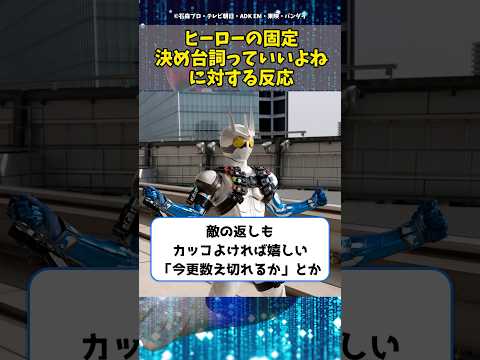
▶ Watch the original YouTube video
Why Heroes’ Iconic Catchphrases Resonate So Deeply with Audiences
A deep analysis of how heroes’ signature catchphrases function as psychological anchors that connect audiences to characters and stories. Drawing from 15 years of anime and gaming experience, this exploration reveals why simple repeated lines become the emotional core of beloved franchises.
- What Happened
- Why It Matters
- Background
- Key Points
- The Psychology Behind Catchphrase Effectiveness
- Comparative Analysis Across Major Franchises
- The Creator’s Perspective
- Evolution and Transformation
- Current Industry Trends
- Community Response and Cultural Impact
- Practical Guide for Deeper Appreciation
- Insights and Future Implications
What Happened
A video essay examining the cultural and psychological significance of heroes’ iconic catchphrases has sparked widespread discussion across social media platforms. The analysis explores how phrases like “I AM HERE!” from My Hero Academia, “I am free!” from Attack on Titan, and “I will do my best” from Demon Slayer function as more than mere dialogue—they serve as character identities that anchor viewer emotions and create community bonds.
Why It Matters
Catchphrases represent a fundamental storytelling technique in anime and gaming that directly impacts character development, audience engagement, and franchise longevity. Understanding how these phrases work reveals the deliberate psychology behind character design and explains why certain shows achieve cultural dominance while others fade from memory. For creators, this knowledge is essential; for audiences, recognizing these mechanisms deepens appreciation of the medium.
Background
The concept of heroes’ signature catchphrases gained prominence through classic anime and manga series. The analysis traces this phenomenon back approximately 13 years, noting how Code Geass’s Lelouch’s repeated phrase “Everything goes according to plan” first demonstrated the power of catchphrases as character identity markers. Since then, major franchises including One Piece, My Hero Academia, Attack on Titan, and Demon Slayer have elevated catchphrase design to an art form. The trend reflects a deliberate creative choice by writers and directors who recognize that simple, repeated dialogue can convey complex character philosophies more effectively than exposition.
Key Points
- Iconic catchphrases function as psychological triggers that create conditioned emotional responses in viewers, similar to classical conditioning
- Catchphrases serve as compressed character philosophies, allowing audiences to understand a hero’s core beliefs and motivations instantly
- The repetition of catchphrases across episodes creates consistency that reinforces character strength and reliability in viewer perception
- Catchphrases evolve alongside character development, with their meaning shifting to reflect internal transformation—a sophisticated narrative technique
- Catchphrases generate community cohesion, becoming shared language among fans that strengthens parasocial bonds with characters
- Recent anime trends favor short, simple catchphrases (3-5 words) over complex dialogue, reflecting modern audience preferences for direct emotional communication
The Psychology Behind Catchphrase Effectiveness
Catchphrases work through multiple psychological mechanisms. First, they operate as conditioned stimuli—when viewers hear a phrase repeatedly paired with specific emotional contexts, the phrase alone eventually triggers those emotions. This explains why audiences report emotional reactions to hearing “I AM HERE!” even in isolation.
Second, catchphrases function as cognitive shortcuts. Rather than requiring viewers to interpret complex character motivations, a well-designed catchphrase instantly communicates a hero’s core philosophy. Luffy’s “I will become the Pirate King!” from One Piece encapsulates his entire character arc and life purpose in a single sentence.
Third, catchphrases create what psychologists call “shared experience.” When millions of viewers react to the same phrase simultaneously, they experience a sense of community and belonging. This phenomenon is visible on social media, where catchphrase-related hashtags regularly trend during episode releases.
Comparative Analysis Across Major Franchises
Different franchises employ catchphrases with varying degrees of sophistication:
One Piece: Luffy’s catchphrase functions as a life declaration. It is simple, memorable, and directly expresses his ultimate goal. Its effectiveness lies in its clarity and unwavering consistency throughout the series.
Attack on Titan: Eren’s “I am free!” demonstrates advanced catchphrase design. The phrase’s meaning fundamentally transforms as the narrative progresses—beginning as pure aspiration, it eventually becomes obsession and determination. This evolution allows viewers to track character development through linguistic change alone.
My Hero Academia: All Might’s “I AM HERE!” serves a dual function: it announces his presence as a reassuring hero figure while simultaneously becoming a marker of his declining power as the phrase appears less frequently in later seasons. Viewers unconsciously register his weakening through the absence of his signature declaration.
Demon Slayer: Tanjiro’s “I will do my best” is deliberately modest and humble, reflecting his character’s humility and determination without arrogance. Its simplicity makes it universally relatable.
Code Geass: Lelouch’s “Everything goes according to plan” expresses his need for control and intellectual superiority, functioning as a window into his psychological state.
The Creator’s Perspective
Production analysis reveals that catchphrases are typically established during character design phases, not added as afterthoughts. Original creators carefully craft these phrases to encapsulate character essence. Interviews with creators indicate they revise catchphrases multiple times to ensure they authentically represent their characters’ core beliefs.
Voice actors play a crucial role in catchphrase effectiveness. The same words delivered with different vocal inflection, tone, and emotional intensity produce vastly different impacts. Professional voice actors treat catchphrases as character declarations requiring full dramatic commitment, not mere repetitive lines.
Screenwriters strategically place catchphrases at narrative turning points and emotional climaxes, ensuring they become associated with high-stakes moments. This deliberate placement amplifies their psychological impact.
Evolution and Transformation
Sophisticated narratives employ catchphrase evolution as a storytelling device. When a catchphrase’s meaning shifts—either through changing context or character development—viewers experience subtle but profound character transformation. This technique proves more effective than explicit dialogue explaining change because it operates on a subconscious level.
In long-running series, catchphrase frequency itself becomes meaningful. When a character’s signature phrase appears less often, audiences intuitively sense weakness or change without explicit explanation. This represents an elegant narrative economy where dialogue patterns communicate story information.
Current Industry Trends
Recent anime productions increasingly favor brevity in catchphrase design. Modern audiences appear to prefer 3-5 word phrases that communicate instantly over longer, more complex declarations. This reflects broader shifts toward rapid-fire content consumption and preference for direct emotional communication.
The gaming industry similarly recognizes catchphrase importance. Action RPGs and adventure games employ character catchphrases to enhance immersion and player identification. Games like Persona 5 use catchphrases as transformation triggers that psychologically signal gameplay state changes to players.
Community Response and Cultural Impact
Social media analysis reveals that catchphrases generate disproportionate engagement. When episodes featuring iconic catchphrases air, related hashtags consistently trend. Fan communities use catchphrases as shorthand communication, with references to specific phrases instantly evoking shared emotional memories.
Online discussion forums dedicated to anime feature recurring threads debating “the greatest catchphrase” across franchises. This sustained engagement demonstrates that catchphrases function as cultural artifacts worthy of serious analytical discussion, not merely entertainment ephemera.
YouTube comments sections consistently highlight catchphrase moments, with viewers reporting emotional responses ranging from tears to goosebumps. This quantifiable engagement suggests catchphrases tap into fundamental human psychological needs for symbolic meaning and community belonging.
Practical Guide for Deeper Appreciation
For Newcomers: Begin with One Piece to understand catchphrase fundamentals. Luffy’s declaration is straightforward and demonstrates basic catchphrase function. Progress to Attack on Titan to observe how catchphrase meaning evolves with narrative complexity. Finally, explore My Hero Academia to analyze how multiple characters employ distinct catchphrases with different psychological functions.
For Deeper Understanding: Pay attention to the context surrounding each catchphrase utterance. Identical words carry different weight depending on emotional circumstances. Notice voice actor delivery—the same phrase performed with varying intensity produces different emotional resonance. Track catchphrase frequency across episodes; changes in repetition patterns signal narrative developments.
Related Recommendations: Code Geass demonstrates how catchphrases express complex psychological states. Demon Slayer showcases how multiple characters’ catchphrases interact within a single narrative framework. JoJo’s Bizarre Adventure illustrates how different protagonists employ distinct catchphrase philosophies reflecting their unique worldviews.
Insights and Future Implications
The analysis reveals that catchphrases represent far more than stylistic flourishes—they constitute fundamental narrative technology that directly impacts character memorability, audience emotional investment, and franchise cultural penetration. The most successful franchises demonstrate sophisticated understanding of catchphrase psychology, while less successful properties often neglect this element.
A concerning trend emerges in recent productions: some creators appear to underestimate catchphrase importance, resulting in characters lacking memorable signature phrases. This oversight correlates with reduced audience attachment and diminished franchise longevity.
Future development should emphasize increasingly sophisticated catchphrase design. Rather than static declarations, catchphrases might evolve more deliberately, with meaning shifts serving as explicit narrative markers of character transformation. This technique, already employed by elite productions, could become industry standard.
Ultimately, catchphrases represent psychological bridges connecting characters to audiences. They transform abstract narrative concepts into memorable emotional anchors. As the medium matures, recognizing and deliberately crafting these bridges will increasingly distinguish exceptional storytelling from forgettable content. The power of simple, repeated words to move millions of viewers deserves recognition as a legitimate and sophisticated creative achievement.