▶ Watch the original YouTube video
Anime’s Taboo-Breaking Moment: Final Episode Preview of “Smoking Cat” Ignites Heated Debate Over Artistic Expression
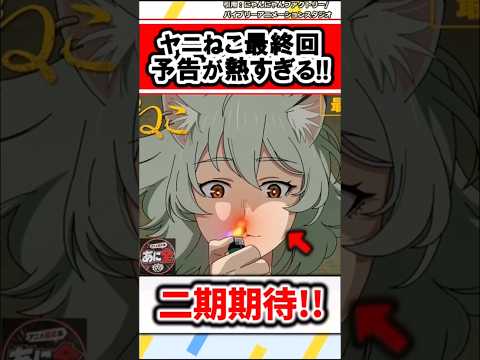
The final episode preview of the anime “Smoking Cat” has sparked intense online discussion with its provocative tagline “The cat will smoke even in the finale.” The preview reveals a deliberate artistic choice that challenges conventional anime content standards and raises questions about the boundaries of creative expression in the medium.
What Happened
The anime “Smoking Cat” released a preview for its 12th and final episode featuring the tagline “The cat will smoke even in the finale.” The preview has generated significant online buzz, with viewers and critics discussing both the artistic merit and potential social implications of the show’s central premise: a cat character whose defining trait is smoking cigarettes.
The preview’s reception reflects a broader conversation about how anime addresses taboo subjects. Rather than abandoning the character’s core behavior for the finale, the creators have doubled down on the concept, signaling that this trait remains central to the character’s identity through the story’s conclusion.
Why It Matters
“Smoking Cat” represents a significant moment in anime’s evolution as a medium. For over 15 years, anime has depicted smoking in various contexts—from character development to world-building—but rarely has a series made the act itself the primary comedic and thematic focus. This shift reflects changing attitudes within the anime industry toward what constitutes acceptable content and how creative boundaries are being redefined.
The preview’s reception also highlights a fundamental tension in modern media: the balance between artistic freedom and social responsibility. The varied reactions—from enthusiastic support to concerns about influence on younger viewers—demonstrate that audiences are actively questioning where these boundaries should lie.
Background
Anime has a long history of depicting smoking as a character trait or world-building element. Characters like Spike Spiegel from “Cowboy Bebop,” Hange Zoë from “Attack on Titan,” and Tanjiro’s father from “Demon Slayer” all smoke, but in these cases, smoking serves as a tool for character development or narrative context rather than the primary focus.
The anime industry has experienced a gradual shift in content boundaries over the past five years. Beginning around 2018 with increasingly graphic depictions of violence in shows like “Attack on Titan,” the industry has progressively tested audience tolerance for mature and controversial content. By 2020, works like “Darling in the Franxx” demonstrated how sexual and psychological themes could be framed within scientific or philosophical contexts to justify their inclusion.
“Smoking Cat” appears to represent the next phase of this evolution: the direct treatment of socially prohibited behaviors as primary comedic and thematic material. The show employs a multi-layered approach to justify this choice, operating simultaneously as surface-level comedy, social commentary, and philosophical inquiry.
Key Points
- The final episode preview confirms the protagonist cat will continue smoking throughout the series, emphasizing character consistency and thematic commitment
- The show functions on three distinct levels: surface comedy (the absurdity of a smoking cat), social messaging (themes of free will and individual choice), and meta-commentary (questioning societal boundaries)
- Online reactions are sharply divided between those celebrating the show’s artistic boldness and those expressing concerns about potential negative influence on younger viewers
- The work reflects a broader industry trend of gradually expanding content boundaries, building on precedents set by shows depicting violence and sexual themes
- The character design choice—using a cat rather than a human—allows creators to present smoking as an act of a non-human entity operating outside human social norms
- The comedic tone, rather than a serious one, suggests the creators aim to provoke reflection rather than glorify the behavior
Timeline of Anime’s Content Evolution
- 2008–2015: Anime establishes conventions for depicting smoking as character trait or world element; smoking scenes remain contextual rather than central
- 2018: “Attack on Titan” Season 3 normalizes increasingly graphic violence; industry consensus shifts on acceptable depiction levels
- 2020: Works like “Darling in the Franxx” demonstrate how sexual and psychological content can be justified through philosophical framing
- 2023–Present: “Smoking Cat” emerges as first major anime to make a socially prohibited behavior the primary thematic and comedic focus
Perspectives
Supporters of the Work: Many viewers and critics praise “Smoking Cat” for its artistic courage and thematic consistency. They argue that the show uses smoking as a metaphor for individual autonomy and resistance to social conformity. The character’s refusal to change, even in the finale, is interpreted as a statement about the immutability of personal identity and the strength of individual will against societal pressure. These viewers see the work as a legitimate artistic exploration of philosophical themes rather than a glorification of smoking.
Critics and Concerned Viewers: Others express concern that the show’s comedic treatment of smoking could normalize or encourage the behavior among younger audiences. They question whether the philosophical justifications adequately address the potential social responsibility issues. Some argue that the show represents a concerning trend of “taboo-breaking for its own sake” rather than genuine artistic expression with meaningful purpose.
Neutral Observers: A third group views “Smoking Cat” as a valuable case study in the ongoing negotiation between creative freedom and social responsibility. They see the work and its reception as important indicators of how media industries and audiences are redefining content boundaries in real time.
Insights
“Smoking Cat” marks a potential turning point in anime’s relationship with taboo content. The work demonstrates that the industry is willing to directly engage with socially prohibited behaviors as primary material, moving beyond the subtle implications and contextual depictions of previous decades.
The show’s three-layered approach—surface comedy, social messaging, and philosophical inquiry—suggests that creators are attempting to justify boundary-pushing content through intellectual and artistic frameworks rather than mere provocation. Whether this strategy succeeds depends largely on the final episode’s execution and the degree to which it clarifies the creators’ underlying intentions.
The divided online reception reflects a genuine cultural moment: audiences are actively questioning what anime should be allowed to depict and why. Rather than a simple matter of censorship versus freedom, the debate centers on whether artistic expression requires accompanying social responsibility, and how those two values should be balanced.
The work’s legacy will ultimately depend on whether it is remembered as a meaningful exploration of human autonomy and social conformity, or as an example of artistic boundaries being tested without sufficient purpose. The final episode will likely determine which interpretation prevails, making it a genuinely significant moment in anime history regardless of critical consensus.