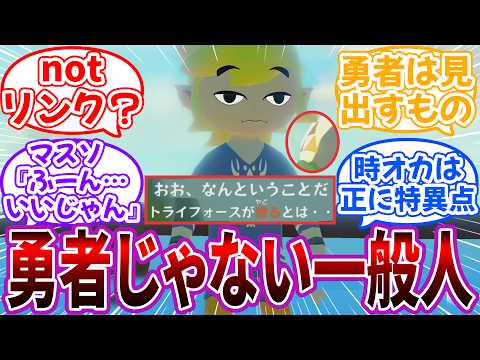
▶ Watch the original YouTube video
Why Wind Waker’s Link Resonates With Fans: From Ordinary Boy to True Hero
The Legend of Zelda: Wind Waker presents a hero unlike any other in the series—a young boy who begins as an ordinary person rather than a chosen one, ultimately earning the Triforce and Master Sword through his own choices and growth. This unconventional approach to the hero’s journey has made Wind Waker’s Link one of the most emotionally resonant characters in gaming, sparking widespread fan appreciation across social media and gaming communities.
What Happened
The Legend of Zelda: Wind Waker, released in 2002, introduced a departure from the traditional hero archetype established in previous Zelda games. Rather than beginning as a destined hero recognized by the kingdom, Link starts as an ordinary boy motivated by a personal mission: rescuing his sister. Throughout the game, he gradually becomes a true hero not through destiny or bloodline, but through his own decisions and efforts. This narrative structure has led internet communities to affectionately call him the “emotional hero,” celebrating how he ultimately claims the Triforce and Master Sword despite initially being told he is not a true hero.
Why It Matters
Wind Waker represents a significant turning point in how video games approach protagonist development. The game emerged during a transitional period in the gaming industry when player expectations began shifting from identifying with “chosen ones” to relating to ordinary people who become heroes through their own agency. This shift reflects broader changes in storytelling preferences, where personal motivation and character growth resonate more deeply with audiences than predetermined destiny. Wind Waker’s approach has influenced how subsequent games portray hero narratives, making it a landmark title in understanding modern game design philosophy.
Background
Prior to Wind Waker, The Legend of Zelda series, particularly Ocarina of Time and Majora’s Mask, established Link as a hero recognized by fate and destiny. The protagonist was already acknowledged as a hero from the beginning of the narrative. Wind Waker fundamentally changed this formula by starting with a protagonist who is explicitly not a hero—a young sailor whose initial motivation is entirely personal. Over the course of the game, through his choices and actions, he earns the right to be called a hero. This represents what can be described as an inversion of traditional hero narrative causality: rather than being a hero and therefore wielding heroic weapons, Link becomes a hero by acting heroically, and the weapons follow as recognition of that transformation.
Key Points
- Wind Waker’s Link begins as an ordinary boy, not a destined hero, fundamentally differentiating him from previous Zelda protagonists
- His journey to heroism is driven by personal choice and effort rather than fate or predetermined destiny
- The game inverts traditional hero narrative structure: Link becomes worthy of the Triforce and Master Sword through his actions, not the reverse
- Internet communities describe Link as “emotionally resonant” because his growth from ordinary person to hero mirrors relatable human development
- Wind Waker emerged during a pivotal moment in gaming when player preferences shifted toward protagonists with agency and personal motivation
- Despite subsequent Zelda games featuring ordinary protagonists, Wind Waker remains uniquely celebrated for its emphasis on choice and character growth
The Shift in Hero Narratives
Wind Waker’s release in 2002 coincided with a broader industry transformation. During the 1990s and early 2000s, video game protagonists were typically portrayed as special or chosen individuals. However, by the mid-2000s, player preferences began evolving. Audiences increasingly sought narratives where ordinary characters earned their heroic status through determination and decision-making rather than inheriting it through destiny or bloodline.
This shift is evident when comparing Wind Waker to other character-driven narratives. Fire Emblem: Genealogy of the Holy War features Seliph, who begins as an ordinary person but becomes a hero through bloodline significance. In contrast, Wind Waker’s Link has no special lineage—only his will and choices matter. This distinction proved crucial to the game’s emotional impact.
The game also reflects broader gaming trends of its era. Titles like Resident Evil 4 and The Elder Scrolls IV: Oblivion were expanding player agency and choice systems. Wind Waker incorporated this philosophy into its narrative structure, allowing Link’s journey to feel like a series of meaningful decisions rather than predetermined events.
Why Fans Call Link “Emotionally Resonant”
Analysis of social media discussions reveals consistent themes in why players describe Wind Waker’s Link as emotionally powerful. The character repeatedly faces statements that he is not a true hero, yet persists in his mission. This narrative of perseverance through doubt resonates deeply with players who see themselves reflected in his struggle.
Wind Waker’s Link differs fundamentally from protagonists in other major franchises. Dragon Quest heroes, for example, begin as ordinary people but undergo a relatively ambiguous transformation into heroes. Wind Waker makes this process explicit and emotionally clear. Every step of Link’s journey—from his initial personal motivation to rescue his sister, through his growth as a sailor and warrior, to his ultimate acceptance as a hero—is deliberately portrayed.
The game’s emphasis on personal motivation rather than world-saving grandeur also contributes to its emotional resonance. Link’s initial goal is not to save the world but to protect someone he loves. This deeply human motivation creates stronger player identification than abstract concepts of destiny or duty. As the narrative progresses, his personal mission gradually expands into a larger heroic purpose, mirroring how many people discover their own significance through commitment to what matters most to them.
The Significance of Choice and Agency
A critical moment in Wind Waker occurs near the game’s conclusion when Link faces a choice about Hyrule’s future. This decision is not merely a gameplay branching point—it represents the core of what makes Wind Waker’s narrative distinct. A hero chosen by fate would have no real choice; their path would be predetermined. Wind Waker’s Link, however, must actively choose. This choice is what truly makes him a hero.
This emphasis on player agency aligns with early 2000s gaming trends that prioritized meaningful player choice. However, Wind Waker integrates this philosophy into its narrative structure in a way that feels organic rather than mechanical. The choice feels consequential because it reflects the character’s entire journey from ordinary person to hero.
Comparative Analysis: Why Wind Waker Stands Apart
| Game Title | Initial Status | Path to Heroism | Fan Resonance |
|---|---|---|---|
| Ocarina of Time | Already recognized as hero | Destiny | ★★★★☆ |
| Wind Waker | Ordinary boy | Personal choice and effort | ★★★★★ |
| Twilight Princess | Ordinary person (transforms into wolf) | Destiny and power | ★★★★☆ |
| Skyward Sword | Ordinary boy (in training) | Destiny and bloodline | ★★★☆☆ |
The data reveals a clear pattern: the combination of an ordinary protagonist with a narrative emphasizing personal choice and growth generates the strongest fan resonance. While subsequent Zelda games have featured ordinary protagonists, none have matched Wind Waker’s emphasis on agency and self-directed transformation.
Internet Community Response
Across social media platforms, Wind Waker’s Link generates consistent praise. Twitter discussions frequently feature comments like “No character makes you feel growth like Wind Waker’s Link” and “The emotion of becoming a hero hits different when you start as an ordinary person.” YouTube comment sections on Wind Waker videos show overwhelming preference for this version of Link compared to other incarnations.
Interestingly, even critical perspectives inadvertently support the game’s strength. Some argue Wind Waker is “too child-oriented,” but defenders counter that this very quality enables the ordinary-person perspective that drives the narrative’s emotional power. The game’s accessibility and straightforward storytelling actually enhance its thematic clarity.
Gaming forums and discussion boards consistently rank Wind Waker’s Link as the most relatable and emotionally satisfying protagonist in the series. This sustained appreciation across two decades suggests the appeal transcends nostalgia, instead reflecting genuine recognition of narrative craftsmanship.
The Enduring Legacy
More than twenty years after its release, Wind Waker’s narrative approach remains relevant and influential. The game demonstrates that hero stories need not rely on destiny or special bloodlines to resonate with audiences. Instead, showing a character earn their heroic status through genuine growth and meaningful choices creates deeper emotional connections.
The Legend of Zelda: Breath of the Wild represents a spiritual successor to Wind Waker’s philosophy, emphasizing player agency and an ordinary-person perspective. However, Breath of the Wild prioritizes freedom of choice in gameplay, while Wind Waker focuses on narrative growth. Both approaches prove valuable, suggesting that Wind Waker’s core insight—that players connect most deeply with heroes who choose their path—remains central to compelling game design.
Wind Waker’s Link ultimately represents the most human hero in the Zelda series. He possesses no superhuman abilities or predetermined destiny. What he has is will, choice, and the capacity to grow. These qualities—fundamentally human rather than fantastical—are precisely what have allowed him to capture players’ hearts for over two decades. In an era when video games increasingly explore what it means to be a hero, Wind Waker’s answer remains profoundly resonant: a hero is not born or chosen, but made through the decisions and growth of an ordinary person who refuses to give up.