▶ Watch the original YouTube video
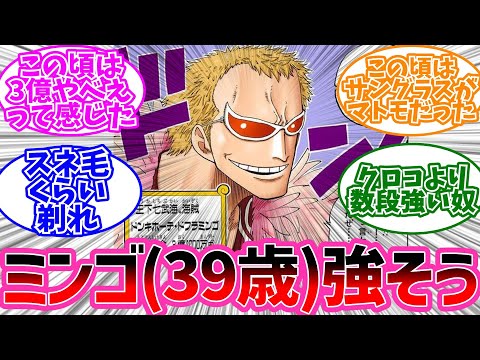
Why Doflamingo at 39 Years Old Looks So Powerful: A Deep Dive Into One Piece Character Design
Fans of One Piece frequently describe the character Doflamingo as “looking strong,” despite being 39 years old. This article explores why this seemingly simple observation reveals deeper truths about character design, age perception, and what makes antagonists compelling in long-running anime series.
What Happened
The One Piece fan community has repeatedly described Doflamingo—the primary antagonist of the Dressrosa arc—as “looking strong” (tsuyosou in Japanese). This phrase has become a recurring meme and discussion point among fans, particularly when discussing his age of 39 years. The observation highlights a disconnect between his actual age and his youthful appearance, combined with his intimidating presence and demonstrated combat abilities.
Why It Matters
This seemingly casual fan observation reveals important truths about how anime and manga audiences evaluate characters. The phrase “looking strong” encompasses multiple layers of assessment: visual design, age-appropriate power scaling, narrative positioning, and psychological impact. Understanding why fans describe Doflamingo this way provides insight into how creator Eiichiro Oda constructs compelling antagonists and how character design influences audience perception across the anime industry.
Background
Doflamingo was first introduced during the Dressrosa arc, which began in 2011. He serves as the tyrannical ruler of Dressrosa and a member of the Seven Warlords of the Sea. His character design features a distinctive pink coat, dark sunglasses, and an imposing demeanor that visually communicates authority and danger. Despite being explicitly stated as 39 years old, his appearance suggests someone in their early thirties, creating a notable visual gap between his actual age and perceived age.
The character’s complexity extends beyond combat ability. Doflamingo’s background as a former Celestial Dragon who abandoned his status, combined with his ruthless governing philosophy, creates a multidimensional antagonist. His defeat at the hands of protagonist Luffy in the Dressrosa arc did not diminish fan perception of his power—if anything, it intensified discussion about his true strength.
Key Points
- Visual-Age Disconnect: Doflamingo’s youthful appearance at 39 years old creates cognitive dissonance that amplifies his perceived threat level. The gap between actual age and visual presentation makes him appear more formidable than characters whose appearance matches their stated age.
- Multidimensional Strength: “Looking strong” encompasses more than combat ability. It includes his social dominance, political control, strategic intelligence, and psychological manipulation—elements that extend beyond pure physical power.
- Character Design Strategy: Creator Eiichiro Oda deliberately crafted this age-appearance gap. The specific choice of 39 years positions Doflamingo as experienced enough to command respect while young enough to execute his plans with physical capability.
- Comparative Analysis: When compared to similar antagonists in other series (such as Aizen from Bleach or Madara from Naruto), Doflamingo’s concrete age specification creates a sense of “realistic strength” that enhances his menace.
- Narrative Ambiguity: The phrase “looking strong” may also reflect fan uncertainty about Doflamingo’s true power level. The ambiguity itself—the sense that there is more to understand about him—maintains audience engagement and speculation.
- Community Consensus: Across multiple platforms (Twitter, YouTube, Reddit, forums), fans consistently describe Doflamingo using language that emphasizes his intimidating presence rather than purely quantifiable strength metrics.
Timeline
- 2011: Doflamingo introduced during the beginning of the Dressrosa arc (anime episode 629 onwards)
- 2014-2015: Dressrosa arc climax featuring the confrontation between Doflamingo and Luffy
- Post-Dressrosa: Ongoing fan discussions about Doflamingo’s true power level and his character’s significance
- Present: “Doflamingo at 39 years old looks strong” becomes a recurring observation in fan communities
Perspectives
The Character Design Perspective: From a production standpoint, Doflamingo’s age-appearance gap is intentional. Oda selected 39 years as a specific narrative choice—old enough to establish authority and experience, young enough to justify his physical capabilities and active role in the story. This precision in character specification demonstrates sophisticated character construction.
The Fan Psychology Perspective: Audiences unconsciously evaluate characters across multiple dimensions simultaneously: visual intimidation, narrative positioning, demonstrated abilities, and backstory complexity. The phrase “looking strong” is a compressed expression of this multifaceted assessment. It reflects not just physical power but the character’s overall presence and threat level.
The Narrative Ambiguity Perspective: Some analysts suggest that the continued use of “looking strong” indicates that Doflamingo remains somewhat mysterious to audiences. His defeat in the Dressrosa arc did not fully resolve questions about his capabilities, leaving room for interpretation and continued speculation about his true power level.
The Industry Perspective: In contemporary anime production, character depth and complexity are increasingly valued over simple power hierarchies. Doflamingo exemplifies this trend—his appeal lies not in being definitively “the strongest” but in embodying a compelling combination of visual presence, narrative complexity, and psychological depth.
Insights
The observation that “Doflamingo at 39 years old looks strong” reveals several important truths about anime character design and audience engagement. First, it demonstrates that character perception is not determined by explicit power statements but by a synthesis of visual design, narrative context, and psychological impact. Oda’s choice to specify Doflamingo’s age while designing him to appear younger creates productive tension that enhances his menace.
Second, this phenomenon illustrates how audiences engage in sophisticated, multi-layered character analysis even when expressing themselves through simple language. The phrase “looks strong” is deceptively complex, encompassing assessments of combat ability, strategic intelligence, social dominance, and narrative significance.
Third, the persistence of this observation across multiple fan communities and platforms suggests that Doflamingo’s character design achieves a specific goal: maintaining audience engagement through a combination of clarity (his obvious threat) and ambiguity (questions about his true power level). This balance is characteristic of successful long-form narrative antagonists.
Finally, Doflamingo’s case demonstrates that character strength in anime is not purely a function of demonstrated combat outcomes. Despite his defeat in the Dressrosa arc, fan perception of his power has not diminished. This suggests that audiences evaluate antagonists based on broader criteria than simple victory or defeat, considering instead their overall presence, complexity, and narrative significance. As One Piece continues to evolve and introduce new powerful characters, Doflamingo’s “mysterious strength” remains a point of fan fascination and discussion.