▶ Watch the original YouTube video
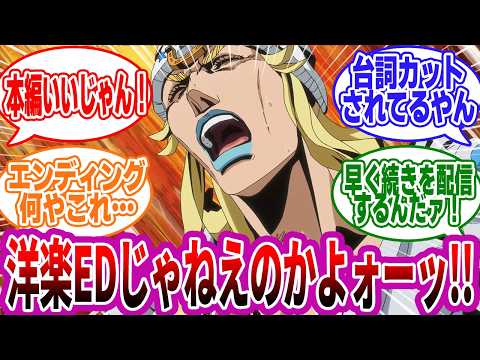
The ending theme for JoJo’s Bizarre Adventure: Steel Ball Run has ignited unprecedented criticism from both domestic and international fans, marking a significant departure from the franchise’s 15-year tradition of Western music. The choice to use Japanese-language hip-hop instead of the expected Western-style composition has generated almost universally negative reactions, raising questions about production priorities and fan expectations in the anime industry.
- What Happened
- Why It Matters
- Background
- Key Points
- Industry Context: Streaming Metrics vs. Artistic Consistency
- Viewer Reactions: Domestic and International Perspectives
- Production Intent vs. Audience Expectations
- Potential for Redemption: The “So Bad It’s Good” Phenomenon
- Viewing Recommendations for Steel Ball Run
- Insights: What This Reveals About Modern Anime Production
What Happened
The seventh installment of JoJo’s Bizarre Adventure, Steel Ball Run, premiered with an ending theme performed by a Japanese rapper in Japanese, breaking with the franchise’s established musical tradition. Previous installments—from Part 1’s “Roundabout” through Part 6’s “Empathy”—consistently featured Western-influenced or fully Western compositions. This stylistic shift has generated overwhelming criticism across social media platforms, with viewers citing poor lyricism, awkward phrasing, and sonic discomfort as primary concerns.
Why It Matters
The Steel Ball Run ending theme controversy reveals critical tensions in modern anime production: the conflict between domestic streaming metrics and international fanbase expectations. JoJo’s Bizarre Adventure maintains a genuinely global audience spanning multiple languages and regions. The decision to prioritize Japanese domestic viewership over the franchise’s established international brand identity has alienated a significant portion of the fanbase and raises broader questions about how anime studios balance industry trends with artistic consistency. This case study demonstrates how breaking established franchise conventions can backfire when the change contradicts core audience expectations.
Background
JoJo’s Bizarre Adventure has maintained remarkable consistency in its musical identity since the 2012 television anime adaptation. Each part’s ending theme was carefully selected to complement the story’s international scope and adventurous tone. Part 4 (Diamond is Unbreakable) introduced a Japanese artist (Savage Genius) but maintained a Western musical aesthetic, successfully blending Japanese lyrics with an English-language feel. This approach demonstrated that Japanese involvement didn’t require abandoning the franchise’s established sonic identity.
Steel Ball Run, set during an American transcontinental horse race, would logically seem suited for contemporary Western musical styles. However, the production team’s choice to use Japanese hip-hop—ostensibly to appeal to domestic streaming platforms—represents a fundamental break from franchise tradition. Industry trends over the past five years have increasingly favored domestic artists due to streaming algorithm prioritization, but this shift has not been universally appropriate for all franchises, particularly those with established international identities.
Key Points
- Main Episode Quality Remains High: The actual Steel Ball Run episodes receive praise for faithful character adaptation, strong voice casting, and effective buddy-comedy dynamics between protagonists Johnny and Gyro
- Lyrical Content Criticized as Superficial: Viewers identify lyrics like “riding a powerful horse” as merely listing plot elements rather than expressing thematic depth or emotional resonance
- Sonic Design Issues: Beyond lyrics, the rap tempo, trap beat selection, and weak chorus composition generate additional criticism about the overall audio production
- Franchise Tradition Violation: The departure from 15 years of Western-influenced ending themes amplifies negative perception and creates cognitive dissonance for longtime viewers
- Global Consensus Against the Choice: Criticism spans multiple languages and regions, indicating the problem transcends cultural preference and reflects genuine musical quality concerns
- Possible Mid-Season Change: Speculation suggests the ending theme may be replaced during the season, indicating production awareness of the poor reception
Industry Context: Streaming Metrics vs. Artistic Consistency
The Steel Ball Run ending theme decision reflects a broader industry shift toward prioritizing domestic streaming performance. Over the past five years, anime ending themes increasingly feature Japanese artists, driven by algorithm optimization for domestic viewership. However, this trend has not been uniformly successful across all franchises.
Comparative analysis reveals successful implementations of Japanese hip-hop in anime: “My Hero Academia’s” “Heroes Come Back” (2016) and “Attack on Titan’s” “Crimson Bow and Arrow” (2013) both employed rap while maintaining thematic abstraction and sonic sophistication. These examples demonstrate that Japanese-language hip-hop can work within anime contexts when lyrics express universal themes rather than plot summaries, and when production quality matches the franchise’s established standards.
The Steel Ball Run ending theme fails on both counts: its lyrics function as concrete plot description rather than thematic expression, and its production quality falls below the franchise’s historical standard. This represents not a successful adaptation of industry trends, but a misapplication of them.
Viewer Reactions: Domestic and International Perspectives
Domestic Japanese Feedback: Japanese viewers express shock at the lyrical quality, with comments ranging from “the lyrics are genuinely embarrassing” to “I’ve never seen an anime comment section this uniformly negative.” Some acknowledge the trap beat itself isn’t inherently problematic but emphasize that lyrics alone ruin the overall composition.
International Response: English-speaking, Spanish-speaking, and Chinese-speaking fans express similar confusion and disappointment. The most common international reaction questions the fundamental choice: “An American transcontinental horse race with Japanese rap?” This global consensus suggests the problem isn’t cultural preference but rather a genuine mismatch between content and execution.
Nuanced Criticism: Some viewers distinguish between the instrumental production and vocal delivery, suggesting the beat itself could work with different lyrics. This indicates the failure is primarily compositional rather than genre-based.
Production Intent vs. Audience Expectations
The production team likely intended to modernize Steel Ball Run’s identity by pairing the American setting with contemporary hip-hop, positioning the choice as artistically progressive. However, this intent collided with audience expectations shaped by 15 years of franchise consistency. JoJo’s international fanbase had developed specific expectations: that Steel Ball Run, being the most explicitly American-set installment, would receive a particularly sophisticated Western musical composition.
This represents a critical miscalculation in understanding franchise equity. The audience’s attachment to JoJo’s musical identity wasn’t incidental—it was foundational to the franchise’s brand. Breaking that identity requires either exceptional execution or explicit narrative justification. The Steel Ball Run ending theme provides neither.
Potential for Redemption: The “So Bad It’s Good” Phenomenon
Anime history includes examples of initially despised content that eventually gained cult appreciation through repeated exposure and meme culture. “Samurai Flamenco’s” opening theme (2013) initially faced criticism but eventually became beloved for its distinctive personality. Steel Ball Run’s ending theme could theoretically follow a similar trajectory, provided the main episode quality remains consistently strong.
The prerequisite for this redemption arc is clear: the main episodes must be excellent enough that viewers tolerate the ending theme’s shortcomings. Early reactions confirm this condition is being met. If Steel Ball Run maintains its current quality trajectory, the ending theme’s “badness” might eventually transform into affectionate irony rather than genuine frustration.
Viewing Recommendations for Steel Ball Run
Skip the Ending Theme: Given current production quality, skipping the ending theme preserves the viewing experience without diminishing engagement with the main narrative.
Prioritize the Opening Theme: The opening theme receives qualified praise, with viewers noting its quality improves with repeated exposure. Regular viewing of the opening can enhance overall series immersion.
Focus on Episode Content: The main episodes demonstrate strong character work, appropriate casting, and effective buddy-comedy dynamics. These elements represent the true value of the adaptation.
Comparative Analysis: Watching Part 5 (Golden Wind) and “Attack on Titan” alongside Steel Ball Run provides context for understanding how international themes and hip-hop can be effectively integrated into anime.
Insights: What This Reveals About Modern Anime Production
The Steel Ball Run ending theme controversy exposes a fundamental tension in contemporary anime production: the conflict between algorithm-driven domestic metrics and franchise-specific audience expectations. While streaming optimization is legitimate business strategy, it cannot override established brand identity without consequence.
JoJo’s Bizarre Adventure’s international fanbase isn’t incidental to the franchise—it’s central to its identity. The series has cultivated this global audience over 15 years through consistent artistic choices. Abandoning those choices for domestic streaming metrics represents a strategic miscalculation that damages both short-term reception and long-term brand equity.
The broader lesson: franchise consistency matters more for established properties than for new series. When audiences have developed specific expectations through years of consistent delivery, breaking those expectations requires either exceptional execution or explicit narrative justification. The Steel Ball Run ending theme provides neither, resulting in the unprecedented consensus criticism documented across multiple languages and regions.
However, the situation remains salvageable. The main episodes are strong, and production awareness of the poor reception suggests potential mid-season replacement. If the ending theme is changed and the main episode quality continues, Steel Ball Run can recover from this misstep. The franchise’s 15-year track record suggests the production team understands the importance of musical identity—this ending theme may ultimately represent a temporary deviation rather than a permanent shift in JoJo’s artistic direction.